
Gorjani
About this place
Gorjani, a Slavonian village near Đakovo, is defined above all by its spring procession of queens, locally known as ljelje. On Whit Sunday, young women walk through the village as two distinct groups: the “kings” carry sabres and wear men’s hats decorated with flowers, while the “queens” wear white bridal-style garlands. UNESCO added the procession to its Representative List of the Intangible Cultural Heritage of Humanity in 2009, recognising a living community practice rather than a museum piece. Gorjani’s built heritage includes the Chapel of the Three Kings, a 15th-century structure later used as Jajić-bey’s tower and converted into a chapel in 1837. The parish church of St James the Apostle is the starting point of the Whit Sunday ritual, following Mass and a circle dance outside the church. The village was also the seat of the influential medieval Gorjanski family, while nearby Garov dol is associated with the battle of 1386. A visit consequently brings together a distinctive Slavonian landscape, medieval traces and a ceremonial tradition restored to the village streets in 2002.
Gorjani is more than the setting for the ljelje procession: it was once the seat of the powerful medieval Gorjanski family, whose estates extended across Slavonia and Hungary. The village’s layered past is especially clear in the Chapel of the Three Kings. Built in the 15th century, it later became Jajić-bey’s tower before being converted into a chapel in 1837. The parish church of St James the Apostle preserves furnishings shaped by Classicist taste. Yet the village’s defining emblem remains the Whit Sunday procession, revived in Gorjani in 2002 after a 36-year period when the custom no longer took place through the village streets.
Things to see

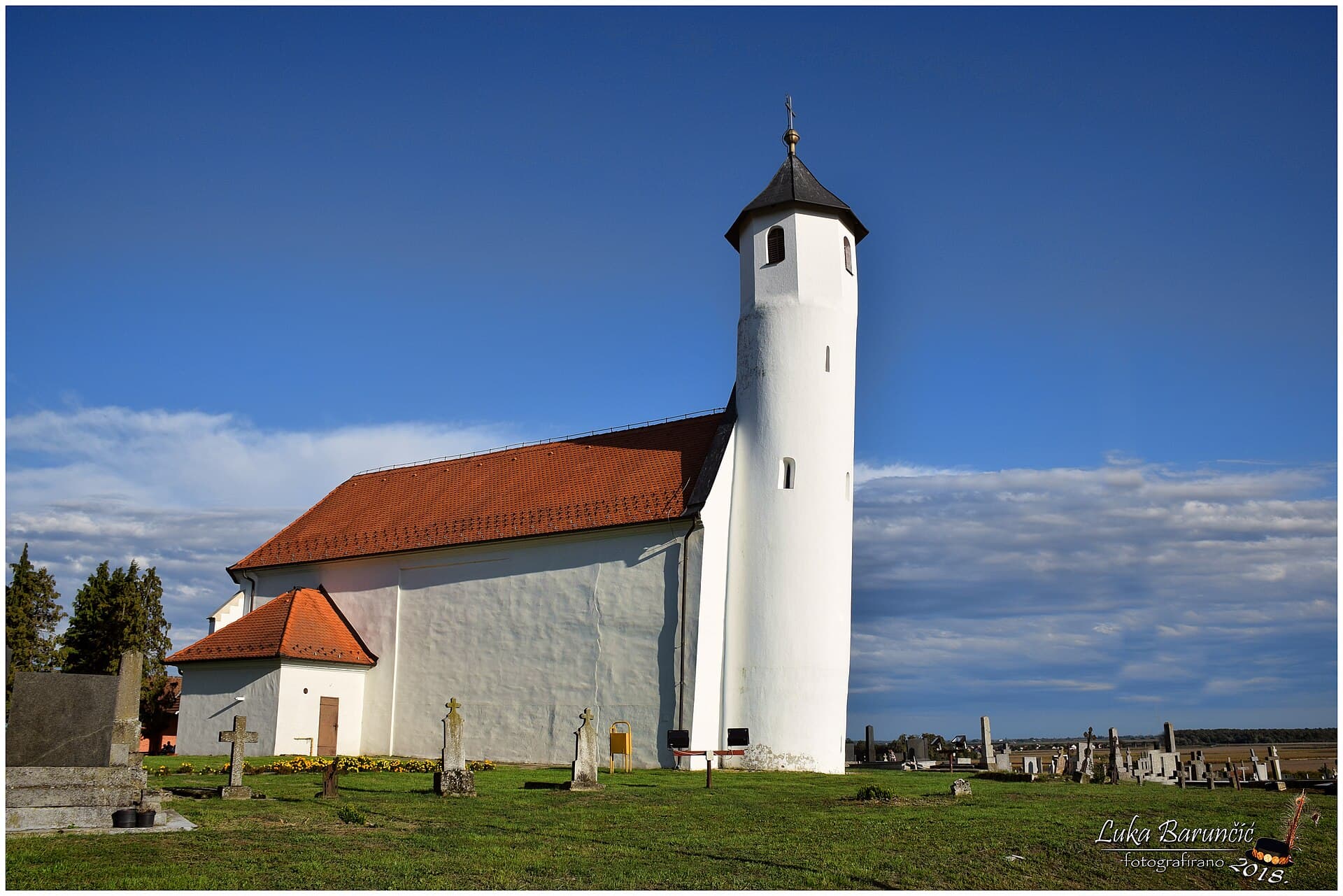
St. Bartholomew's Church in Novi Mikanovci
Landmark · Novi Mikanovci
church building in Stari Mikanovci, Croatia
22 km from Gorjani

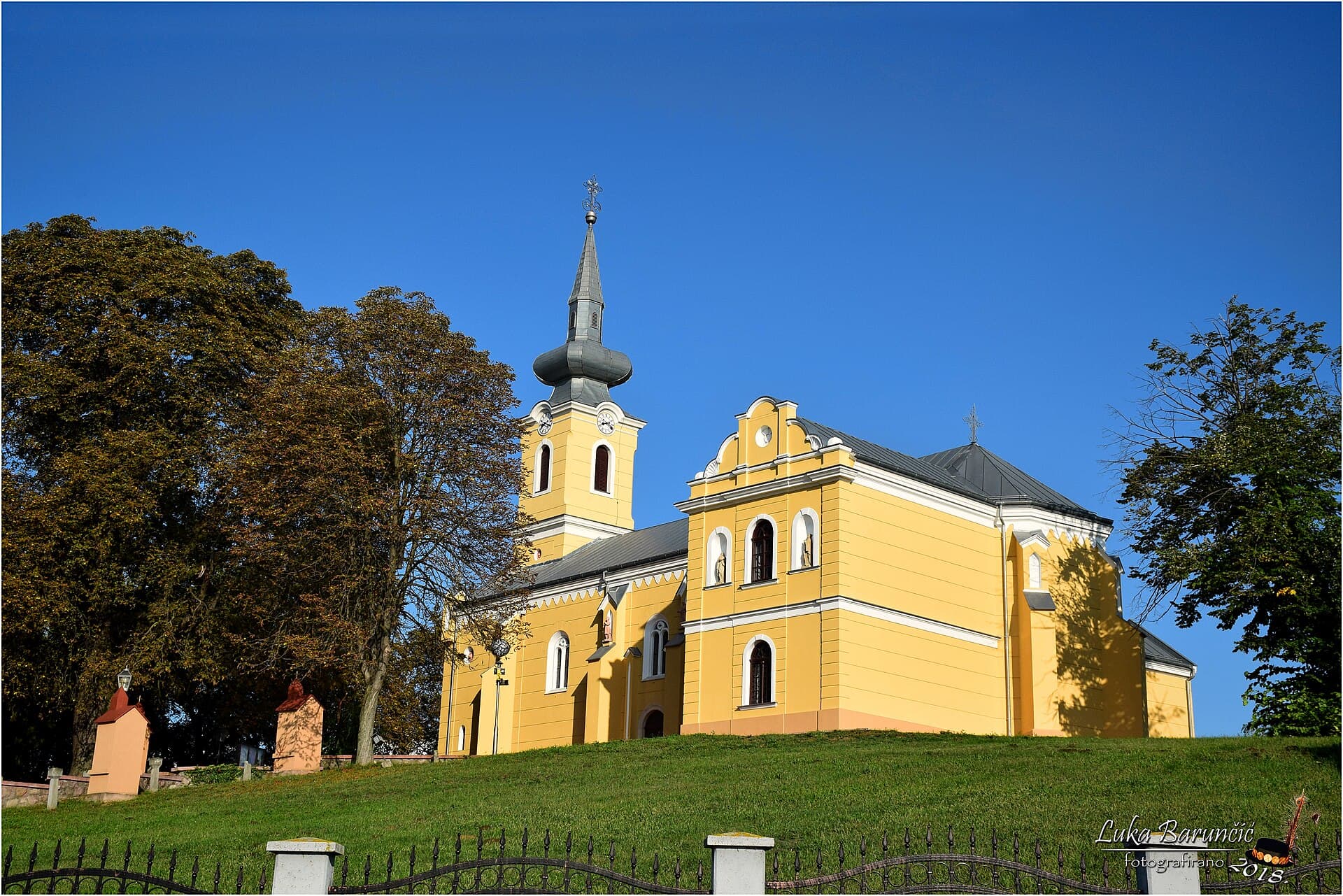
župa Rođenja sv. Ivana Krstitelja
Landmark · Ivankovo
The Parish Church of the Nativity of St John the Baptist in Ivankovo is a medieval church distinguished by a single nave and polygonal sanctuary.
28 km from Gorjani
Stays
No stays listed here yet
Things to do
Gorjani is most distinctive on Pentecost Sunday, when the annual Ljelje procession links the parish church of St James the Elder with the village streets. Girls take the roles of kings and queens, performing songs and sword dances, followed by a circle dance outside the church after Mass. The custom was inscribed on UNESCO’s Representative List of the Intangible Cultural Heritage of Humanity in 2009. Outside the feast day, the church still provides the procession’s physical point of reference, but its costumes, swords and songs belong specifically to Pentecost.
Tours and activities
AdAd · partner offers: GetYourGuideThe partner handles booking, payment and support. StayBravo may earn a commission on bookings made through these links.How we choose offersGetYourGuide offers are selected and ordered by GetYourGuide based on the name of the nearest larger town or national park; we do not influence their selection and do not use data about you.GetYourGuide · Đakovo
We show GetYourGuide offers once you allow their cookies.
Practical information
Getting there and around
Gorjani’s road connections are oriented toward Đakovo, the regional centre whose immediate sphere of influence includes the municipality. Local county roads run mainly east–west and feed into the broader Beli Manastir–Osijek–Đakovo transport corridor. In 2015, the Croatian Chamber of Economy recorded two proposed Đakovo–Gorjani bus timetables, departing at 9:30 and 10:00, but that archived document is not a current schedule. Travellers relying on public transport should therefore confirm the present connection with the operator, while a car makes it straightforward to continue from Gorjani to Tomašanci or Đakovo.
Frequently asked questions
When does the ljelje procession take place in Gorjani?
The ljelje procession moves through Gorjani on Whit Sunday, following Mass at the church of St James the Apostle.
When was the Gorjani procession inscribed by UNESCO?
UNESCO inscribed the spring procession of the queens, or ljelje, from Gorjani in 2009.
What was the Chapel of the Three Kings formerly used as?
The 15th-century building later served as Jajić-bey’s tower and was converted into a chapel in 1837.
Nearby
Gorjani
Open in OpenStreetMap(opens in a new tab)Smaller places
straight-line distance
Related guides

Osijek
Tvrđa and the centre around the main square are distinct starting points for understanding Osijek. The former emphasises the fortified historic quarter and Baroque architecture; the latter…
Read the guide

Vukovar
A cultural visit to Vukovar has several separate centres of gravity. Eltz Palace and the City Museum address the city and its inhabitants across different periods. Vučedol reaches much…
Read the guide

Stubičke Toplice
Stubičke Toplice derives almost its entire identity from thermal water and the Zagorje landscape. There is no large urban historic core; green spaces, bathing facilities and traces of the…
Read the guide
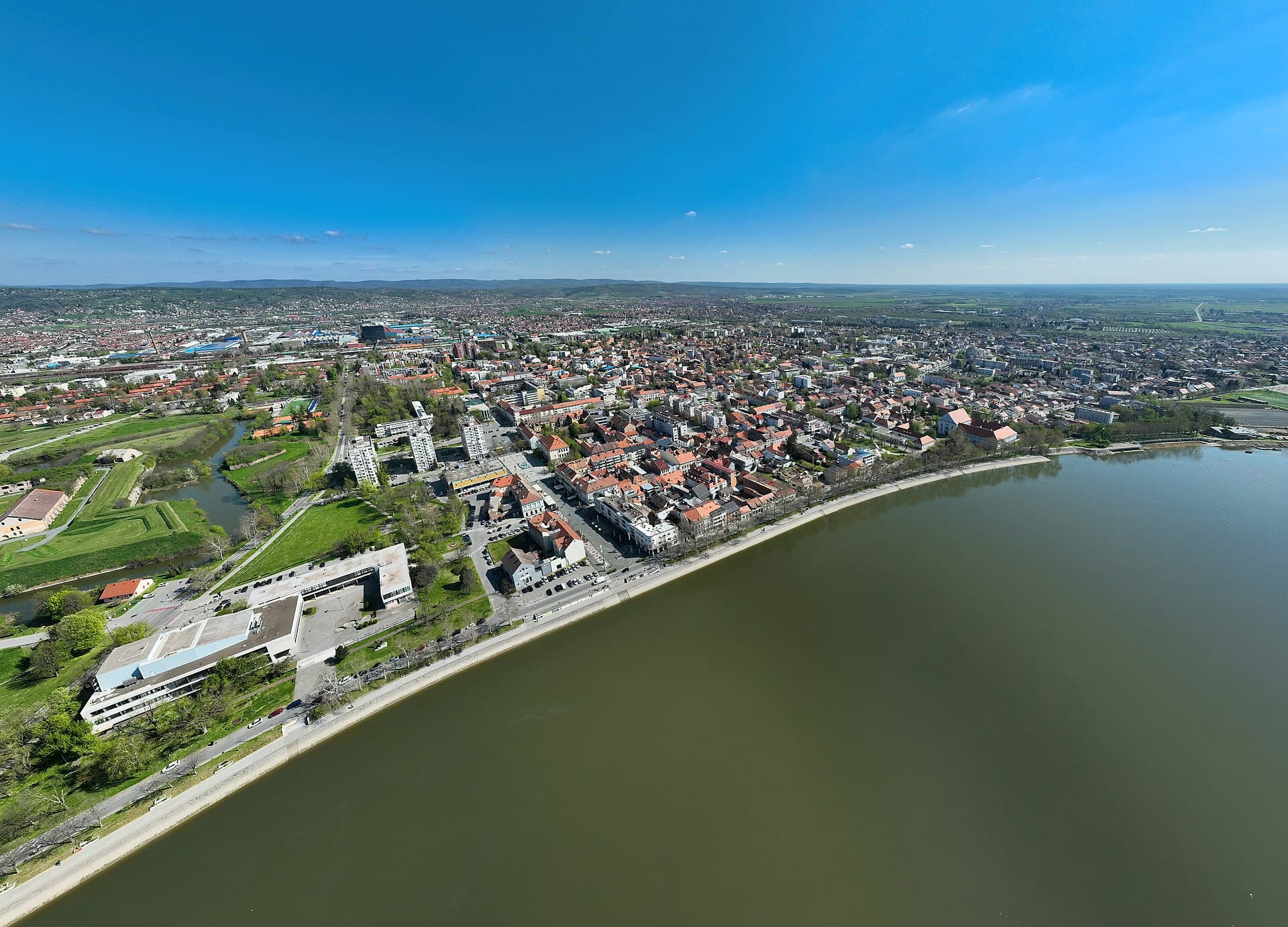
Slavonski Brod
Slavonski Brod developed around one of the major crossings of the Sava, and that border and transport role left a strong mark on the city. Brod Fortress represents the eighteenth-century…
Read the guide
Know Gorjani? Correct us
Tell us in your own words what is not accurate. We check right away.Do not enter personal data. Corrections are checked by the StayBravo AI assistant; changes to the description are approved by an editor. Use the form instead
Do you know Gorjani?
Help the guests who come after you.
Help us complete
Nothing is published without an editor’s review.Report illegal content
Photo credits: Gorjani — Roko Poljak (CC BY-SA 4.0) · Đakovo Cathedral — Author's own photo (CC BY 2.5) · St. Bartholomew's Church in Novi Mikanovci, župa Rođenja sv. Ivana Krstitelja — Barun501 (CC BY-SA 4.0) · Pejačević Manor — Flammard (CC BY-SA 3.0) · Osijek — Rp031 (CC BY-SA 4.0) · Vukovar — Bybbisch94, Christian Gebhardt (CC BY-SA 4.0) · Stubičke Toplice — MOs810 (CC BY-SA 4.0) · Slavonski Brod — Petar Milošević (CC BY-SA 4.0)