Skrad
About this place
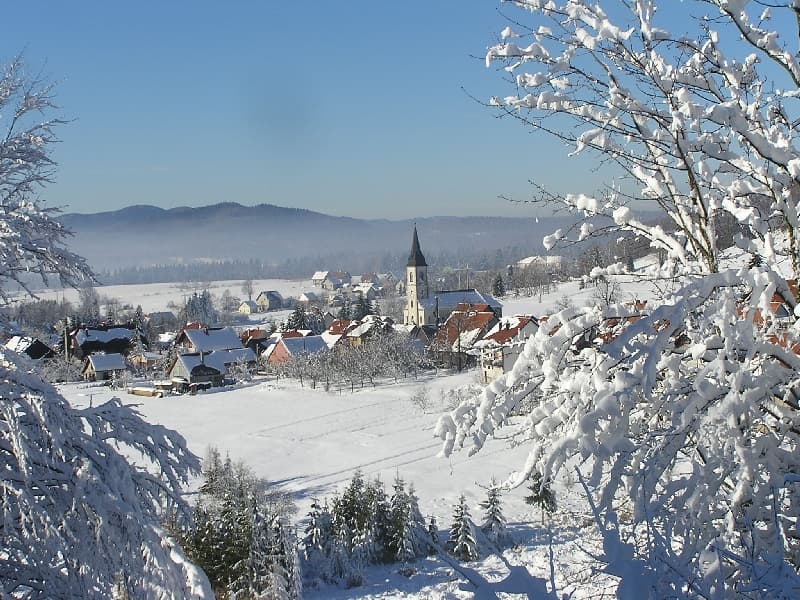
Skrad is a small Gorski kotar settlement perched above the deeply cut Dobra and Kupa valleys, best known for Zeleni vir and Vražji prolaz. The protected area below the village includes Zeleni vir spring, a 70-metre cliff with a waterfall, the roughly 800-metre Vražji prolaz canyon, Muževa hiša cave and the historic Munjara hydroelectric plant from 1921. Skrad itself also has the Church of St Anthony of Padua dating from 1694, the 1,044-metre Skradski vrh and the Šiljar educational trail with the Perić viewpoint. The destination is strongly oriented towards walking and hiking: Zeleni vir can be reached on foot from the settlement, while several trails link the railway station, canyon and surrounding hills. In 2026 vehicle access to the excursion area was restricted by road works, so official advice directed visitors to pedestrian approaches. Skrad is therefore ideal for travellers seeking forest, water and short but often steep mountain paths.
Skrad developed along an old transport route through Gorski kotar, but today its visitor experience is defined by the dramatic relief beneath the settlement. Views open from the centre towards deep valleys, while trails descend to Zeleni vir, Vražji prolaz and the Munjara hydroelectric plant. The Church of St Anthony and the Lončarić House recall the settlement’s own history, while Skradski vrh offers a very different perspective from more than a thousand metres above sea level. The contrast between the ridge-top village and the canyon several hundred metres below makes Skrad particularly rewarding for active visitors.
Stays nearby
 Apartment
Apartmeni Klenovica.eu
Klenovica
37 km from Skrad
up to 4 guests · 1 bedroom
The host confirms the exact price for your dates and availability.
Things to see
Zeleni vir is a powerful karst spring emerging in a cave beneath an approximately 70-metre cliff over which a waterfall descends. Vražji prolaz is about 800 metres long and in places only around two metres wide, ending at Muževa hiša, a roughly 200-metre cave with a pool. The same valley contains Munjara, a hydroelectric plant whose construction began in 1919 and which started producing electricity in 1921/1922. In Skrad itself, notable sites include the 1694 Church of St Anthony, Skradski vrh and the historic Lončarić House beside the old Lujzijana road.
 Special reserve
Things to do
The most complete outing links Skrad on foot with Zeleni vir and Vražji prolaz. A marked trail from the railway-station area descends towards the waterfall, while another route passes through the canyon towards Muževa hiša cave. For an easier programme, follow the Šiljar educational trail to the Perić viewpoint; hikers wanting more elevation can continue to Skradski vrh. Because of the large vertical difference, the return climb towards Skrad can be much harder than the descent. Always check current notices before setting out because trails and access routes may close due to weather or works.
Food and drink
The Mountain House Zeleni vir stands at the excursion area, with official sources noting that refreshments are available there. Skrad does not have a dense restaurant scene, so for a full-day outing it is sensible to check whether the hut is operating and to carry your own water and some food. The destination is more about a mountain excursion than a food tour, while a broader choice of restaurants can be found in Delnice, Ravna Gora and other larger Gorski kotar settlements. In summer especially, the climb back from the canyon makes carrying sufficient water more important than relying on a single venue below.
Practical information
Practical information
Service information for Zeleni vir and Vražji prolaz should be checked on the day of the visit. In September 2026 the official site published 10:00–17:00 opening hours, ticket sales until 16:00 and temporary closure of the vehicle access road for reconstruction, with pedestrian approaches from Skrad or Donji Ložac recommended instead. The canyon can be slippery after rain and water levels or weather may affect safety. Sturdy footwear is much more suitable than casual city shoes, and access to the cave should follow rules protecting its bat populations.
Getting there and around
Skrad lies on the D3 Rijeka–Zagreb state road and has a railway station, making it one of the Gorski kotar excursion bases that can be reached without a car. Official directions give a walking route of roughly 40 minutes from the railway station to Zeleni vir, with the canyon route taking longer. The vehicle road to the excursion area is narrow and steep, and official guidance recommends leaving the car in Skrad or using the Ložac approach when road conditions are poor. Because of works in 2026, check which access option is currently open before travelling.
Frequently asked questions
How long is Vražji prolaz?
The canyon is about 800 metres long and narrows to roughly two metres in places.
Can Zeleni vir be reached on foot from Skrad?
Yes. A marked route from the railway station takes roughly 40 minutes to the waterfall.
What is Munjara?
It is a historic hydroelectric plant in the canyon, built in the early 1920s and important as industrial heritage.
Where should visitors park for Zeleni vir?
Depending on current access, official guidance recommends Skrad, the railway-station area or the forest parking area near Ložac.
Nearby

Kupjak
Village · Kvarner
Related guides
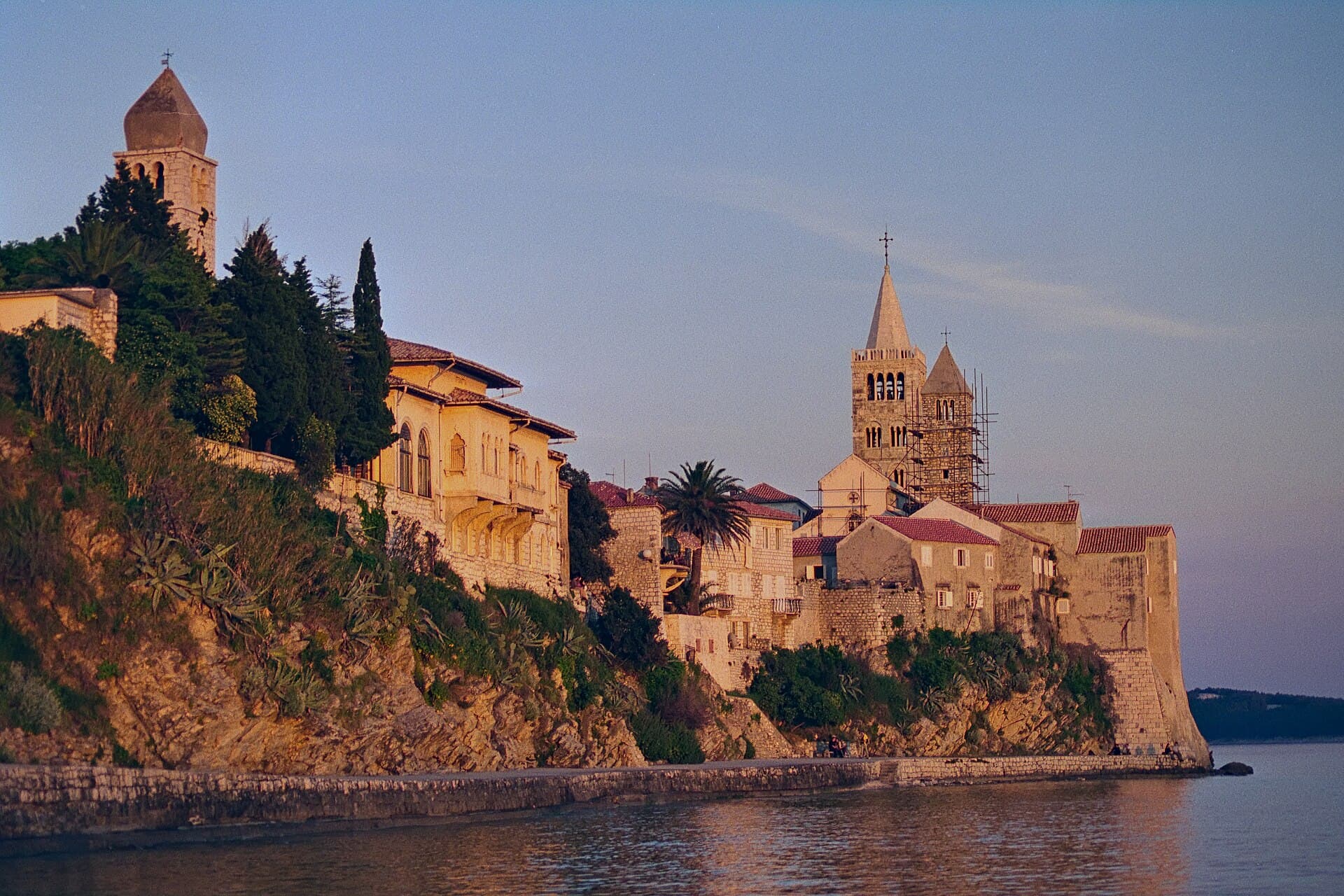
Rab
Rab's old town has a clear silhouette, but it rewards more than a postcard view. Its four towers mark distinct religious sites: the Assumption of Mary, St John the Evangelist, St Andrew and…
Read the guide
Help improve this page
Spot something missing or wrong? Suggest a correction, add your photo or report a problem. Editors review every suggestion before it is published.
Photo credits
- Skrad — Martin Brož · CC BY 3.0 · Wikimedia Commons
- Kupjak, Ravna Gora — Martinarg · CC BY-SA 3.0 · Wikimedia Commons
- Brod na Kupi — Modzzak · CC BY-SA 3.0 · Wikimedia Commons
- Zeleni vir — Deapmakeup · CC BY-SA 4.0 · Wikimedia Commons
- Apartmeni Klenovica.eu