Mošćenička Draga
About this place
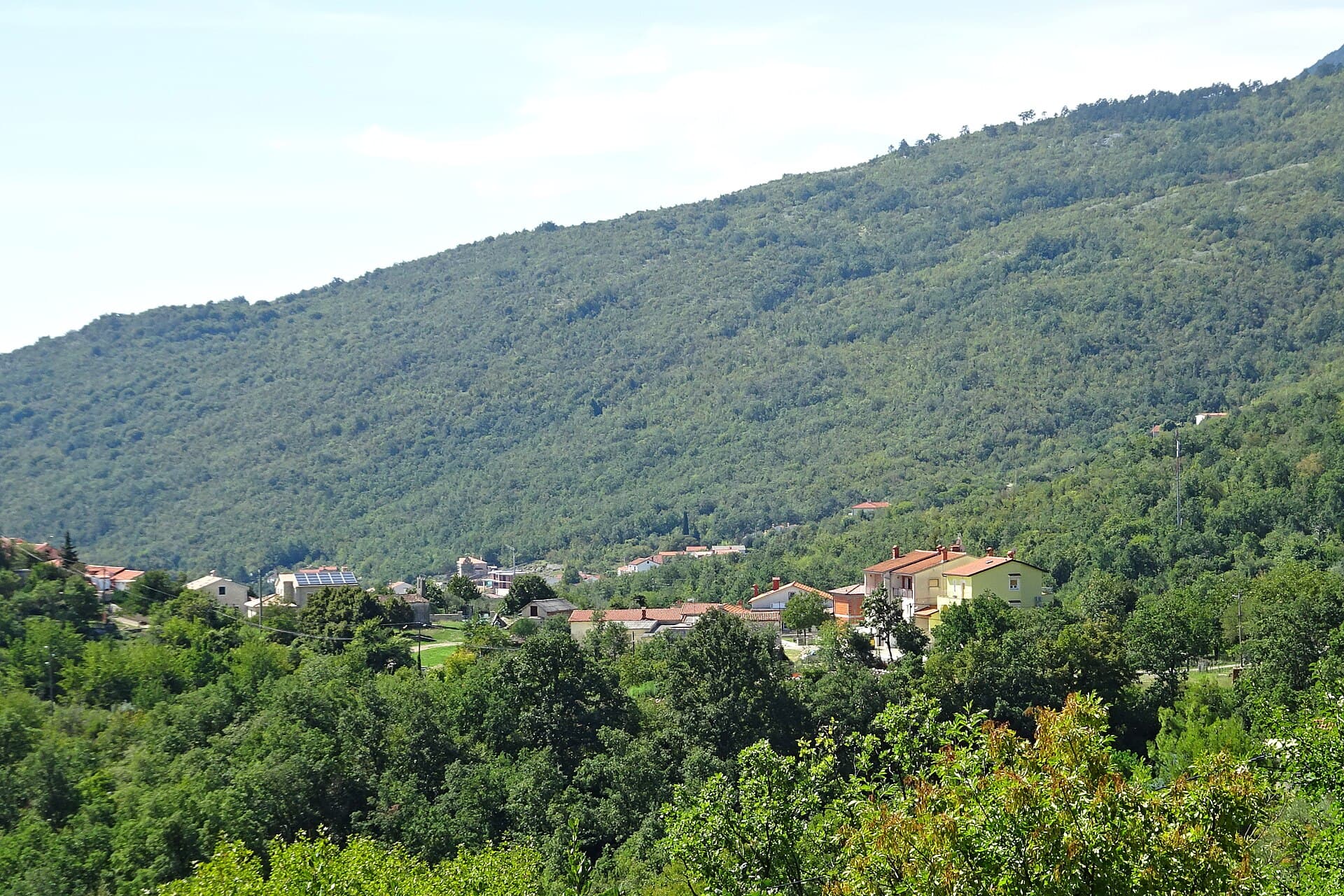
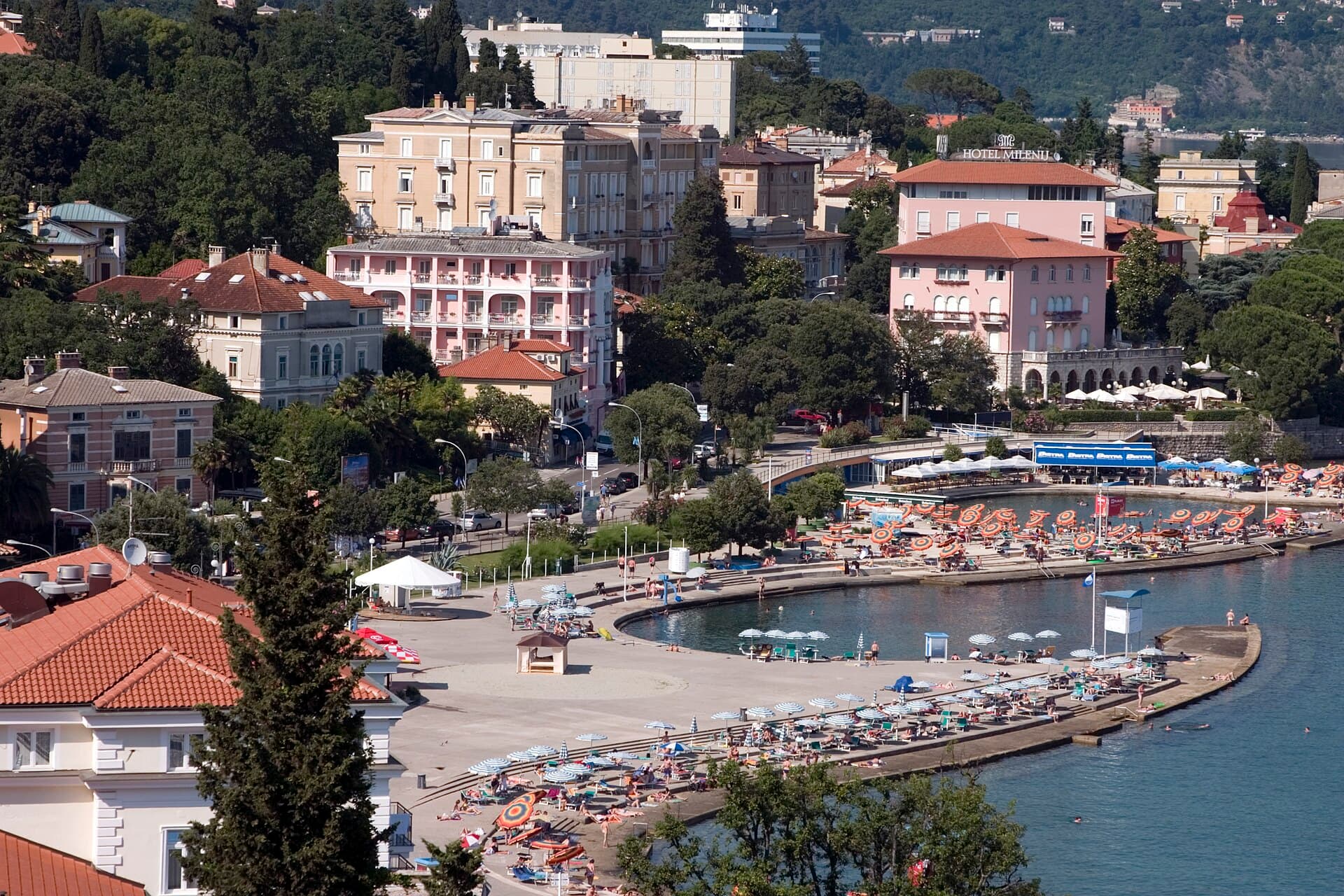
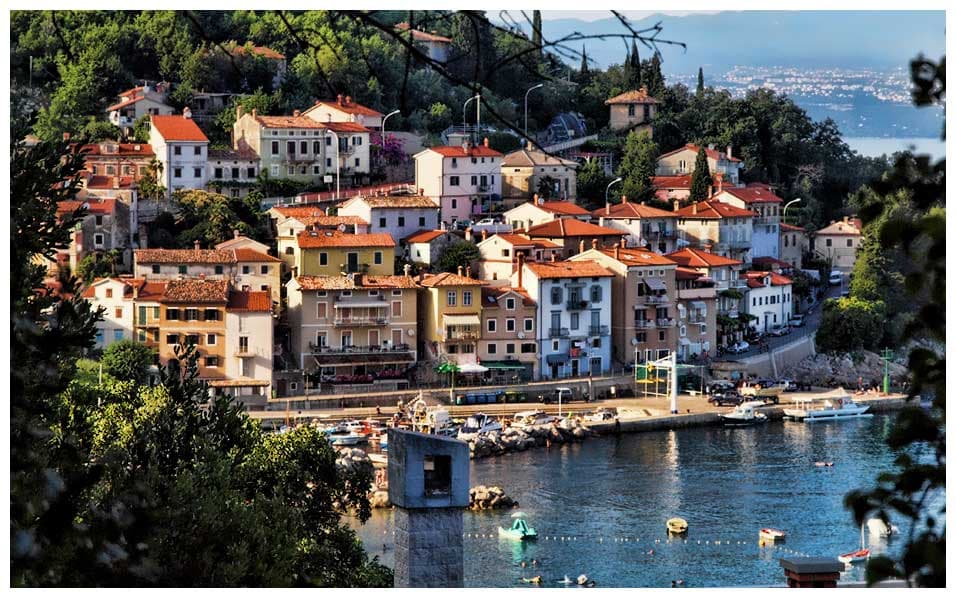
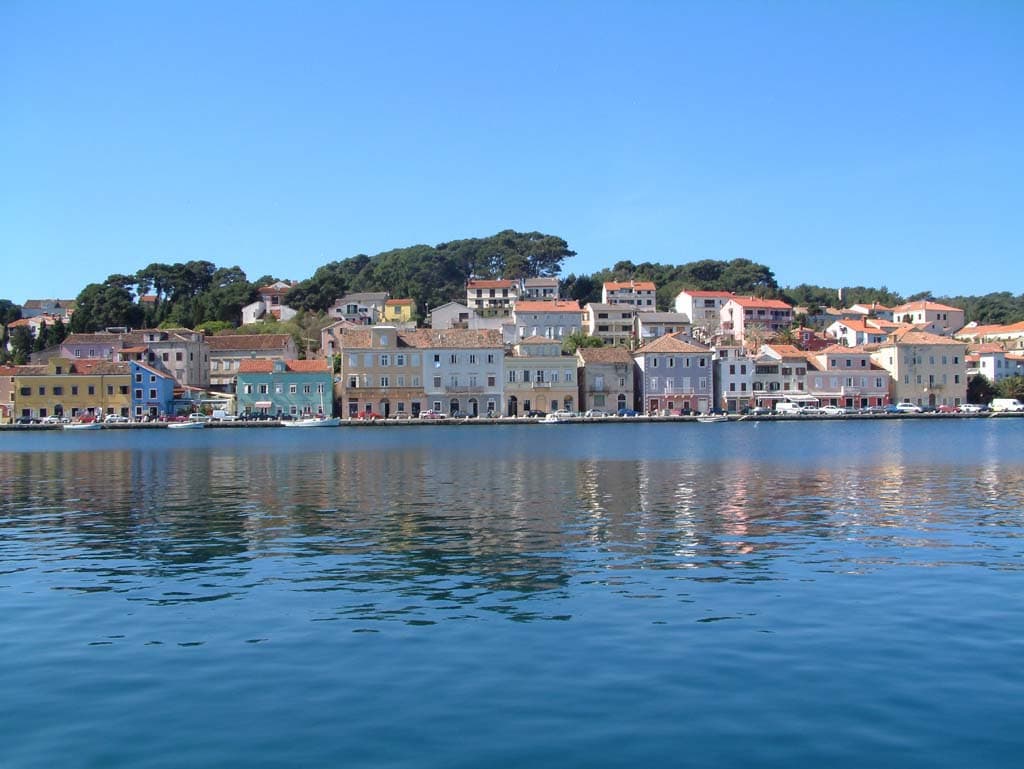
Mošćenička Draga lies beneath Učka, seven kilometres southwest of Lovran, and developed as a fishing and maritime settlement at the end of a long pebble shoreline. Sipar beach is the town’s defining image, while a coastal promenade continues toward St Ivan beach. The old urban area of Mošćenička Draga is protected as cultural heritage, but the strongest historic contrast is found above the sea in Mošćenice, a medieval settlement on the slopes of Učka. Its ethnographic collection and old olive press interpret traditional life and olive processing. Farther south, Brseč is another historic village set high above Kvarner. The hinterland belongs to the Učka landscape and includes the mythological-historical trail toward Trebišća, which interprets elements of Slavic mythology. The municipality’s maritime tradition also survives in votive paintings kept in local churches. Mošćenička Draga is therefore more than a beach base: within a short distance, the coastline gives way to medieval hill villages and mountain paths.
Mošćenička Draga grew as the fishing harbour of historic Mošćenice, with a 1436 record mentioning a settlement by the port of St Marina. Today it combines a compact old quarter descending to a small harbour, Habsburg-era villas and the long sweep of Sipar beach. Tourism accelerated in the late 19th and early 20th centuries, when visitors arrived by carriage from the Opatija Riviera; early properties included Hotel Armanda and Pension Alla Marina. Hotel Draga later rose on the Armanda site, became the Miramar and is now the Mediteran. Mount Učka dominates the backdrop, while the seafront walk towards Sveti Ivan links the beaches, Villa Zagreb and the village’s maritime past.
Stays nearby
 Apartment
Apartmeni Klenovica.eu
Klenovica
49.2 km from Mošćenička Draga
up to 4 guests · 1 bedroom
The host confirms the exact price for your dates and availability.
Things to see
Sipar is the central coastal landmark of Mošćenička Draga, a pebble beach stretching beside the settlement beneath Učka. For history, climb above the sea to Mošćenice, where an ethnographic collection and old olive press preserve clothing, tools and the tradition of olive processing. Brseč is the municipality’s other major historic point, with narrow lanes and a position high above Istria’s eastern coast. Inland, the trail toward Trebišća is distinctive for its interpretation of Slavic mythology, so local heritage ranges from maritime traditions and votive paintings to stories connected with the mountain landscape of Učka.
Beaches
Sipar is a pebble strand several hundred metres long, formed from material carried by the local stream and rounded by the waves. Southward, the coastal walk continues to Sveti Ivan, including a particularly scenic stretch below Villa Zagreb. Beyond Sveti Ivan lies the naturist beach Senjavac, screened by rocks. Between Draga and Brseč, Uboka and Jelenšćica can be reached by boat or on footpaths descending from the Rijeka–Pula road. Farther south, Stupova is most practical by sea, while Klančac and Riva are approached through the Brseč valley past the cemetery. The coastline therefore offers both an accessible central beach and secluded coves beneath steep cliffs.
Bathing water quality nearby
- M. Draga - kraj plaže · 480 mexcellent · season 2025
- Sv. Ivan - plaža · 560 mexcellent · season 2025
- M. Draga - početak plaže · 575 mexcellent · season 2025
Source: European Environment Agency (EEA); data from Croatian authorities. · bathing water profile
Things to do
Start the morning in the harbour among fishing boats and the houses of old Draga, then walk the full length of Sipar before its busiest hours. Continue along the seafront past Villa Zagreb to Sveti Ivan beach; from this side, steps climb towards historic Mošćenice. For a closer look at local seafaring, return to the Kuća od mora interpretation centre, while a full hiking day can follow the myth-and-history trail through Trebišća in Učka Nature Park. Visitors seeking a quieter shoreline can take a small boat towards Uboka and Jelenšćica or use the footpaths descending from the Rijeka–Pula road.
Food and drink
Local food reflects Draga’s fishing harbour and the Kvarner catch. The tourist board’s list for the village includes Johnson and Na Rivi kod Benita, the Plaža and Dora bistros, Konoba Nostromo and Restaurant Sidro. Quicker options include Mrvica, the Gimi and Val pizzerias, and the restaurants at the Marina and Mediteran hotels. A climb to Mošćenice can be combined with a meal at Perun, while the wider municipality also lists Batelan in Brseč and Slamnjaki in Sveta Jelena. As some establishments operate seasonally, checking the current opening day directly with the restaurant is sensible before making the journey.
Practical information
Practical information
The tourist office is at Aleja Slatina 7 near central Mošćenička Draga and can be reached on +385 51 739 166. The official visitor map marks the bus stop, parking areas, pharmacy, ATM, tourist office, toilets and access points for Sipar and Sveti Ivan beaches. Trips to secluded Uboka, Jelenšćica or Stupova require either steep paths or a small boat. Routes towards Trebišća and the Učka summits are considerably more demanding than the seafront promenade, so sturdy footwear, water and a proper map matter far more there than on the easy coastal walk to Sveti Ivan.
Parking
Public parking in Mošćenička Draga is charged seasonally from 1 May to 30 September 2026. Under the tariff effective from 1 May 2026, registered visitors whose accommodation has no private parking pay €20 per day for stays of one to three days, or €15 per day when staying four days or longer. The central parking area is marked near the entrance to the village and the bus stop, while the official tourist map shows additional parking points by the approaches to Sipar and on the route towards Sveti Ivan. The visitor tariff depends on the guest being correctly registered in eVisitor.
Getting there and around
Autotrolej’s suburban route 32 connects Mošćenička Draga with Lovran, Opatija and Rijeka, while selected services continue towards Mošćenice, Brseč and Zagore. Timetables for routes 32 and 32A should be checked immediately before travelling, as departures vary by operating period and network changes. Draga’s bus stop is in the central area close to the tourist office and main parking facilities. Drivers arrive on the D66 coastal road, which passes Lovran and Medveja from the Opatija direction and continues south above the coves of Uboka and Jelenšćica towards Brseč and the Labin area.
Frequently asked questions
What is the main beach in Mošćenička Draga?
Sipar is the settlement’s best-known pebble beach.
What can you see in Mošćenice above the coast?
Mošćenice has a medieval core, an ethnographic collection and an old olive press.
Why is Brseč worth an excursion from Mošćenička Draga?
Brseč is a historic settlement high above Kvarner, with preserved narrow lanes and an old-town atmosphere.
What is the trail toward Trebišća?
It is a mythological-historical trail in the hinterland that connects the landscape with interpretations of Slavic mythology.
Nearby

Mošćenice
Village · Kvarner

Related guides
Rab
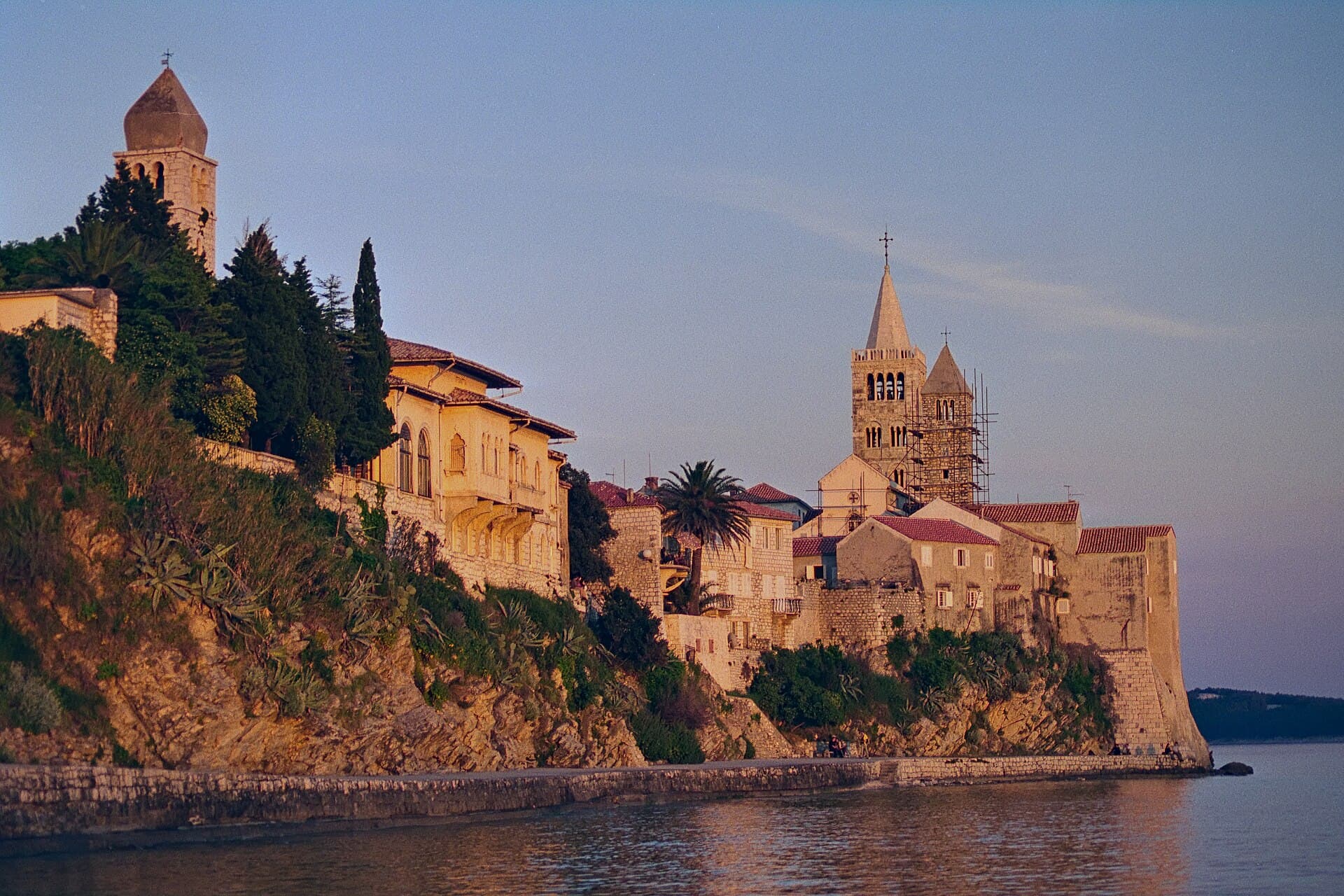
Rab's old town has a clear silhouette, but it rewards more than a postcard view. Its four towers mark distinct religious sites: the Assumption of Mary, St John the Evangelist, St Andrew and…
Read the guide
Help improve this page
Spot something missing or wrong? Suggest a correction, add your photo or report a problem. Editors review every suggestion before it is published.
Photo credits
- Mošćenička Draga — Mario Fajt · CC BY 2.0 · Wikimedia Commons
- Mošćenice, Kraj, Mošćenička Draga — Roberta F. · CC BY-SA 3.0 · Wikimedia Commons
- Sveta Jelena, Golovik — User:P199 · CC BY-SA 4.0 · Wikimedia Commons
- Lovranska Draga