About this place
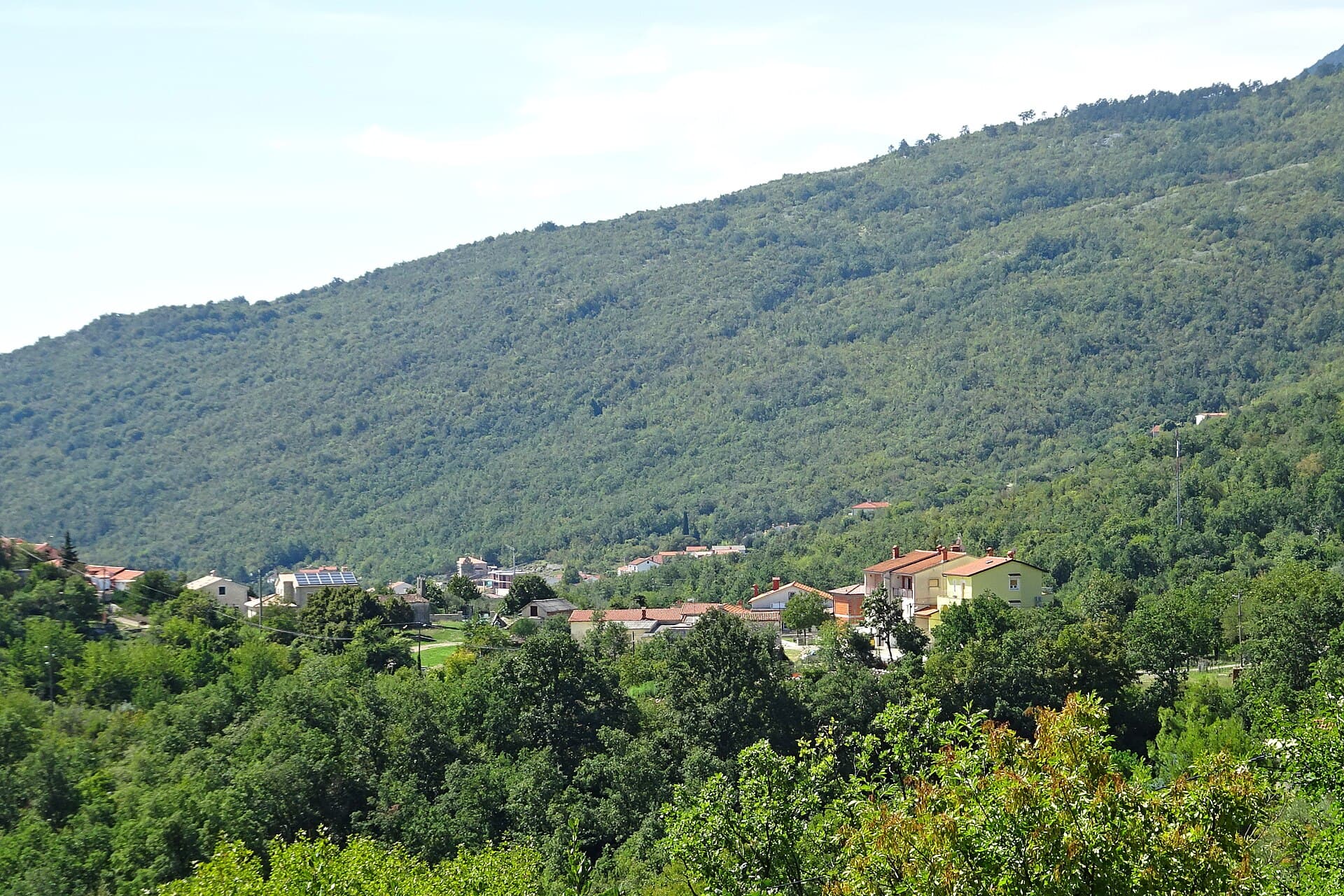
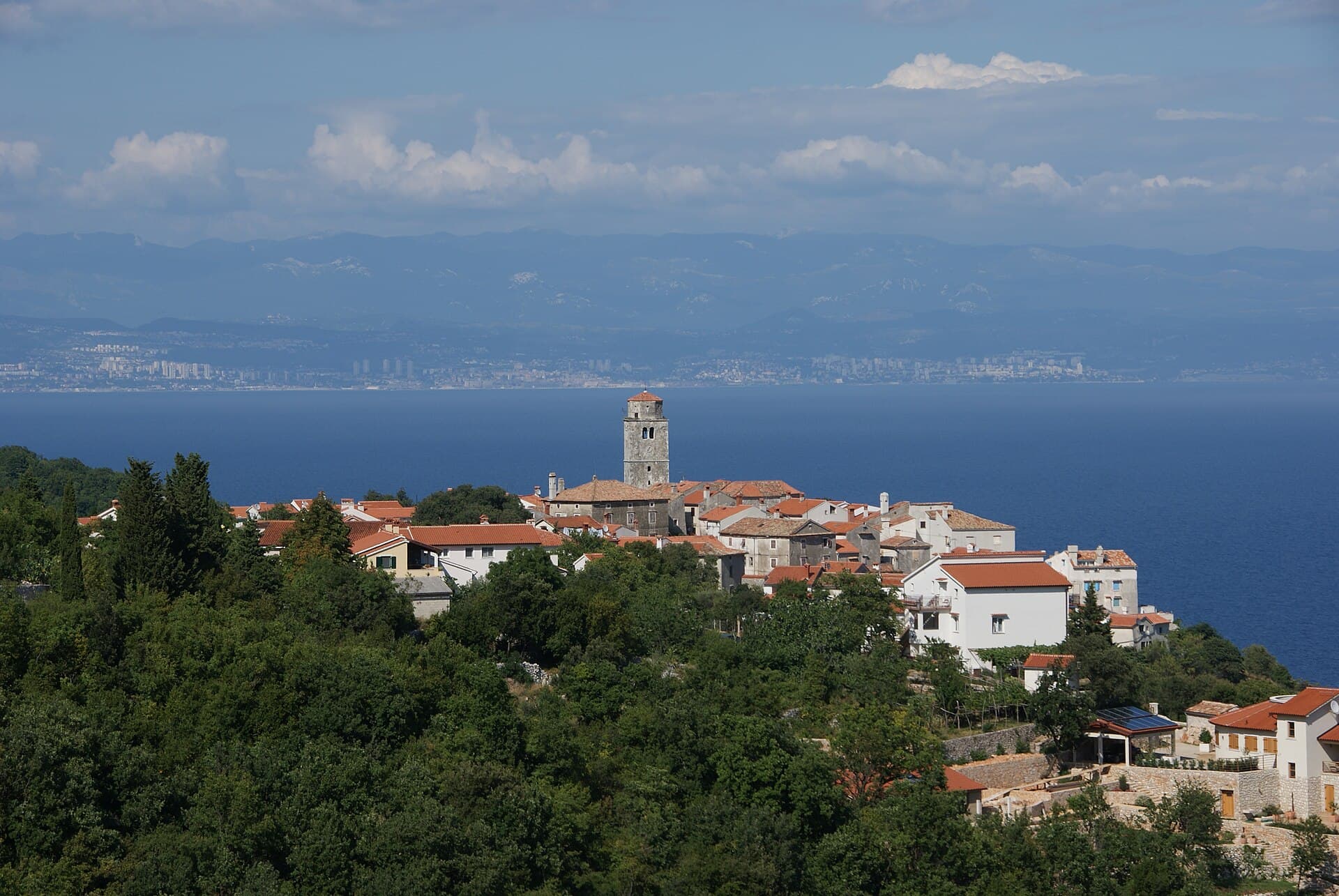
Mošćenice is a fortified medieval hill town above Mošćenička Draga and Sveti Ivan beach, with broad views across Kvarner Bay. Within its gate, stone houses and narrow passages lead to St Andrew’s Church, the Stražnica loggia, Kostinac square, the former Šterna cistern and the Kaštel, now occupied by a primary school with exhibition space on its ground floor. At the entrance to the old town, the Ethnographic Collection preserves costumes, tools, jewellery and household objects; nearby, Mošćenički toš is an approximately 300-year-old olive mill. The settlement’s past is also tied to the Glagolitic tradition and the Mošćenice land register of 1622. A staircase of 753 steps descends from the stone centre to Sveti Ivan beach, allowing heritage sightseeing and swimming to be combined—provided visitors are ready for a demanding climb back. Mošćenička Draga is about three kilometres away by road. Above the settlement, the landscape opens into Učka Nature Park, including the 15-kilometre Trebišća–Perun mythological and historical trail. Mošćenice thus offers an unusual Kvarner combination of a living historic settlement, ethnographic heritage, mountain paths and the sea immediately below its walls.
Mošćenice is a compact stone settlement above Istria’s eastern coast, administratively linked with Mošćenička Draga yet distinct in both setting and character. Its town gate opens into narrow passages around St Andrew’s Church, the Stražnica loggia, Šterna cistern, Kostinac and the Kaštel. Views fall towards Sveti Ivan beach and Kvarner Bay, while the slopes of Učka and Mount Perun rise behind the town. Olive processing shaped local life for centuries and is represented by the roughly 300-year-old toš mill. Mošćenice is also associated with Glagolitic culture and its 1622 land register, preserved in the Croatian State Archives.
Stays nearby
 Apartment
Apartmeni Klenovica.eu
Klenovica
49 km from Mošćenice
up to 4 guests · 1 bedroom
The host confirms the exact price for your dates and availability.
Things to see
Begin a visit to Mošćenice at the entrance to the old town, where the Ethnographic Collection opened in 1984 in a two-storey stone house. Its displays cover the hearth, kitchen implements, textile tools, coopering, costumes and jewellery; downstairs, the original Toš olive crusher and press survive with their equipment and water-heating hearth. Continue to Stražnica, the town loggia, then to Šterna, the former main cistern, and Kostinac, the square behind the church that was once a cemetery. The Kaštel by the town entrance contains an exhibition-gallery space at ground level. The historic core entered the register of immovable cultural heritage in 1968.
Beaches
Sveti Ivan beach lies below Mošćenice and is linked to the old town by 753 steps. Reach the stairway via the eastern section of the town walls, a route between closely built houses and gardens that passes beneath the terrace of the former reading room. The shore is mainly pebbly, with a concrete section at its northern end recorded in the municipality’s 2024 beach-management plan. That plan designates space for sunshades and loungers, pedal boats, windsurf boards and SUPs, making Sveti Ivan a developed seasonal bathing spot as well as the destination of Mošćenice’s steep descent.
Bathing water quality nearby
- Sv. Ivan - plaža · 1.5 kmexcellent · season 2025
- M. Draga - kraj plaže · 2.1 kmexcellent · season 2025
- M. Draga - početak plaže · 2.2 kmexcellent · season 2025
Source: European Environment Agency (EEA); data from Croatian authorities. · bathing water profile
Things to do
Enter through the town gate and begin with the Ethnographic Collection, then visit the nearby toš and its olive-processing equipment. Continue to Stražnica, formerly a place for trade and contracts, before crossing Kostinac and passing Šterna on the way to St Andrew’s Church. Pause at the Kaštel for its exhibition area and Kvarner views. To combine heritage with the sea, descend 753 steps to the pebble beach of Sveti Ivan, remembering that the same staircase awaits on the return. Reserve a separate hiking day for the 15-kilometre Trebišća–Perun trail in Učka Nature Park.
Practical information
Practical information
The tourist board publishes direct contact details for the local custodian of the Ethnographic Collection, so arranging a visit before climbing to Mošćenice is advisable. Stone passages and steps make sturdy footwear more useful than shoes intended for a level town walk. The tourist office is at Aleja Slatina bb in Mošćenička Draga, where visitors can check local programmes and bus information. Anyone walking to Sveti Ivan beach should allow for 753 steps each way, carry water and avoid the hottest part of the day. Seafront services are more concentrated in Mošćenička Draga than inside the fortified hill town.
Getting there and around
Mošćenice is linked by road with Mošćenička Draga, approximately three kilometres away, while Sveti Ivan beach can also be reached directly by staircase. The relevant local public transport is Autotrolej route 32A, connecting Lovran, Mošćenička Draga, Mošćenice and Brseč; passengers should confirm the current departure before travel. Route 32 links Rijeka, Opatija and Lovran, enabling onward travel towards the Mošćenice coast. The road is winding and the climb pronounced, so bus or car avoids the demanding ascent on foot from sea level to the old town.
Frequently asked questions
How many steps lead to Sveti Ivan beach?
A staircase of 753 steps connects Mošćenice with Sveti Ivan beach.
What is Mošćenički toš?
The toš is an approximately 300-year-old olive mill beside the Ethnographic Collection.
What does the Ethnographic Collection contain?
The collection displays traditional costumes, tools, ornaments, furniture and other objects from life in Mošćenice.
Which bus serves Mošćenice?
Autotrolej route 32A connects Lovran, Mošćenička Draga, Mošćenice and Brseč.
Nearby
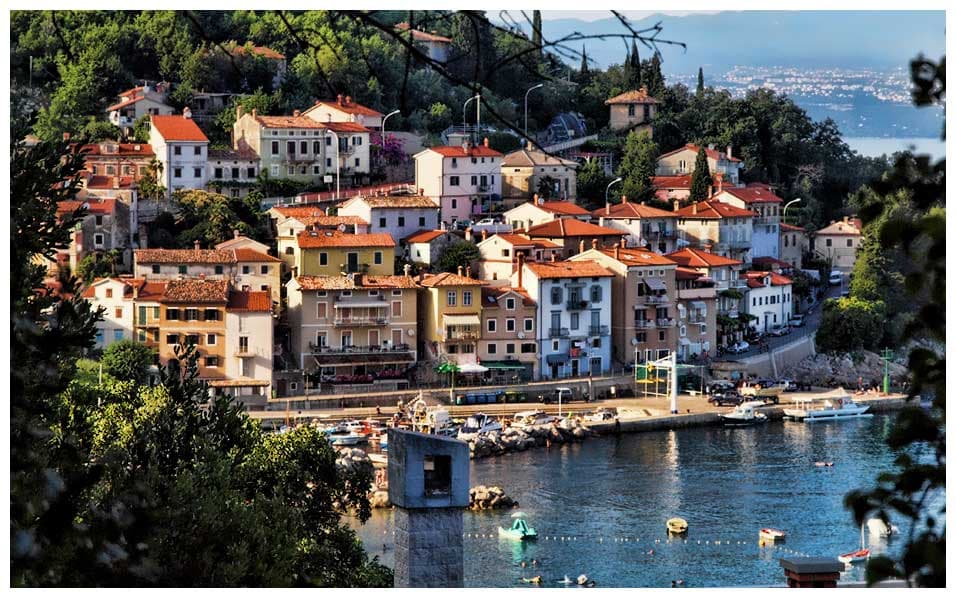
Mošćenička Draga
Village · Kvarner

Related guides
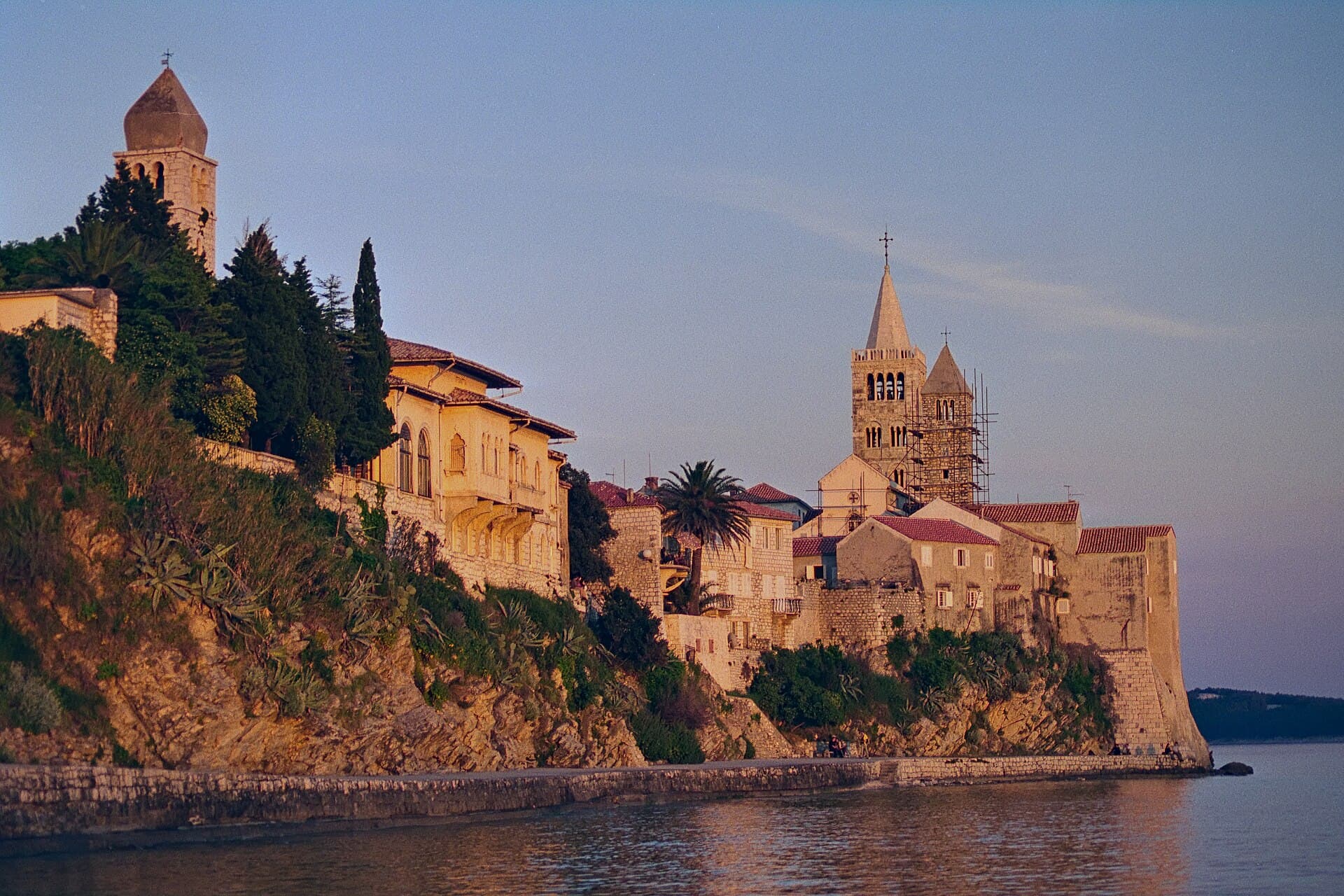
Rab
Rab's old town has a clear silhouette, but it rewards more than a postcard view. Its four towers mark distinct religious sites: the Assumption of Mary, St John the Evangelist, St Andrew and…
Read the guide
Help improve this page
Spot something missing or wrong? Suggest a correction, add your photo or report a problem. Editors review every suggestion before it is published.
Photo credits
- Mošćenice, Kraj, Mošćenička Draga — Roberta F. · CC BY-SA 3.0 · Wikimedia Commons
- Mošćenička Draga — Mario Fajt · CC BY 2.0 · Wikimedia Commons
- Sveta Jelena, Golovik — User:P199 · CC BY-SA 4.0 · Wikimedia Commons
- Brseč — Aconcagua (talk) · CC BY-SA 3.0