About this place
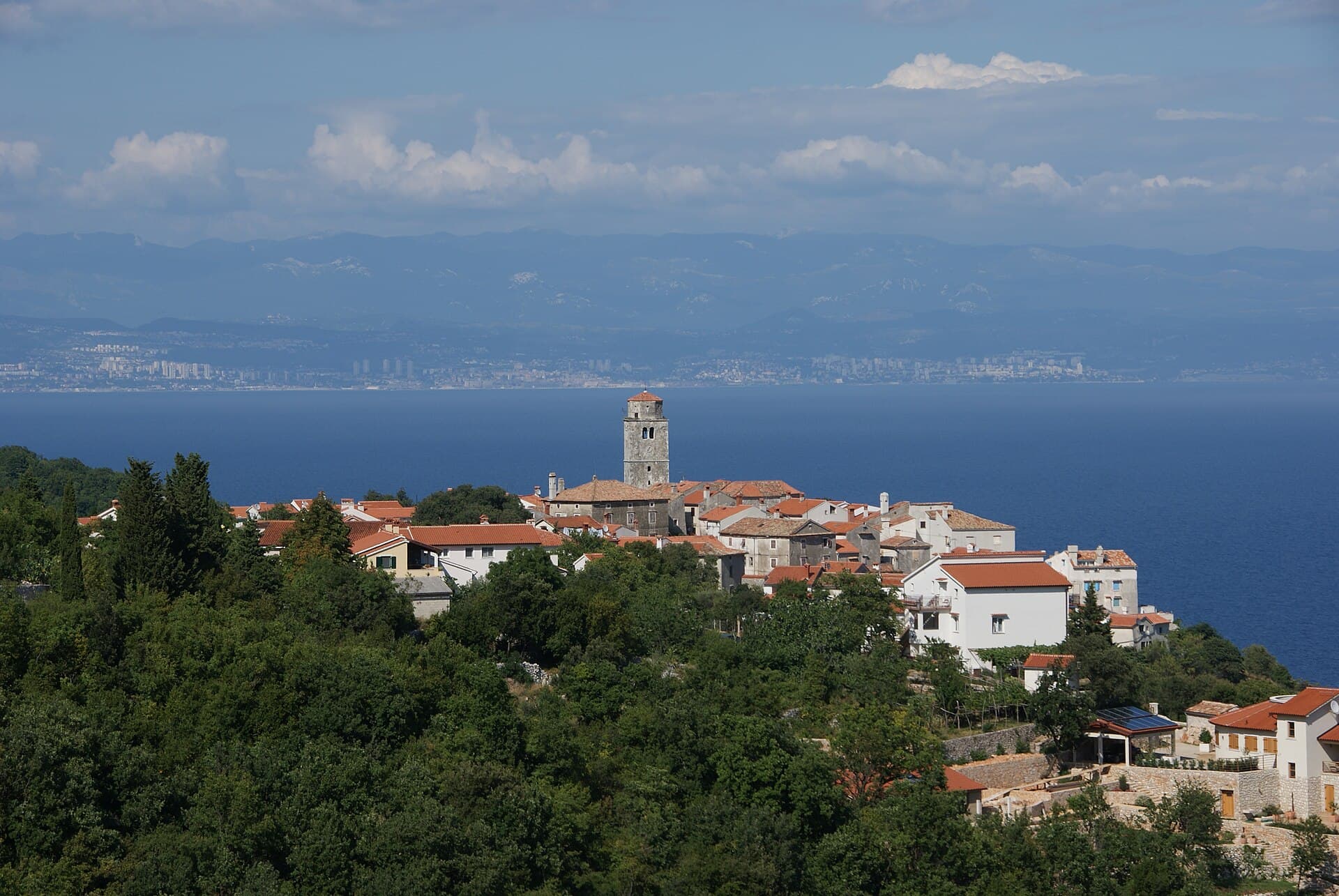
Brseč stands on a rocky bluff 157 metres above the Kvarner, beside the coastal road linking Opatija and Labin. Its compact skyline is shaped by tightly packed stone houses, remnants of defensive walls and the bell tower of St George’s parish church, which once doubled as a lookout and strongpoint. Inside the old town, narrow passages, vaulted alleys, Glagolitic inscriptions and mostly 17th-century houses survive. The central square contains the town cistern and an 1868 schoolhouse, while the loggia at the entrance displays a bust of Eugen Kumičić, the novelist and politician born here. His birthplace now houses a library and the Eugen K gallery. Far below lies Klančac Cove, while the isolated 15th-century church of St Mary Magdalene commands a memorable view towards Cres. Brseč consequently offers two sharply contrasting experiences: a medieval hilltop settlement and swimming beneath steep coastal cliffs. Olive groves, a surviving traditional olive mill and sculptor Ljubo de Karina’s nearby studio in Zagore add further layers to a village whose appeal extends well beyond its beach.
Brseč is a historic town on Istria’s eastern coast, although administratively it belongs to Mošćenička Draga municipality in Primorje-Gorski Kotar County. Its old core developed over a prehistoric hillfort, and fragments of later defences remain embedded in the outer rows of houses. Written records reach back to 1102, while successive rule by the bishops of Pula, the Lords of Duino, the Counts of Gorizia and the County of Pazin helped shape the medieval and early modern settlement. Stone houses, gateways and a bell tower built partly for defence give Brseč an unusually compact, fortified appearance. Its cliff-top setting keeps the historic streets visually tied to Cres and the open Kvarner below.
Stays nearby
 Apartment
Apartmeni Klenovica.eu
Klenovica
49 km from Brseč
up to 4 guests · 1 bedroom
The host confirms the exact price for your dates and availability.
Things to see
St George’s parish church is the principal monument inside the old town: its Baroque interior preserves late Gothic fresco fragments attributed to Master Albert, painted altarpieces and carved 17th-century altars. The separate 15th-century church of St Mary Magdalene crowns the coastal bluff and forms a distinctive landmark when Brseč is seen from the sea. A Romanesque church dedicated to St Stephen stands in the cemetery, its orientation altered by a later Baroque extension. The Mašunerija was built in 1654 by the priest Juraj Mavrović as an endowed residence with a loggia and service rooms. The gateways, cistern, old olive mill and Kumičić birthplace with the Eugen K gallery complete the architectural circuit.
Beaches
Klančac is Brseč’s closest swimming spot, tucked into a deep cove directly below the village and enclosed by high cliffs. The official Riviera map marks it as a beach, reached from the settlement by a steep descent that becomes a demanding climb on the return. Pale pebbles and blue-green water define the cove, although its confined setting leaves limited room at the height of summer. Municipal planning documents also record heavy traffic pressure on the access road, making a car descent a poor choice at peak times. The same official map shows the natural coves of Uboka and Jelenšćica farther along the coast; both require more demanding approaches than a conventional roadside beach.
Things to do
Begin at the town loggia and Eugen Kumičić’s bust, then pass beneath the vaulted alleys towards the cistern and the school built in 1868. Continue to St George’s parish church, where fragments of late Gothic frescoes survive alongside carved 17th-century altars. After exploring the stone lanes, walk to the church of St Mary Magdalene at the edge of the bluff for views across the cove towards Cres. Klančac is the natural next stop for a swim, but allow energy for the steep climb back to the village. An art-focused finale can include the Eugen K gallery in Kumičić’s birthplace or Ljubo de Karina’s studio roughly two kilometres away in Zagore.
Food and drink
Konoba Batelan is Brseč’s clearly documented dining address and the only venue in the village specifically included in the local tourist board’s Riviera-wide restaurant list. Its setting belongs to the broader culinary landscape of Mošćenička Draga, known for Kvarner—locally called Draški—scampi, olive-oil cooking, wild asparagus in spring and chestnut desserts made with local maruni in autumn. A wider choice of seafood restaurants is available down in Mošćenička Draga, where the official list includes Johnson, Nostromo and Na Rivi kod Benita, as well as Sidro, Marina and Mediteran. Nearby alternatives named by the tourist board are Perun in Mošćenice and Slamnjaki in Sveta Jelena.
Practical information
Practical information
Visitor information for Brseč is provided by the Mošćenička Draga Municipal Tourist Board at Aleja Slatina in Mošćenička Draga, telephone +385 51 739 166. The official Brseč map identifies a shop, ATM, bus stop, children’s playground, restaurant and parking, although these facilities sit at different elevations between the historic core and the coast. The route to Klančac is steep, so footwear with reliable grip makes both the descent and return safer. Visits to the Eugen K gallery and Ljubo de Karina’s studio are best arranged in advance, as Brseč does not operate a large museum complex with continuous daily admission. Broader everyday services are concentrated in the municipal centre of Mošćenička Draga.
Getting there and around
Brseč sits on the Labin–Opatija coastal road and is reached by car either from Plomin or from Mošćenička Draga. Autotrolej route 32A links Mošćenička Draga, Mošćenice, Brseč and Zagore, with route 32 providing onward connections towards Opatija and Rijeka; the timetable issued on 4 November 2025 shows that services through Brseč are much less frequent than those on the main Rijeka–Lovran corridor. The village bus stop appears on the official local map. Klančac is far below both the stop and the historic core, so reaching the beach involves a substantial descent followed by an uphill return. On a day trip, exploring the old town before swimming makes the route easier to manage.
Frequently asked questions
How high above the sea is Brseč?
Brseč’s historic core occupies a cliff approximately 157 metres above sea level.
Where was Eugen Kumičić born?
Eugen Kumičić was born in Brseč, and his birthplace now serves as a library and the Eugen K gallery.
Which bus serves Brseč?
Autotrolej route 32A links Brseč with Mošćenička Draga, Mošćenice and Zagore under the timetable issued on 4 November 2025.
What is Brseč’s best-known beach?
Klančac lies in a cove directly below Brseč and is reached by a steep descent from the village area.
Nearby
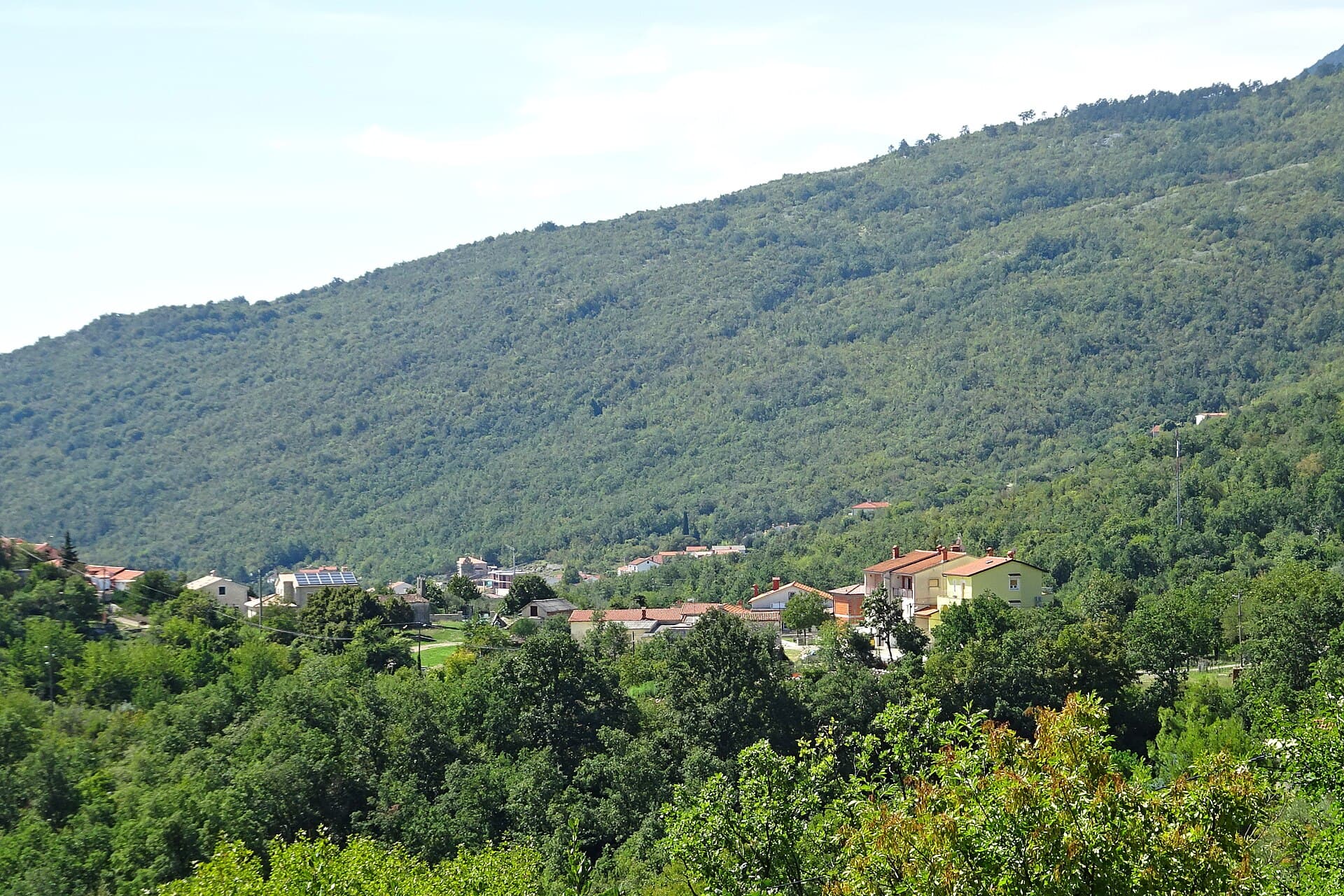
Golovik
Village · Kvarner

Related guides
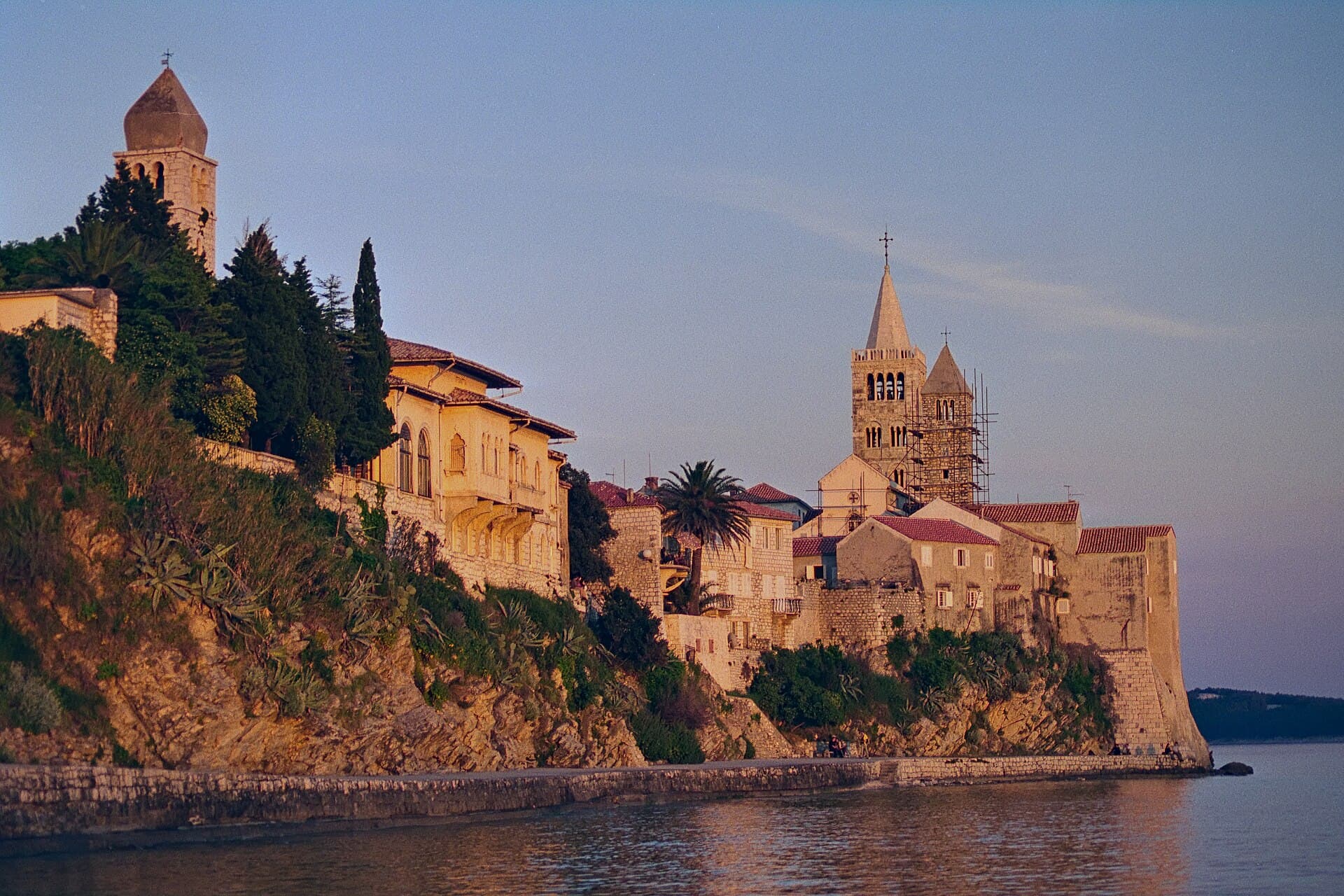
Rab
Rab's old town has a clear silhouette, but it rewards more than a postcard view. Its four towers mark distinct religious sites: the Assumption of Mary, St John the Evangelist, St Andrew and…
Read the guide
Help improve this page
Spot something missing or wrong? Suggest a correction, add your photo or report a problem. Editors review every suggestion before it is published.
Photo credits
- Brseč, Plomin — Aconcagua (talk) · CC BY-SA 3.0 · Wikimedia Commons
- Golovik, Sveta Jelena — User:P199 · CC BY-SA 4.0 · Wikimedia Commons
- Mošćenice — Roberta F. · CC BY-SA 3.0 · Wikimedia Commons
- Kožljak — Crovata · CC BY-SA 4.0