
About this place
Long inlets, the pinewoods of Čikat and the Osoršćica ridge above Nerezine give Lošinj its distinctive outline. At Osor, an artificial channel separates it from Cres, with a swing bridge carrying the road between the islands. On southern Lošinj, Mali Lošinj brings together the working harbour, former captains' houses and the Museum of Apoxyomenos. Veli Lošinj has a smaller harbour, a defensive tower and the neighbouring fishing inlet of Rovenska. The bronze athlete recovered near Vele Orjule now stands in the Kvarner Palace, giving the island's underwater archaeology a compelling address on land. Lošinj's bathing spots vary considerably: Veli žal has a pebbly entrance, Artatore combines rock with shingle, and Čikat links pinewoods with developed waterfront beaches. Above Nerezine, paths climb towards Televrin and the chapel of St Nicholas, a different undertaking from the coastal walks around Mali Lošinj. In Veli Lošinj, the Blue World Institute introduces bottlenose-dolphin research through exhibitions and education. Passenger boats from Mali Lošinj also serve Susak, Unije and Vele Srakane; Susak's deep sandy deposits provide a striking contrast to Lošinj's rocky shores.
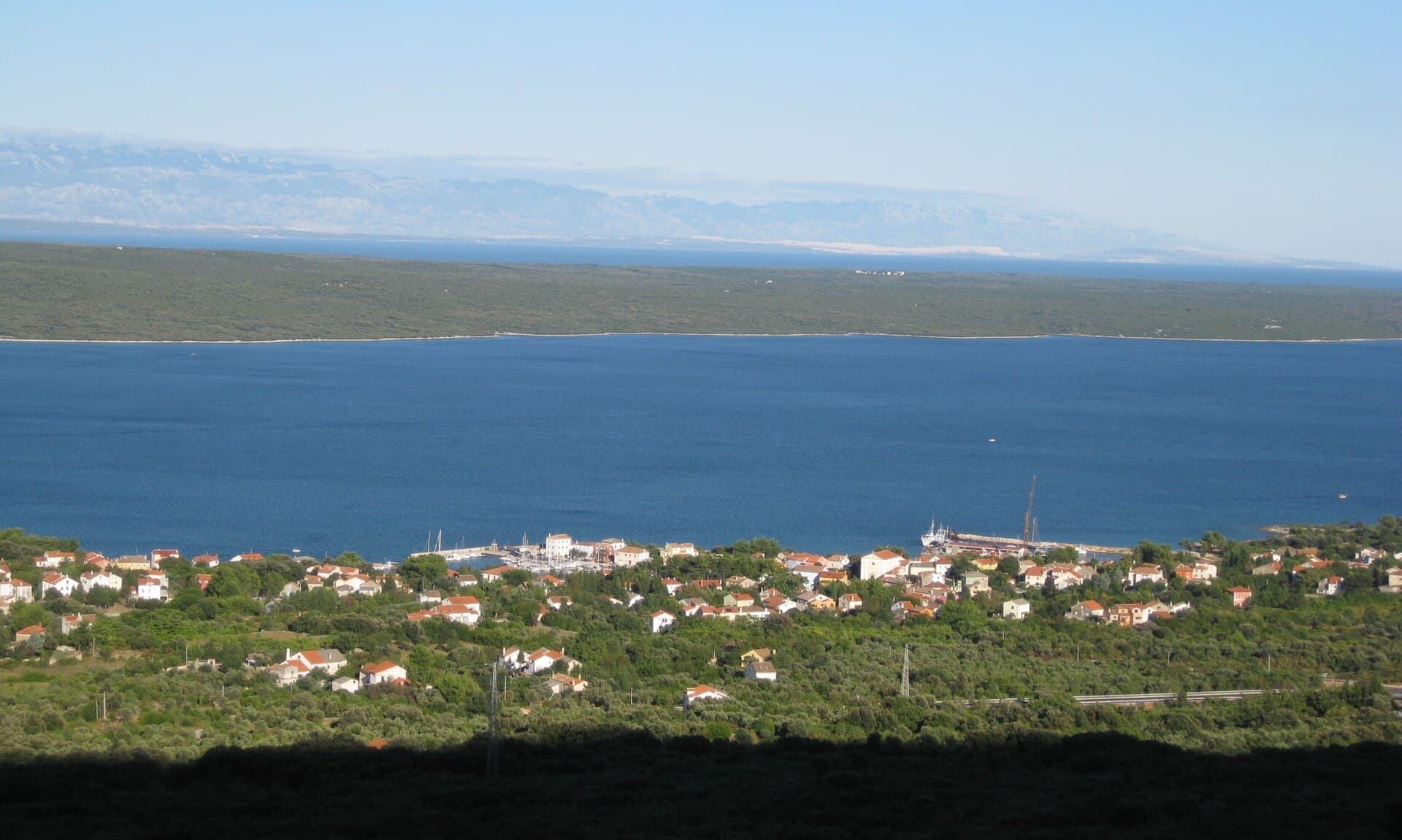
Osoršćica defines northern Lošinj, while south of Ćunski the land descends towards a deeply indented coast and the island's two largest settlements. Nerezine began around cultivated fields below the ridge; shipping gradually shifted its centre of gravity towards the harbour and shipyard. Studenac Square remains the focal point of Nerezine, beside the parish church built in the nineteenth century. Mali Lošinj occupies a long, sheltered inlet, unlike the more exposed setting of Veli Lošinj on the island's eastern side. Near Mali Lošinj, the Privlaka channel cuts through a low isthmus, bringing sea passages into the course of short road journeys.
Top places
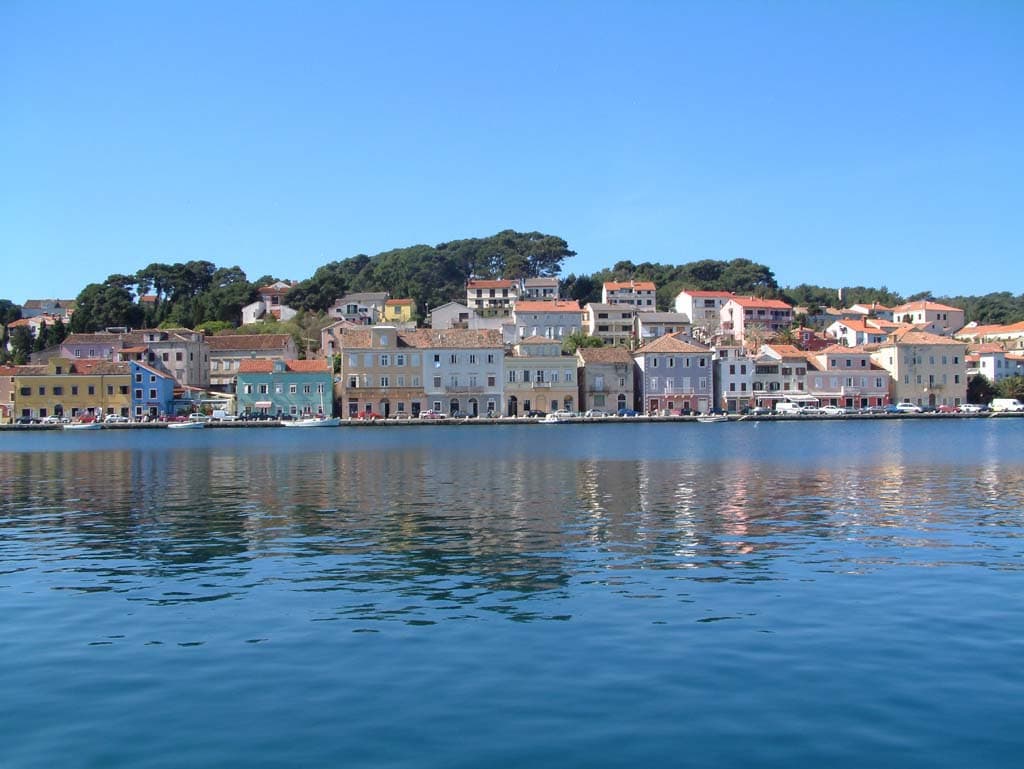
Mali Lošinj
Town · Lošinj
Stays
No stays listed here yet
Things to see
The Museum of Apoxyomenos, in Mali Lošinj's Kvarner Palace, is devoted to the bronze athlete raised from the sea on 27 April 1999. Found at a depth of 45 metres near Vele Orjule, the statue is presented through the story of its discovery and lengthy conservation. Veli Lošinj's fifteenth-century Tower Museum displays captains' portraits, navigational instruments and a model of Esempio, a sailing vessel built at Rovenska in 1877. On the tower's ground floor, a replica of Apoxyomenos lies in the position in which the original was found underwater. The original sculpture remains in its dedicated museum in Mali Lošinj.

Culture and history
Beaches
Veli žal in Sunčana Uvala has a pebbly entrance to the sea, with a coastal path linking it to the bathing areas around Čikat. Northwest of Mali Lošinj, Artatore follows a bay of rocky stretches and smaller shingle beaches backed by pines. Near Veli Lošinj, Rovenska combines a fishing harbour with a pebble beach, allowing a swim to be paired with a walk around the breakwater. Lošinj's official beach directory identifies designated dog-bathing areas at Annunziata in Čikat, Srebrna Uvala, Kovčanje, Valdarke and Artatore. These locations offer different starting points for visitors staying on the western shore, around Artatore or in Veli Lošinj.
Things to do
Start a coastal walk around Mali Lošinj at Borik, continuing through Sunčana Uvala and Veli žal towards Cape Annunziata and Čikat. Beside the path stands the sixteenth-century Annunziata chapel, associated with the island's seafarers. For an elevated view, Providenca on Umpiljak combines a 300-metre Apsyrtides educational trail with 28 panels introducing the archipelago. Its tables bear the names of Lošinj vessels or captains, carrying maritime history beyond the museum walls. In Veli Lošinj, explore the harbour before following the shore to Rovenska, where fishing houses and a breakwater create a different waterfront from the hotel-lined bays of Čikat.
Activities
Osoršćica can be approached on foot from Nerezine or Osor, while traversing the ridge from Ćunski makes a longer island hike. Televrin forms the highest part of the ridge; the chapel of St Nicholas stands on a separate prominent summit. The climb from Nerezine leaves the seaside settlement for rocky mountain terrain, where beach footwear is no substitute for walking boots. For a route without that ascent, follow the coast through Borik, Veli žal, Annunziata and Čikat. Continuing via Srebrna and Zlatna coves towards Boka Falsa and Monte Baston adds a wooded stretch before returning towards Velopin.
Day trips
From Mali Lošinj, Susak offers an excursion to an island mantled in deep sand, with Gornje Selo above the harbour-side Donje Selo. On Unije, the only village faces west, while cultivated fields and olive-growing country extend inland. In 2026, Jadrolinija's passenger route 310 links Mali Lošinj with Unije, Susak and Vele Srakane without carrying cars. The sequence of calls and the return sailing determine the time available on each island. Give Susak its own walking itinerary through the settlement and sandy landscape; choose Unije for its village waterfront, agricultural plain and olive-growing surroundings.
Events
From 5 to 19 September 2026, LOSINAVA celebrated Lošinj's seafaring heritage through regattas, concerts, talks and workshops. The LOSINAVA POINT programme in Mali Lošinj's main square included maritime and fishing skills alongside local products. Across the channel at Osor, on Cres, the 51st Osor Musical Evenings ran from 20 July to 23 August 2026. Ivo Pogorelić was among the performers, giving his recital in the former cathedral. The festival's closing programme took place in the square, while most concerts used the church interior, making the venue an important part of an evening excursion from Lošinj.
Food and drink
Opened in 1972, Restaurant Artatore is rooted in its namesake bay and a family cooking tradition that uses island herbs. Its presentation for the 2025 Taste of Vitality programme featured crab soup, scampi with polenta and lemon sorbet with Lošinj myrtle. Veli žal, overlooking the beach in Sunčana Uvala, serves Cres lamb, Adriatic fish and homemade pasta. For a meal in Mali Lošinj's harbour, Baracuda at Priko 31 focuses on fish and seafood. Choosing between Artatore, Veli žal and Priko also means choosing the setting: a smaller bay, a resort beach or the town's working waterfront.
Towns
All other placesShow all 1Hide list
Practical information
Practical information
Distinguish the island of Lošinj from the town of Mali Lošinj when choosing accommodation: Nerezine, Ćunski and Veli Lošinj are separate settlements and give different starting points for exploring. Mali Lošinj's tourist office is at Priko 42, while the Museum of Apoxyomenos is at Riva lošinjskih kapetana 13. The Blue World Institute is at Kaštel 24 in Veli Lošinj, not in Mali Lošinj's harbour. Driving from Cres involves crossing Osor's swing bridge, which opens to let boats through the channel. Include that crossing when planning a road journey to catch a sailing from Mali Lošinj.
Parking
In its 2026 notices, Lošinj usluge separates central zone 0 on Priko and Braće Vidulića Street from zone 1, which includes Bočac, the health centre and Zagazinjine. The operator also lists parking by the supermarket in Nerezine, so its information is not limited to Mali Lošinj itself. Bmove payments use the zone displayed at the parking area, and the published SMS numbers also differ between zones. Aquapark Čikat has a separate entrance and its own car park, removing the need to use Mali Lošinj's harbour-side parking when visiting the pool complex.
Getting there and around
Drivers reach Lošinj through Cres: either by the Brestova-Porozina ferry from Istria or the Valbiska-Merag crossing from Krk, then by road towards Osor. The bridge over Osor's channel connects Cres with Lošinj, followed by Nerezine and the settlements farther south. In 2026, Jadrolinija operates catamaran route 9308 from Rijeka to Mali Lošinj, with intermediate island calls varying by departure. Since 3 July 2026, the service has again used Mali Lošinj's restored Vela Riva quay. A separate passenger service, route 310, serves Susak, Unije and Vele Srakane; cars stay on Lošinj for that circular island journey.
Frequently asked questions
Is there a ferry between Cres and Lošinj?
Cres and Lošinj are connected by a road bridge over the channel at Osor. Drivers normally use a ferry to reach Cres from Brestova or Krk, not to cross from Cres to Lošinj.
Where can I see the original Lošinj Apoxyomenos?
The original bronze is displayed in the Museum of Apoxyomenos in Mali Lošinj's Kvarner Palace. The Tower Museum in Veli Lošinj displays a replica, not the original statue.
Does Lošinj have a dolphin education centre?
The Blue World Institute runs the Lošinj Marine Education Centre at Kaštel 24 in Veli Lošinj. Its exhibitions and education programmes explain the marine environment and bottlenose-dolphin research in the Adriatic.
Where do walks up Osoršćica start?
Nerezine and Osor are established starting points for Osoršćica in the northern part of the island area. A traverse from Ćunski is a longer mountain route.
Related guides
Mali Lošinj
Use the harbour as your starting point, but do not reduce Mali Lošinj to its waterfront. The Apoxyomenos Museum belongs to this everyday urban setting, whereas Čikat offers a different…
Read the guide

Help improve this page
Spot something missing or wrong? Suggest a correction, add your photo or report a problem. Editors review every suggestion before it is published.
Photo credits
- Lošinj, Mali Lošinj — K. Korlevic · Public domain · Wikimedia Commons
- Nerezine — Sl-Ziga · CC BY-SA 3.0 · Wikimedia Commons
- Veli Lošinj — Sti2 · CC BY-SA 3.0 · Wikimedia Commons
- Ćunski — August Dominus · CC BY-SA 4.0 · Wikimedia Commons
