About this place
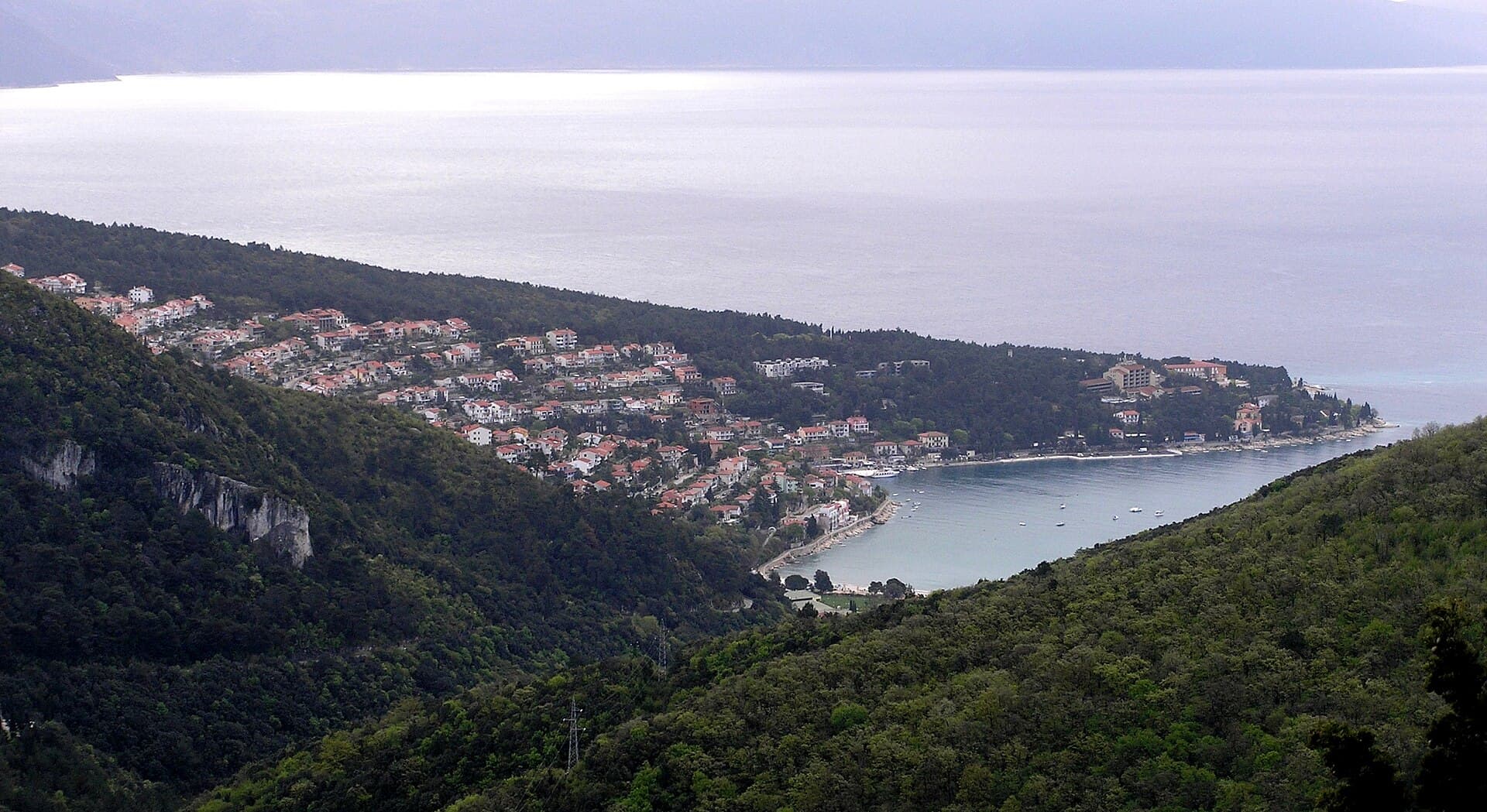
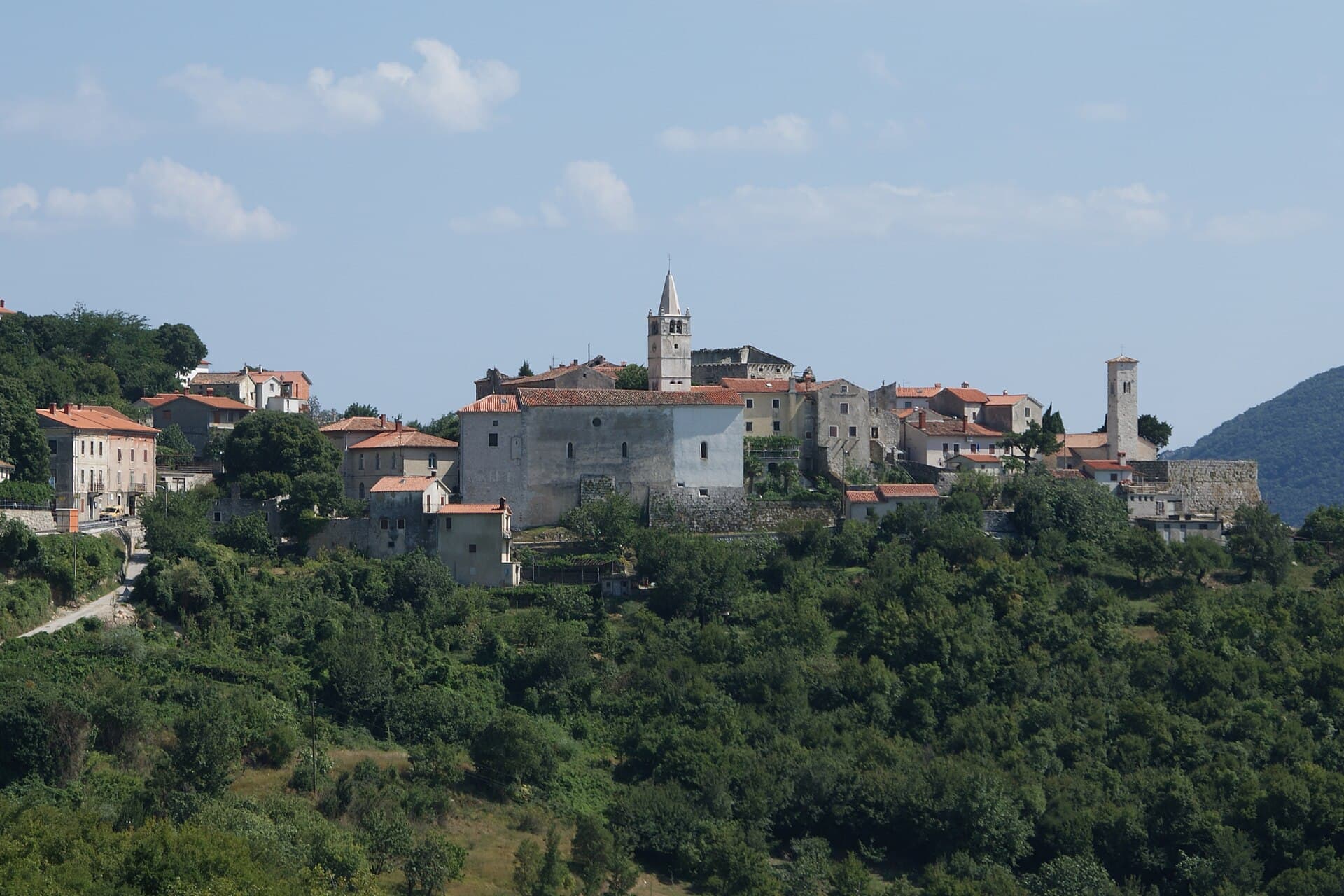
Plomin is a compact stone hill town in the Municipality of Kršan, perched almost 80 metres above the deeply indented Plomin Bay. Narrow lanes, the town gate, La Tura communal palace and surviving defensive walls form its historic core, while the settlement’s edge looks across the Kvarner towards Cres. Its defining monument is set into the Church of St George the Elder: the 11th-century Plomin inscription, carved in rounded Glagolitic script on an ancient relief of the god Silvanus. A single stone therefore brings together the area’s Illyrian-Roman legacy and early Croatian literacy. The second Church of St George preserves a fresco painted by Albert of Constance in 1475, rewarding visitors who look beyond the famous inscription. The sea lies below at Plomin Luka, where a waterfront path leads towards Dražine beach and onwards in the direction of Cape Mašnjak. In late spring, blue-violet Istrian bellflowers transform walls and façades. Plomin particularly suits travellers wishing to combine a short walk through a medieval settlement, cliff-top views over eastern Istria and a swim in the bay.
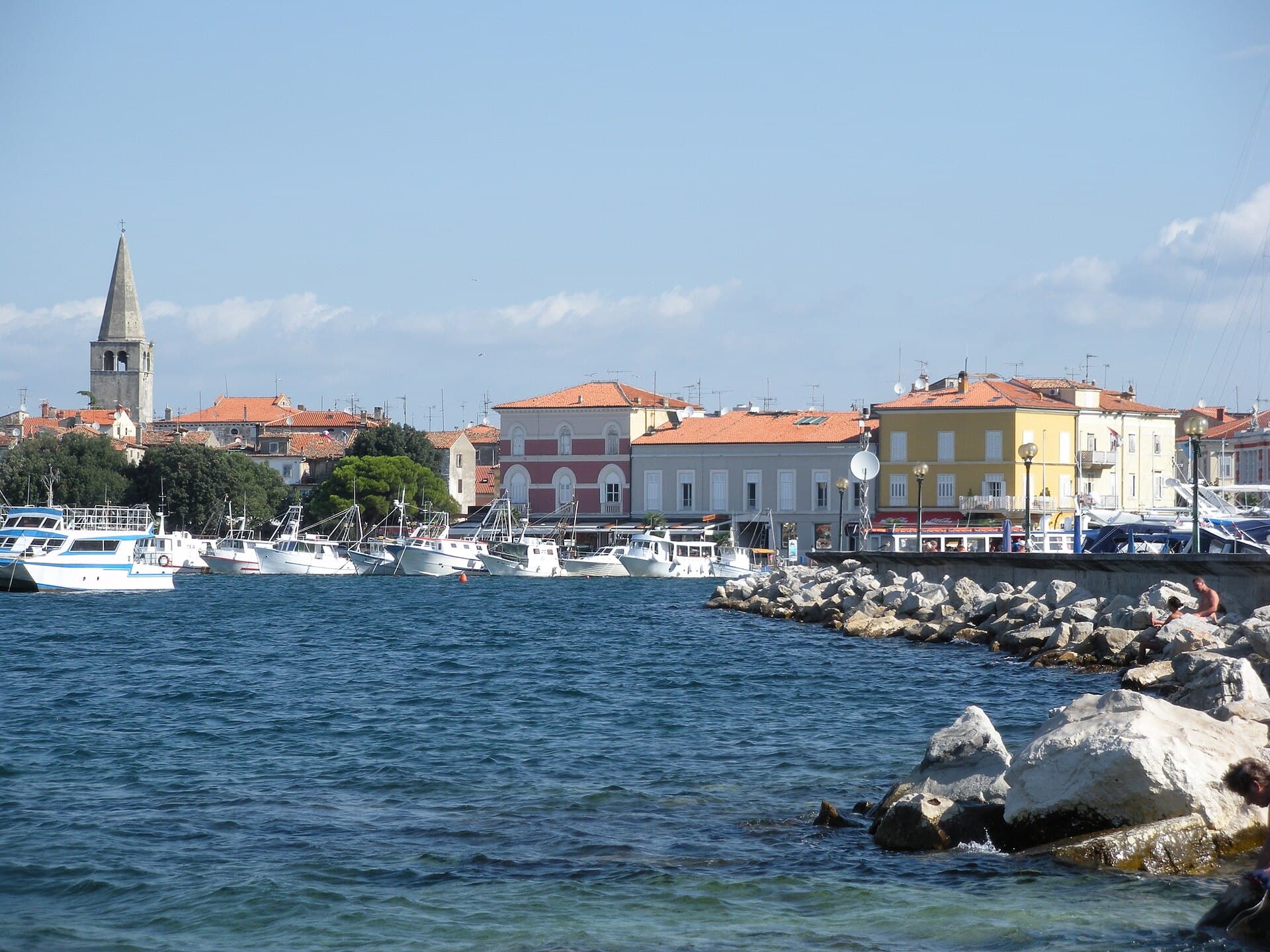
Plomin and Plomin Luka are distinct places: the historic settlement stands high above the bay, while the harbour and beach occupy the waterfront below. Ancient Flanona developed at a strategic point on eastern Istria, and today’s core is defined by its defensive edge, stone houses and the square containing La Tura communal palace. Views extend across Plomin Bay and the Kvarner towards Cres, making the town a natural stop on the coastal road between Labin and Rijeka. Plomin gains an unusual seasonal signature in late May and early June, when Istrian bellflowers bloom across the old town’s walls, churches and terraces.
Stays nearby
 Apartment
Apartmeni Klenovica.eu
Klenovica
52 km from Plomin
up to 4 guests · 1 bedroom
The host confirms the exact price for your dates and availability.
Things to see
The Romanesque Church of St George the Elder dates from the 11th century and is accompanied by a bell tower about 15 metres high. Its wall holds the Plomin inscription, an ancient relief of Silvanus to which a short text in rounded Glagolitic script was added in the 11th century; the original is kept in storage and a cast is displayed on the church. The second St George’s Church is notable for a large fresco painted by Albert of Constance in 1475. Plomin’s secular heritage includes La Tura communal palace, the town gate, stretches of defensive wall, and Renaissance and Baroque houses lining its steep lanes.
Beaches
Bathing water quality nearby
- Plominski zaljev - Dražine zapad · 527 mexcellent · season 2025
- Plominski zaljev - Dražine istok · 577 mexcellent · season 2025
Source: European Environment Agency (EEA); data from Croatian authorities. · bathing water profile
Things to do
Enter the historic core and locate La Tura first, where a web of narrow passages branches between old stone houses. Continue to the Church of St George the Elder to see the cast of the Plomin inscription on its exterior wall, then seek out the second St George’s Church and its 1475 fresco. Finish the upper-town circuit at the defensive edge or viewpoint overlooking the bay and Cres. In the afternoon, descend to Plomin Luka and follow the waterfront path for about a kilometre towards the beaches. Cape Mašnjak lies several hundred metres farther on and must be approached from the sea, for example by paddleboard or boat.
Practical information
Practical information
Visitor information is provided by the Kršan Tourist Board, whose office at Vozilići 66 lists the telephone number +385 52 880 155. An information point in Plomin’s old centre helps visitors interpret the churches, inscription and historic buildings. Shoes with a firm sole are sensible on the steep stone lanes, while swimming requires a separate descent to Plomin Luka. Late May and early June offer a distinctive reason to visit, as Istrian bellflowers cover Plomin’s walls and terraces in blue and violet blooms.
Getting there and around
Plomin lies on eastern Istria’s coastal road between the Rijeka and Labin directions, and its bus stop is used by services linking it with both towns. Arriva publishes several daily Rijeka–Labin departures in 2026, but passengers should confirm that their chosen service actually calls at Plomin rather than assuming every through bus stops there. A car is generally more practical for exploring the old settlement than relying on limited local connections. Plomin Luka occupies the lower part of the bay, so transport to the beach should be planned separately from a visit to historic upper Plomin.
Frequently asked questions
Where is the Plomin inscription?
The inscription belongs to the exterior wall of St George the Elder; a cast is displayed there, while the original relief is kept in storage for protection.
Can you swim in old Plomin?
Not beside the historic core; swimming is down in Plomin Luka, where Dražine and the waterfront path are located.
When does the Istrian bellflower bloom in Plomin?
The blue-violet flowers on Plomin’s walls are most conspicuous in late May and early June.
Is there parking near the old centre?
Yes. Small parking areas are available beside old Plomin and near the viewpoint.
Nearby

Plomin Luka
Village · Istria

Related guides

Novigrad
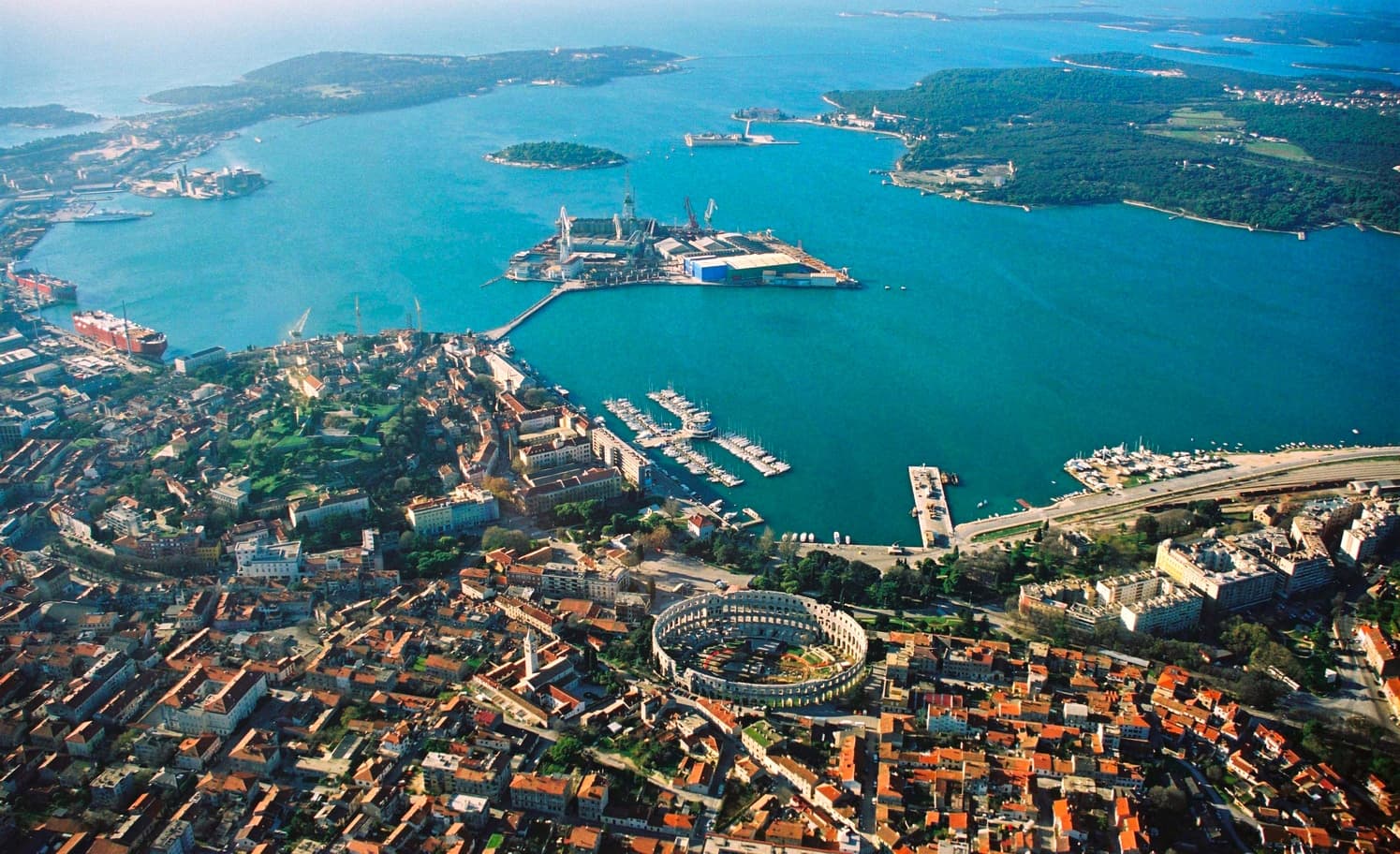
Novigrad-Cittanova developed on Istria’s north-western coast near the mouth of the Mirna, in a maritime setting that shaped centuries of fishing and trade. The historic centre still…
Read the guide
Help improve this page
Spot something missing or wrong? Suggest a correction, add your photo or report a problem. Editors review every suggestion before it is published.
Photo credits
- Plomin — Aconcagua (talk) · CC BY-SA 3.0 · Wikimedia Commons
- Plomin Luka — Ex13 · CC BY-SA 3.0 · Wikimedia Commons
- Vozilići — SIG SG 510 · CC0 · Wikimedia Commons
- Kožljak — Crovata · CC BY-SA 4.0 · Wikimedia Commons
- Kršan