Vrgada
About this place
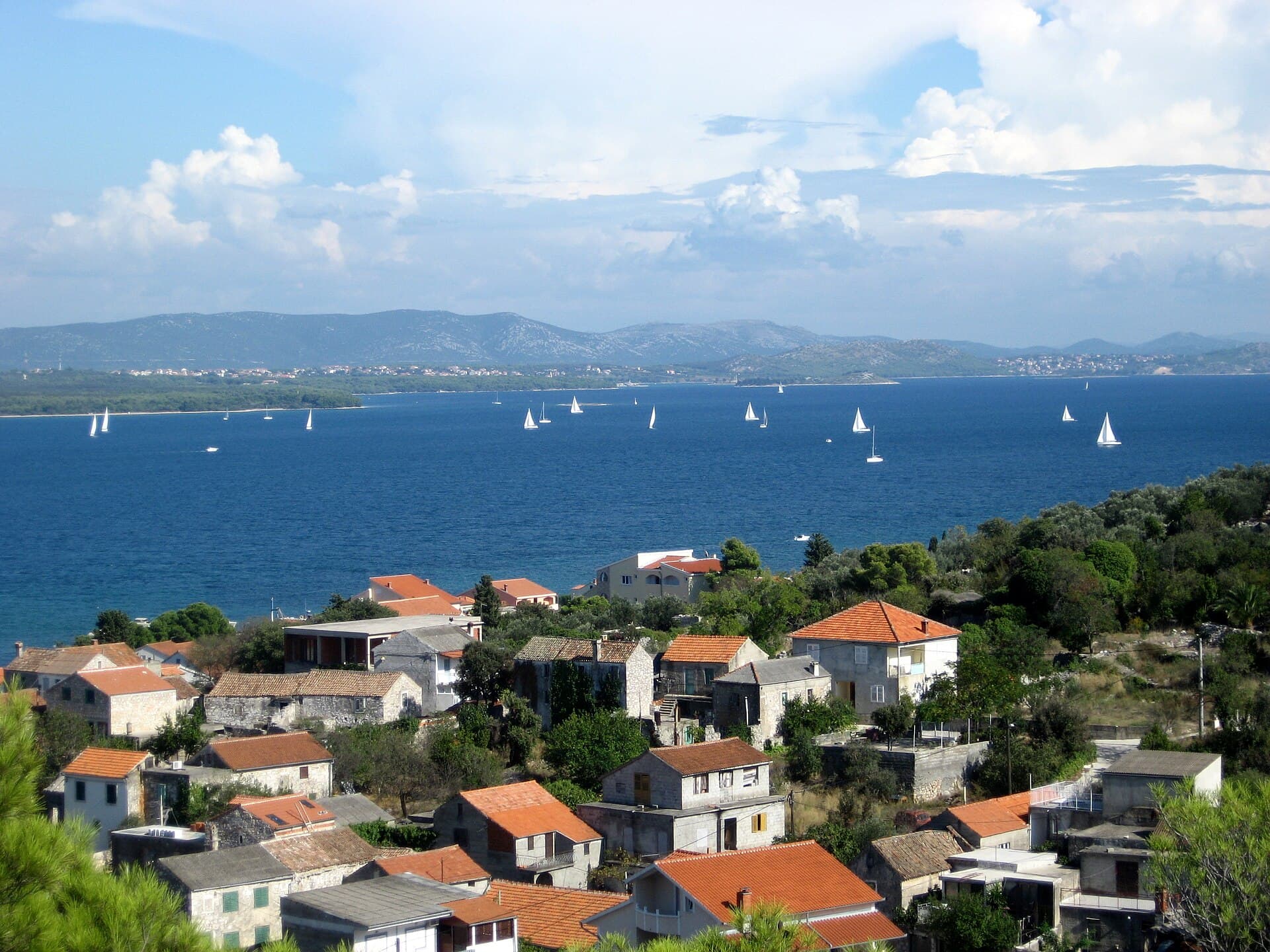
Vrgada is a small inhabited island in the Pakoštane archipelago, roughly 2.5 nautical miles offshore and served from Pakoštane and Biograd na Moru by state passenger-ship route 415. With no car traffic on the island, the stone lanes, churches, fields and beaches are naturally explored on foot. A fertile plain occupies the centre, while Gradina above it preserves traces of a Late Antique or early Byzantine fort and opens views across the surrounding islets. The old Church of St Andrew stands beside the sandy bay of Pržina, while Podbrizi is immediately recognisable for its red-gold sand. Kranje combines a sandy seabed with pine shade, and the three coves of Dražice reveal another side of Vrgada’s coastline. This is not an island for driving between a packed list of attractions: its tempo follows the passenger boat, fishing harbour and footpaths between coves. A day trip is best organised around the 2026 sailing schedule, leaving time for Gradina, St Andrew’s and at least one southern beach.
Vrgada belongs to the Municipality of Pakoštane, yet its village has neither a road link to the mainland nor ordinary car traffic. The island stands at the entrance to the Pašman Channel, a position that historically allowed control of maritime routes along the Adriatic. Its interior contains a fertile field enclosed by low hills, while fishing shelters, sandy coves and thirteen surrounding islets articulate the coast. Vrgada is consequently both a living island community dependent on the boat from Pakoštane and an old maritime waypoint whose strategic importance becomes clearest from the hill of Gradina.
Stays nearby
 Apartment
Apartmeni Klenovica.eu
Klenovica
Klenovica, 148 km from Vrgada
up to 4 guests · 1 bedroom
The host confirms the exact price for your dates and availability.
Things to see
Gradina is Vrgada’s principal historic site: the hill preserves remains of a fort associated with Late Antiquity and the supervision of traffic through the Pašman Channel. Below it, St Andrew’s Bay contains the Church of St Andrew, whose earlier phase belongs to the early medieval period. The village has the parish Church of the Holy Trinity, while remnants of the Damiani estate—including the Chapel of Our Lady of Health and surviving wall sections—recall the island’s early modern landowners. These sites stand close enough to form a single walking circuit rather than separate excursions.
Beaches
Podbrizi, also called the Golden Beach, stands out for red-gold sand beneath the island’s coastal slope. Pržina occupies the broad, shallow Bay of St Andrew on the southern shore, close to the church of the same name. Kranje in the southeast has a sandy seabed, natural pine shade and views toward the small islands of the Vrgada archipelago. Dražice on the northeastern side comprises three quieter coves. As Vrgada’s bathing places are approached on foot rather than by car, footwear suitable for stone and earth paths is more useful than equipment planned around roadside access.
Bathing water quality nearby
- Gradina · 634 mnot classified · season 2025
Source: European Environment Agency (EEA); data from Croatian authorities. · bathing water profile
Things to do
From the harbour, walk through the village toward Gradina, tackling the rise in the morning for a broad view over the field, coastline and Vrgada islets before the strongest sun. Descend to St Andrew’s Bay, pause at its small church and continue to the sand at Pržina. In the afternoon, choose Podbrizi for its red-gold shore or Kranje for pine shade and archipelago views. Return to the harbour well before route 415 departs: every local distance is covered on foot, and missing the passenger boat can substantially alter the day because the number of sailings varies by season.
Practical information
Practical information
Vrgada has no car traffic, so luggage should be manageable on the walk between the harbour and accommodation. Operator RPZ Vrgada publishes separate seasonal and off-season timetables for route 415; travellers should consult the applicable 2026 schedule and any weather-related notices before departure. Tickets are for a passenger vessel, not a car ferry. Water, sun protection and shoes suited to the paths toward Kranje, Podbrizi and Gradina should be organised in the village, as these locations are distributed around the island rather than concentrated beside the landing point.
Parking
There is no visitor car parking on Vrgada because route 415 carries passengers and the island’s paths are used on foot. Travellers embarking in Pakoštane leave their vehicle at mainland facilities managed by the municipal company Juština. Under the parking information published for 2026, outdoor spaces in Pakoštane can be paid for at a machine, through Bmove or VPA, or by text message for zone one; enclosed car parks are paid for upon exit. Anyone staying on Vrgada for several days should confirm the permitted duration at the chosen mainland facility before boarding.
Getting there and around
State passenger-ship route 415 links Vrgada with Pakoštane and Biograd na Moru and is operated by the Vrgada fishing cooperative. Its 2026 timetable distinguishes weekdays, Sundays, public holidays and seasonal periods, so the return sailing should be chosen before walking to a distant beach. The published 2026 off-season fare is €2.40 for an adult between Vrgada and Pakoštane and €2.90 between Vrgada and Biograd. The vessel does not carry visitors’ cars: vehicles remain on the mainland, and transport on Vrgada continues on foot from the island harbour.
Frequently asked questions
Are cars used on Vrgada?
Vrgada has no visitor car traffic, and the village and beaches are reached on foot from the harbour.
Which service sails to Vrgada?
State passenger-ship route 415 connects Vrgada with Pakoštane and Biograd na Moru.
Which beach has red-gold sand?
Podbrizi is also known as the Golden Beach because of its distinctive red-gold sand.
Where can I find natural shade on Vrgada?
Kranje Bay on the island’s southeastern side combines a sandy seabed with pine shade.
Nearby

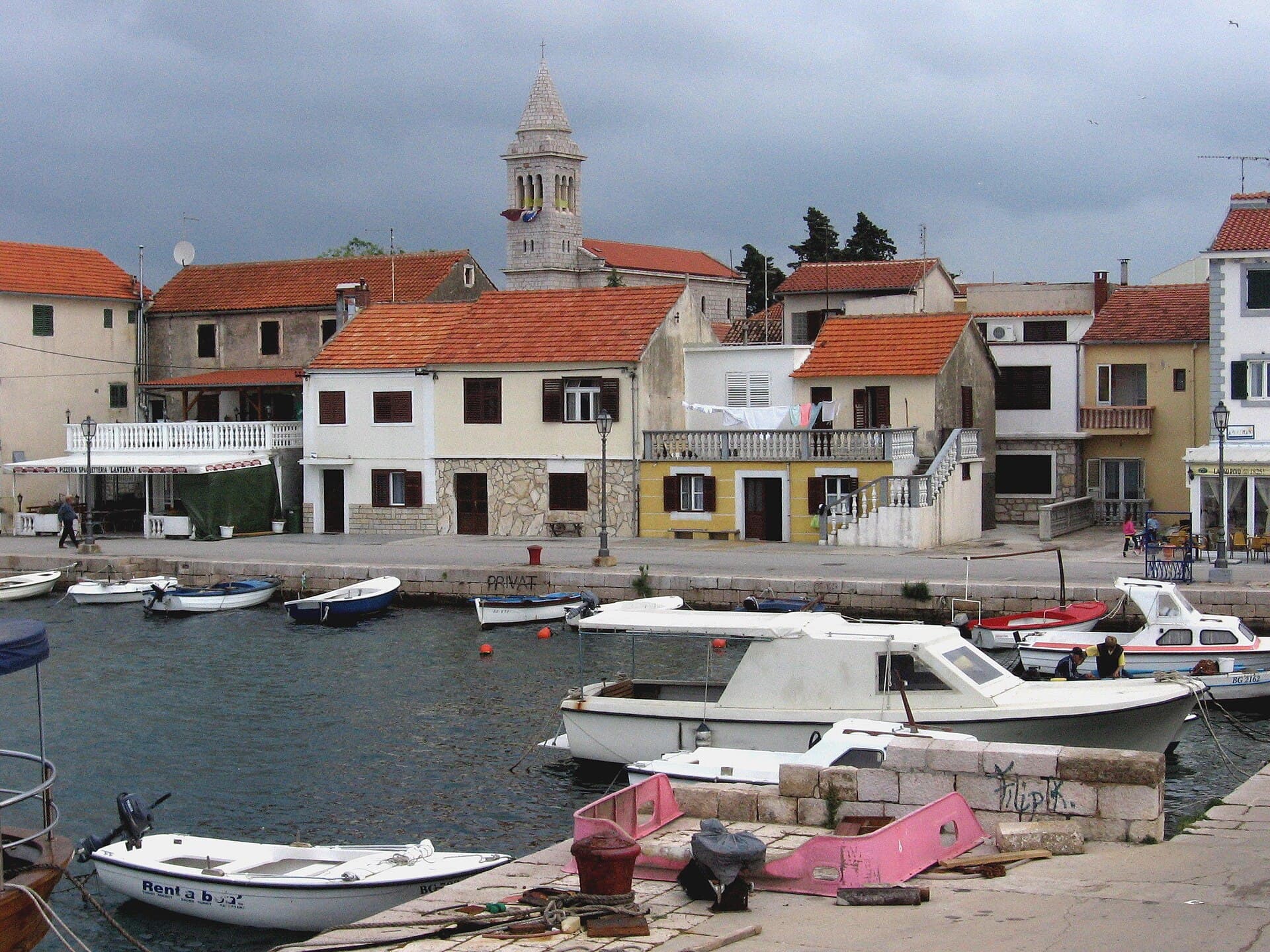
Drage, Pakoštane
Village · Dalmatia – Zadar
Related guides
Novalja
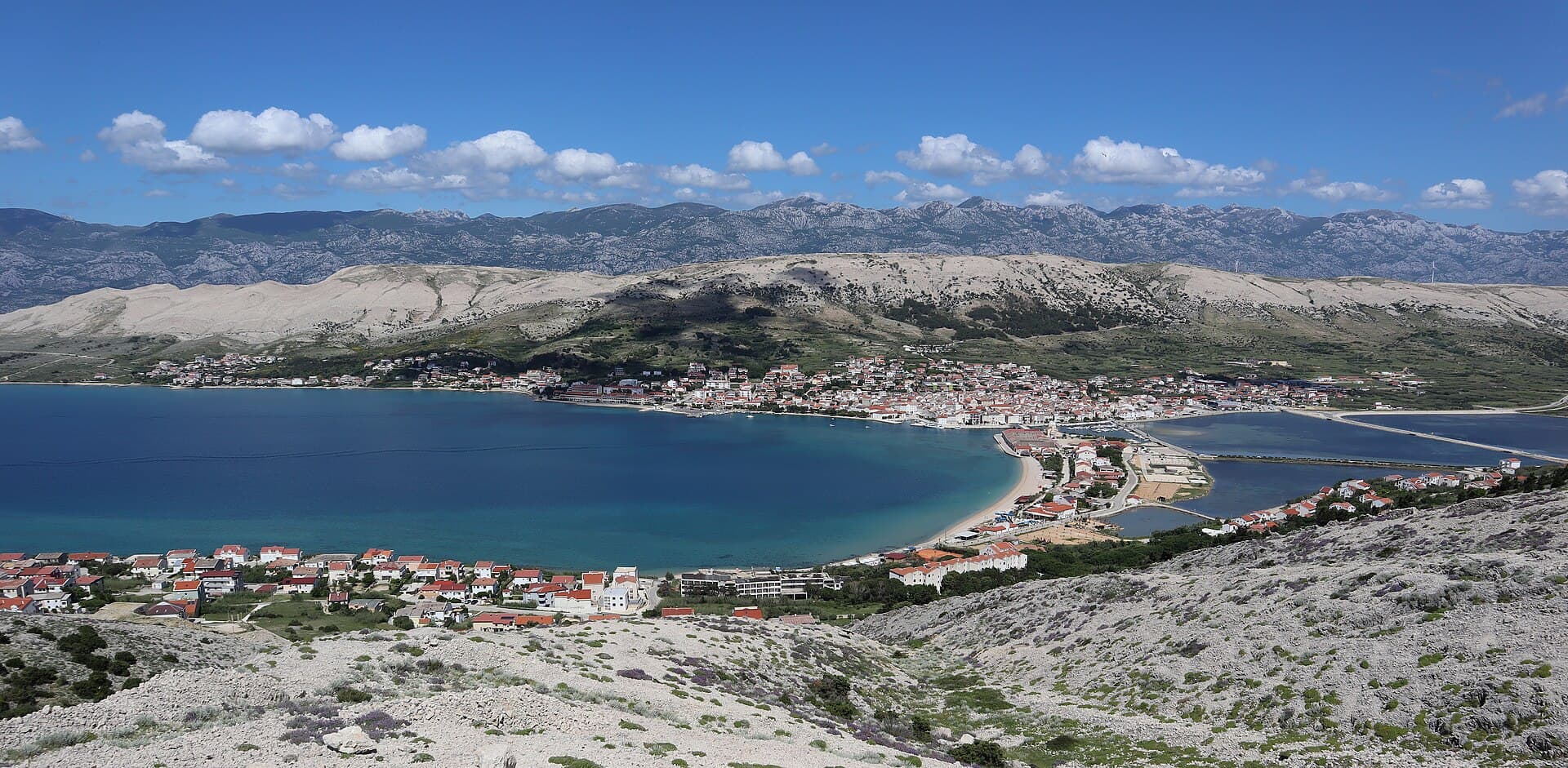
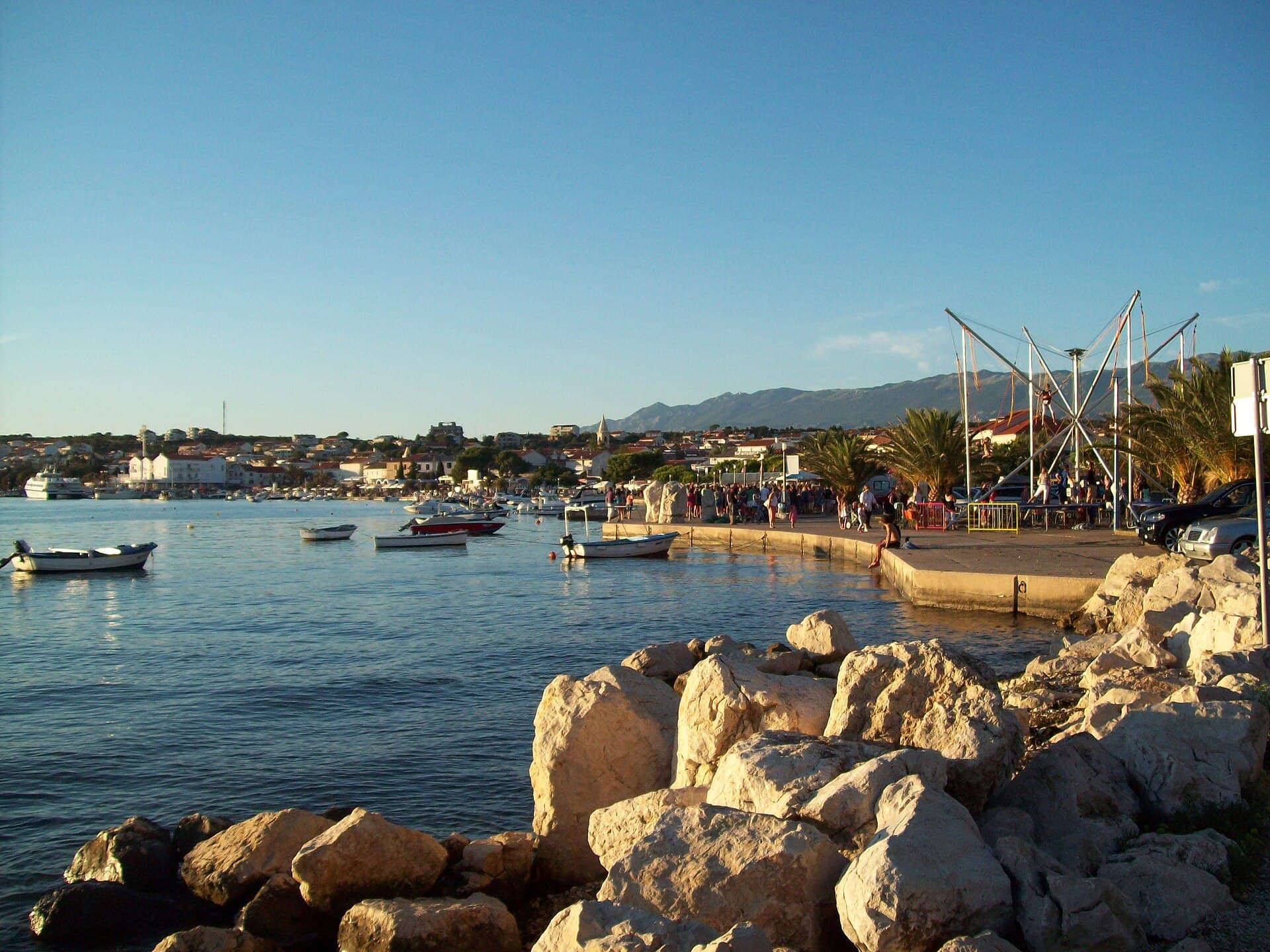
Novalja curves around a bay on Pag’s western shore, with the waterfront, Trg Bazilike and streets around Mala crikva forming the centre. Landing places and restaurants line the water, while…
Read the guide
Help improve this page
Spot something missing or wrong? Suggest a correction, add your photo or report a problem. Editors review every suggestion before it is published.
Photo credits
- Vrgada — Rabko · CC BY-SA 3.0 · Wikimedia Commons
- Drage, Pakoštane — Laci30 · CC BY 3.0 · Wikimedia Commons
- Pakoštane — Roman Klementschitz, Wien · CC BY-SA 3.0 · Wikimedia Commons
- Murter — Luboš Holič · CC BY-SA 3.0 · Wikimedia Commons