Benkovac
About this place
Benkovac is a centre of northern Ravni Kotari, positioned between Zadar, Biograd and the karst landscape of Bukovica. The town developed along inland transport routes, while Benković Castle rises above the centre as a reminder of the strategic importance of this location. A few kilometres away, near Podgrađe, lies Asseria, one of the most significant Roman sites in the Zadar hinterland, with remains of monumental walls and city gates. Benkovac is also widely known for its traditional fair, held on the tenth day of each month and drawing traders, livestock breeders, craftspeople and visitors. The surroundings are less tourism-oriented than the coast, highlighting agriculture, stone and local market culture. From Benkovac it is easy to continue towards Lake Vrana, the Novigrad Sea or the coast around Biograd. A rewarding visit combines Benković Castle, the archaeological site of Asseria and a drive through Ravni Kotari, where the economic and historical role of this inland town becomes much clearer.
Benkovac is a Ravni Kotari town positioned between the more fertile Zadar hinterland and the rockier landscape of Bukovica. The city places itself around 30 kilometres east of Zadar and emphasises its development along major routes, explaining why Benkovac feels more like a regional centre than a conventional tourist resort. Its most distinctive local rhythm appears on the tenth day of every month, when the Benkovac Fair fills a site beside the Benkovac–Karin road. Covering about 5.9 hectares, the fair combines trade, farm products, livestock, food and the social life of the hinterland. A few kilometres outside town lies Asseria, an important Liburnian and Roman site near Podgrađe, while Kaštel Benković provides the main historic anchor in the centre. Benkovac is therefore most rewarding when approached through its fair, archaeology and Ravni Kotari landscape rather than as an alternative to the coastal resorts of Zadar County.
Stays nearby
 Apartment
Apartmeni Klenovica.eu
Klenovica
Klenovica, 133 km from Benkovac
up to 4 guests · 1 bedroom
The host confirms the exact price for your dates and availability.
Things to see
Two places are essential for understanding Benkovac: Benković Castle and Asseria. The castle stands in the town itself and reflects periods when controlling routes across Ravni Kotari had major strategic value. Asseria lies near Podgrađe, a few kilometres away, and is known for substantial Roman walls and remains of monumental gates. A third local experience is not a monument but the Benkovac fair, traditionally associated with the tenth day of each month. The fair brings together trade, livestock, tools, food and the everyday culture of the hinterland. Together, these three elements present Benkovac as a meeting point of Roman heritage, defensive history and a living regional marketplace.
Things to do
The best date for experiencing Benkovac’s everyday identity is the tenth day of the month, when the Benkovac Fair takes place. The fair brings local products, trade, livestock and dishes such as lamb, roast meat and food cooked under the bell into one large site. From the centre, the second part of the day can focus on the local museum and Kaštel Benković before continuing to Asseria near Podgrađe, about six kilometres east of Benkovac according to the Ministry of Culture. This creates three very different layers within a few hours: a contemporary regional fair, the town’s history and an ancient site. On non-fair days, the emphasis can shift to the museum and archaeology, with the drive through Ravni Kotari becoming part of the experience rather than trying to turn Benkovac into an all-day urban sightseeing destination.
Practical information
Practical information
Benkovac is easiest to plan around the monthly rhythm of its fair and the opening information of the local museum. The Benkovac Fair is held on the tenth day of every month on the site beside the road towards Karin, so traffic and visitor numbers are significantly higher on that date. The Benkovac local museum operates in Kaštel Benković and publishes seasonal opening hours and prices on its official website; because these details can change, visitors in 2026 should use the current published schedule. Reaching Asseria requires leaving town towards Podgrađe, roughly six kilometres east of Benkovac. The centre itself is compact, but the key points are separated enough that a car is more practical than relying only on walking, particularly when the archaeological site is included in the same day.
Getting there and around
Benkovac developed at a road crossroads in northern Dalmatia, and the city’s own history page emphasises the role of transport connections in that development. Zadar lies about 30 kilometres to the west, while the wider city area is connected with the A1 motorway. Road travel is especially practical when combining the centre, the monthly fair site on the Benkovac–Karin road and Asseria near Podgrađe in one day. The local museum and Kaštel Benković are in town, but the Asseria archaeological site is about six kilometres east, making a car useful even for a short visit. From Benkovac, roads continue naturally towards Zadar, Karin and the surrounding Ravni Kotari villages, giving the town the role of a base for the hinterland rather than a single isolated stop.
Frequently asked questions
Where is ancient Asseria in relation to Benkovac?
Asseria is located near Podgrađe, a few kilometres from central Benkovac.
What is Benković Castle known for?
Benković Castle is a historic fortress above the town centre and one of Benkovac's main landmarks.
When is the traditional Benkovac fair held?
The fair is traditionally associated with the tenth day of each month.
Which landscape surrounds Benkovac?
Benkovac lies in Ravni Kotari, near the transition towards the rockier Bukovica area.
Nearby

Podgrađe, Benkovac
Village · Dalmatia – Zadar

Related guides
Novalja
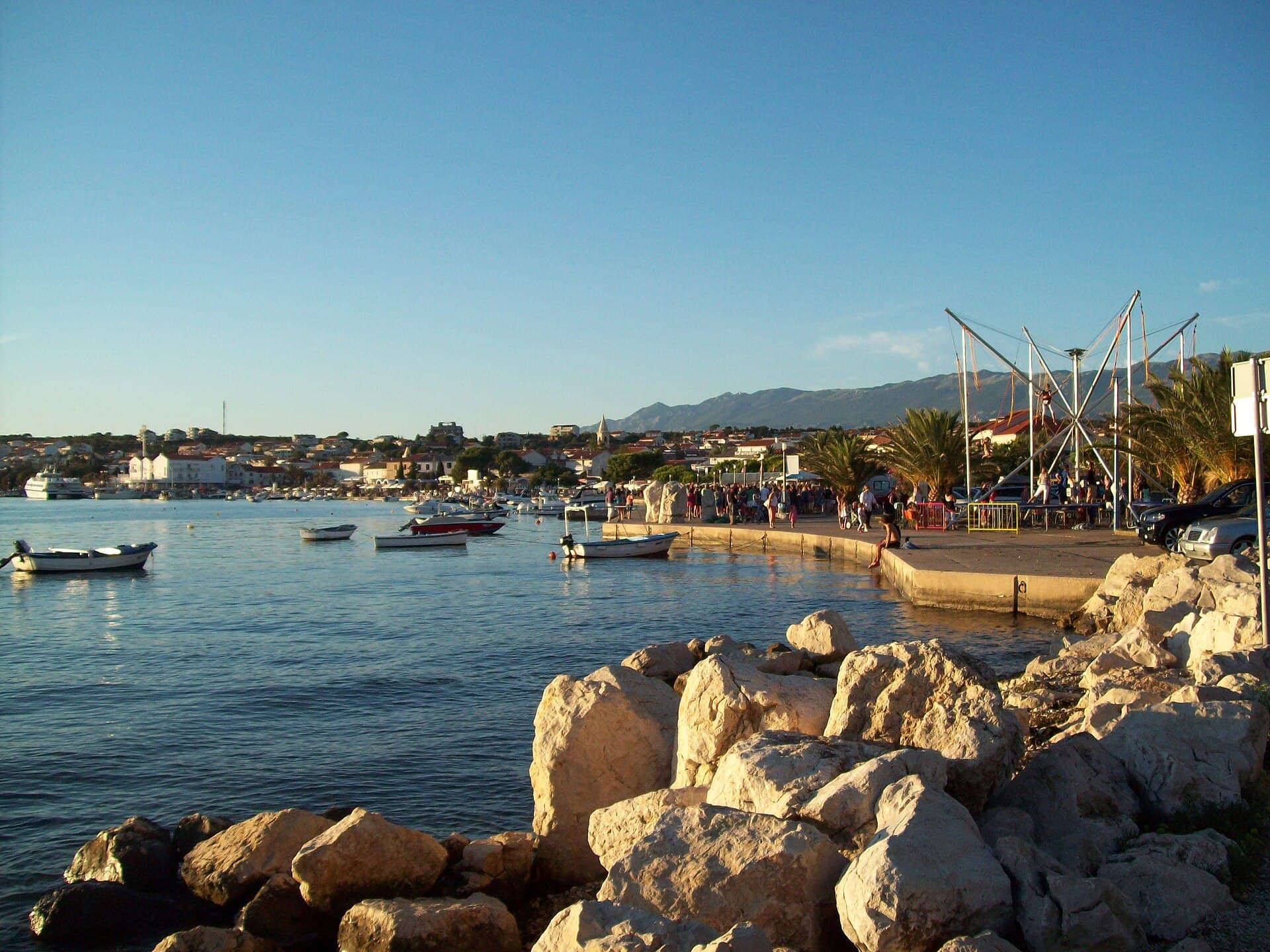
Novalja curves around a bay on Pag’s western shore, with the waterfront, Trg Bazilike and streets around Mala crikva forming the centre. Landing places and restaurants line the water, while…
Read the guide
Help improve this page
Spot something missing or wrong? Suggest a correction, add your photo or report a problem. Editors review every suggestion before it is published.
Photo credits
- Podgrađe, Benkovac — Carole Raddato from FRANKFURT, Germany · CC BY-SA 2.0 · Wikimedia Commons
- Šopot — Roberta F. · CC BY-SA 3.0 · Wikimedia Commons
- Apartmeni Klenovica.eu — Apartmani Klenovica.eu · courtesy of the property owner
- Novalja — JoeTimBlackMax · CC BY-SA 3.0 · Wikimedia Commons
- Nin — Amphisbène · CC BY 2.5 · Wikimedia Commons