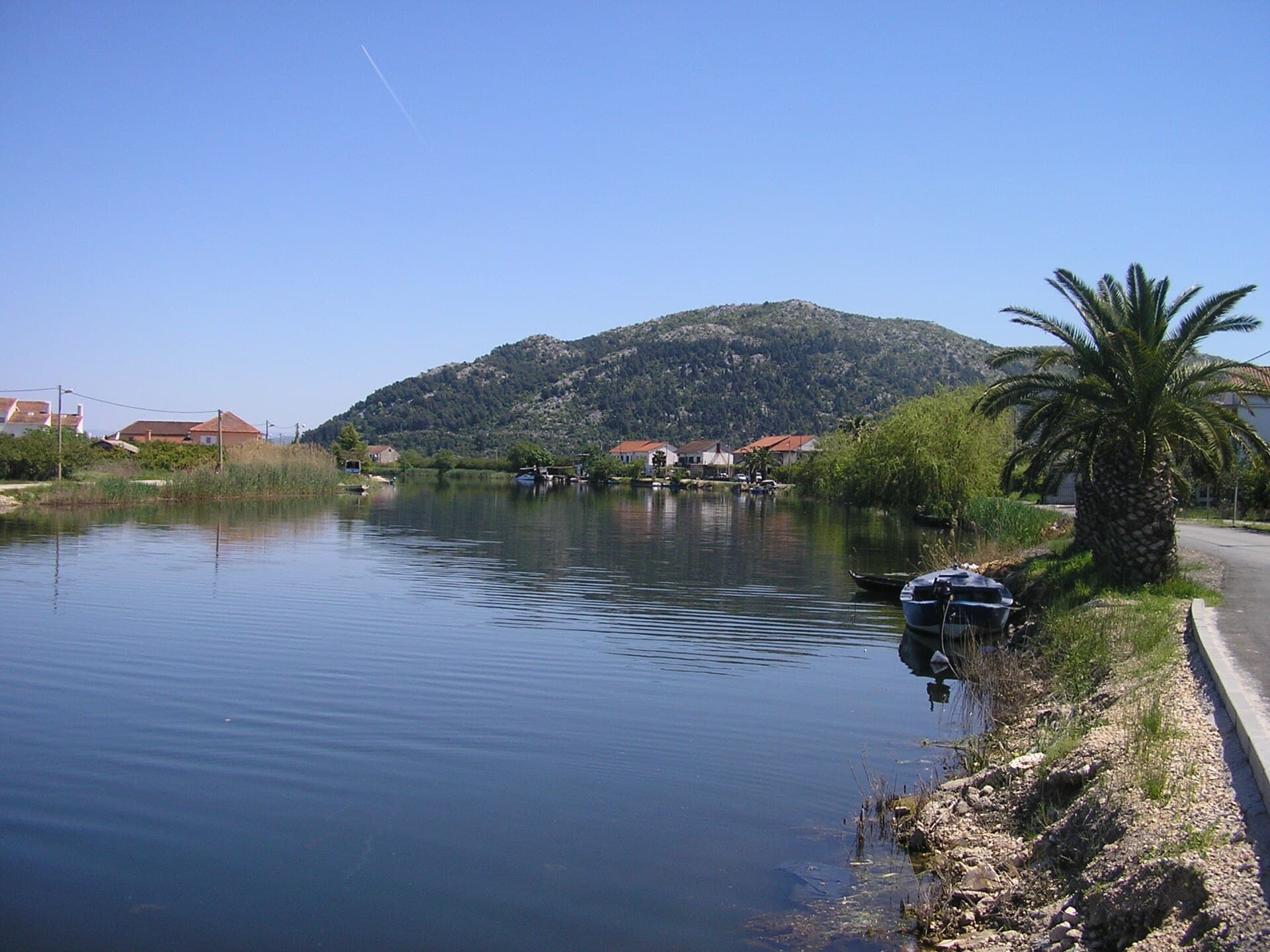
About this place
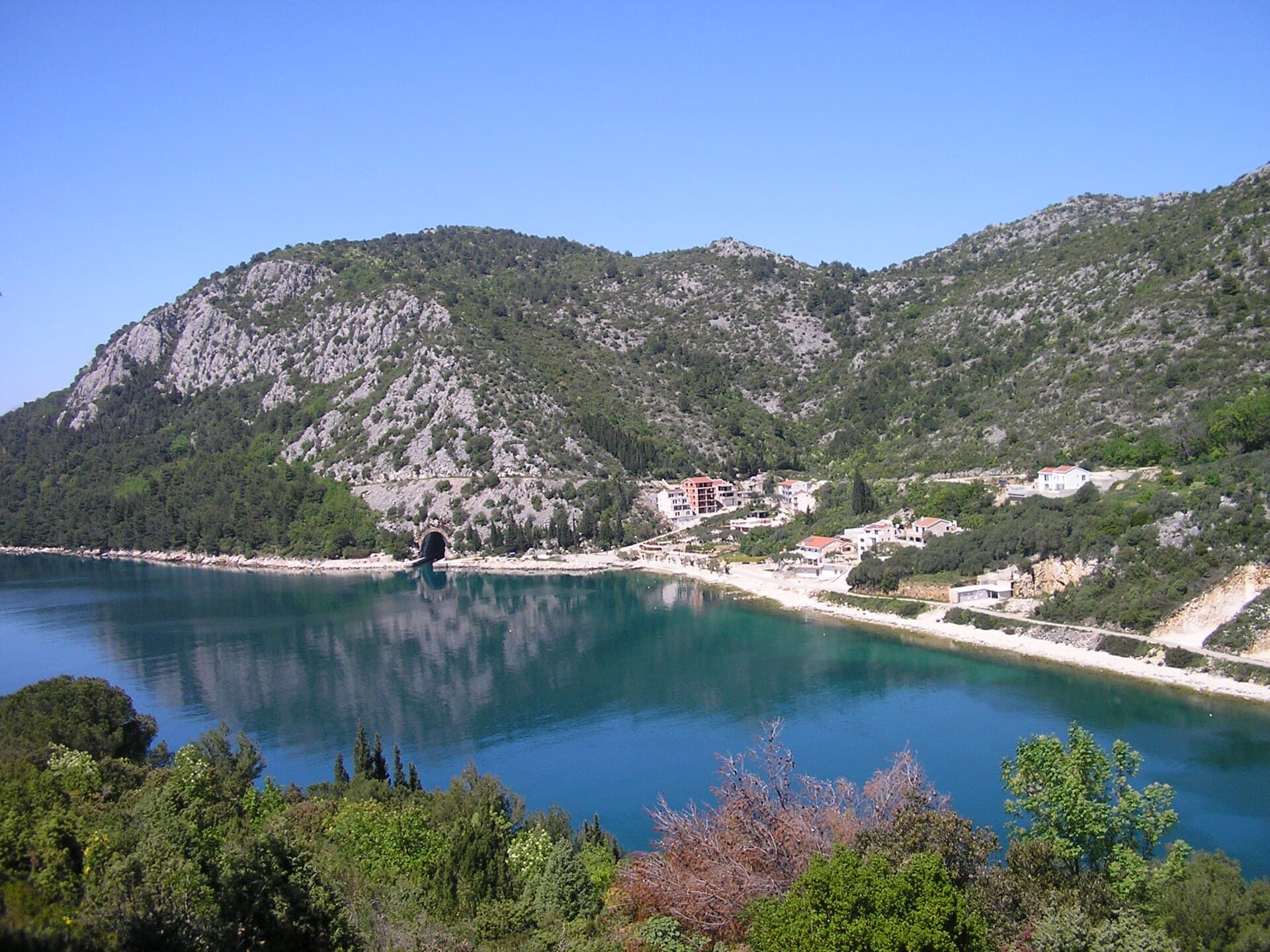
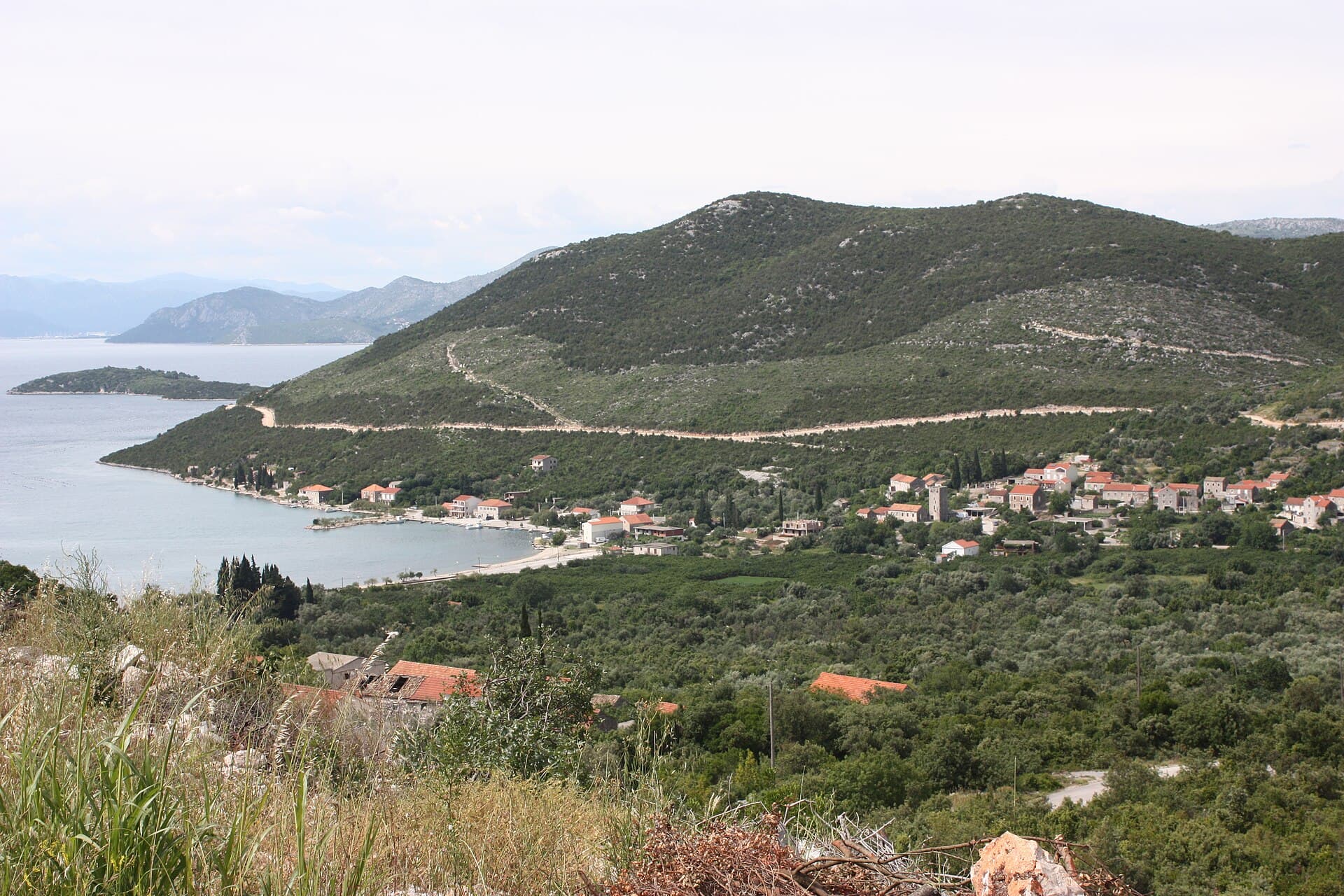
Komarna is a compact seaside village in the Municipality of Slivno, set on Mali Ston Bay beside the mainland approach to Pelješac Bridge. Opened in 2022, the bridge has completely reshaped the local view: its 2.4-kilometre structure crosses the channel from Komarna to Brijesta, placing its pylons and the Pelješac peninsula directly opposite the village. There is no long promenade or conventional town centre here; houses and holiday apartments descend along a steep local road towards a small harbour and the village beach. Swimming naturally dominates a stay, and official environmental records place Komarna’s beach within the Mali Ston Bay ecological-network area. Above the settlement, the remains of an Austrian fort on Glavica recall an era when this coast and the approaches to Klek were closely watched. Nearby Klek provides a broader range of everyday services, while the bridge gives motorists straightforward access to Brijesta, Ston and the rest of Pelješac. Komarna particularly suits travellers seeking a quiet waterfront base with direct road connections to the Neretva valley, Pelješac and Croatia’s far south.
Komarna’s character is now defined by the sea, the steep slope of Glavica and the immediate presence of Pelješac Bridge. Homes and holiday apartments occupy the hillside between the main road and the waterfront, with a small harbour area at the bottom of the village. Komarna belongs to the Municipality of Slivno, whose coastal settlements include Klek, Duboka, Duba and Blace along the meeting point of the Neretva region and the Adriatic. Pelješac lies directly across the water, while the bay in front forms part of Mali Ston Bay. This setting gives Komarna a distinct identity: its skyline is shaped not by a formal urban promenade, but by the bay, Glavica and the bridge leading towards Brijesta.
Stays nearby
 Apartment
Apartmeni Klenovica.eu
Klenovica
Klenovica, 322 km from Komarna
up to 4 guests · 1 bedroom
The host confirms the exact price for your dates and availability.
Things to see
Pelješac Bridge is Komarna’s defining modern landmark, linking the mainland beside the village with Brijesta on the Pelješac peninsula across a span of roughly 2.4 kilometres. It opened to traffic on 26 July 2022, creating a road connection to Croatia’s far south that avoids the border crossing at Neum. A much older defensive layer survives on Glavica above Komarna, where an Austrian fort occupies a position overlooking the coast and the approaches to the Klek peninsula. The fort is not a conventional museum site; it is better approached as the destination of a short uphill walk and a panoramic viewpoint. Together, the bridge and Glavica frame two very different periods of strategic control over the same narrow coastal passage.

Category:Komarna fort
Landmark · Komarna
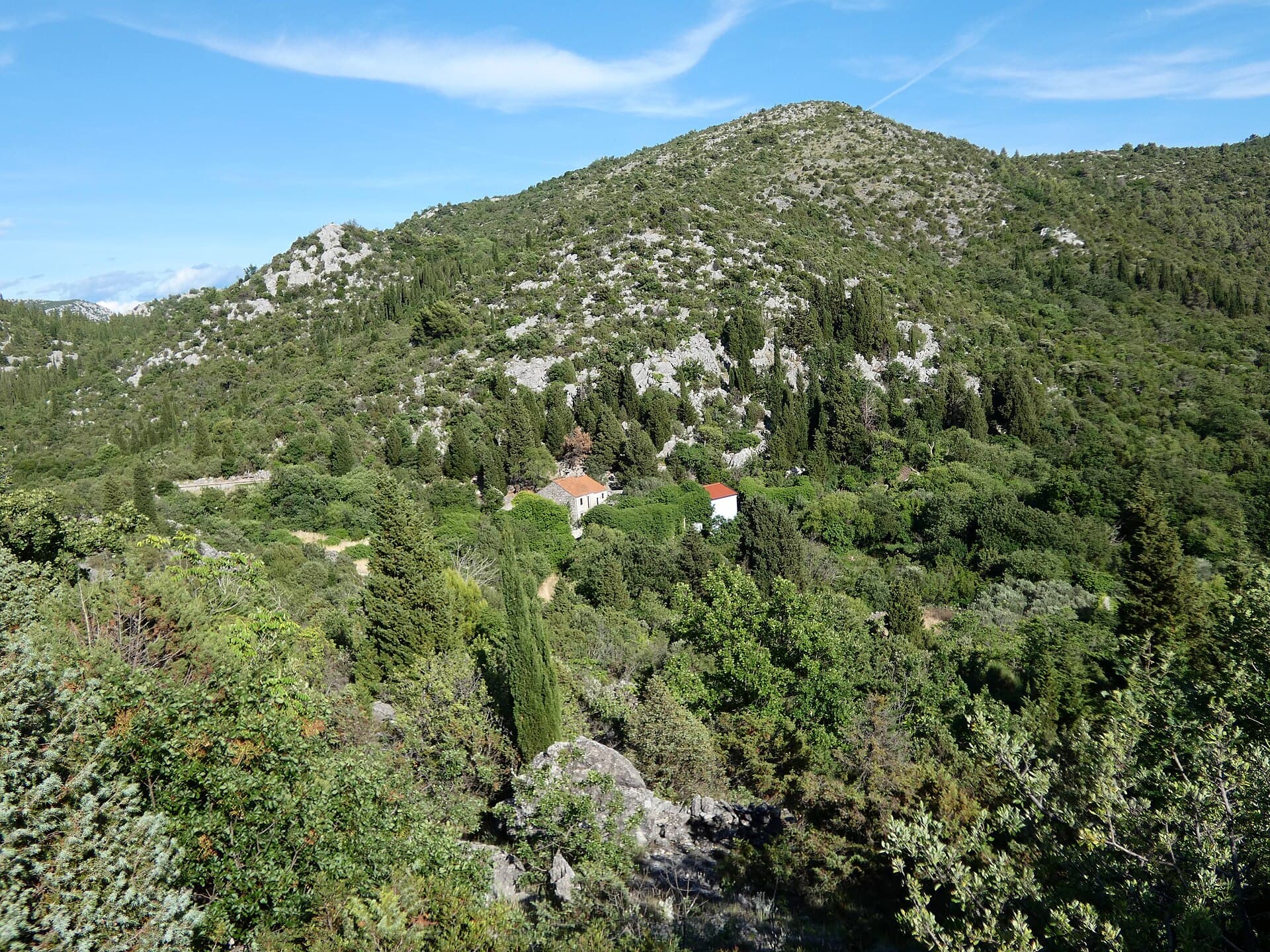
The Austrian fort on Glavica above Komarna preserves a gun position that once controlled the entrance to Neum–Klek Bay.
Beaches
Bathing water quality nearby
- Komarna · 543 mexcellent · season 2025
- Duboka · 757 mexcellent · season 2025
- Klek · 2.4 kmexcellent · season 2025
Source: European Environment Agency (EEA); data from Croatian authorities. · bathing water profile
Things to do
Begin at Komarna’s small harbour and main village beach, where Pelješac Bridge stretches across Mali Ston Bay. After a swim, follow the waterfront towards the neighbouring coves, keeping in mind that the return to the upper houses involves a steep climb. For a broader panorama, head towards Glavica and the exterior remains of the Austrian fort; sturdy footwear is more appropriate here than ordinary promenade shoes. Drivers can then cross the bridge to the Blaca rest area or continue through Brijesta towards Ston. Nearby Klek, with a more developed waterfront than Komarna itself, works well as the final stop of the day.
Practical information
Practical information
Visitor information for Komarna is handled by the Slivno Tourist Board, whose main office is at Plaža 1 in Klek; a second office operates from Duboka 112. Both settlements share the same short coastal stretch as Komarna, making them more practical for in-person enquiries than larger towns farther into the Neretva valley. Komarna itself has only a limited range of everyday services, so groceries, cash withdrawals and pharmacy visits are best arranged before descending to waterfront accommodation. The steep road between the main highway and the shore is an important consideration for visitors with reduced mobility. The Klek tourist-office telephone number is +385 20 691 336.
Parking
Komarna has no published municipal parking-zone system or official 2026 tariff. Because the village occupies a steep slope and the road down to the waterfront is narrow, guests should confirm a private space directly with their accommodation host, particularly when staying near the harbour. For a short stop beside Pelješac Bridge, the official Komarna rest area on the mainland approach provides parking bays, toilets and a designated rest space. It is not a practical substitute for beach parking, as the access road and a considerable change in elevation separate it from the shore. Vehicles should not be left where they obstruct the narrow route used by residents and guests heading to the harbour.
Getting there and around
Komarna connects locally with the D8 Adriatic road, while the Duboka interchange leads onto Pelješac Bridge and the D674 state road. The bridge crosses Mali Ston Channel to Brijesta, after which the access roads continue towards Ston and rejoin the D8 near Zaton Doli. The Komarna rest area on the mainland approach provides parking, toilets and a rest space, but the express-road section across the bridge is closed to pedestrians and cyclists. Intercity coaches between Split, Ploče and Dubrovnik use the coastal corridor; passengers should confirm whether their chosen 2026 departure stops near Komarna rather than assuming every through service does.
Frequently asked questions
Can you walk across Pelješac Bridge?
No. The bridge and its express-road approaches are reserved for motor vehicles, with no pedestrian or bicycle access.
Where is the nearest tourist office to Komarna?
The Slivno Tourist Board has offices at Plaža 1 in Klek and at Duboka 112.
What facilities are at the Komarna rest area?
The mainland rest area beside Pelješac Bridge has parking bays, toilets and a designated rest space.
Is Komarna beach within an ecological-network area?
Yes. Official documentation places Komarna beach within the Mali Ston Bay ecological-network area.
Nearby
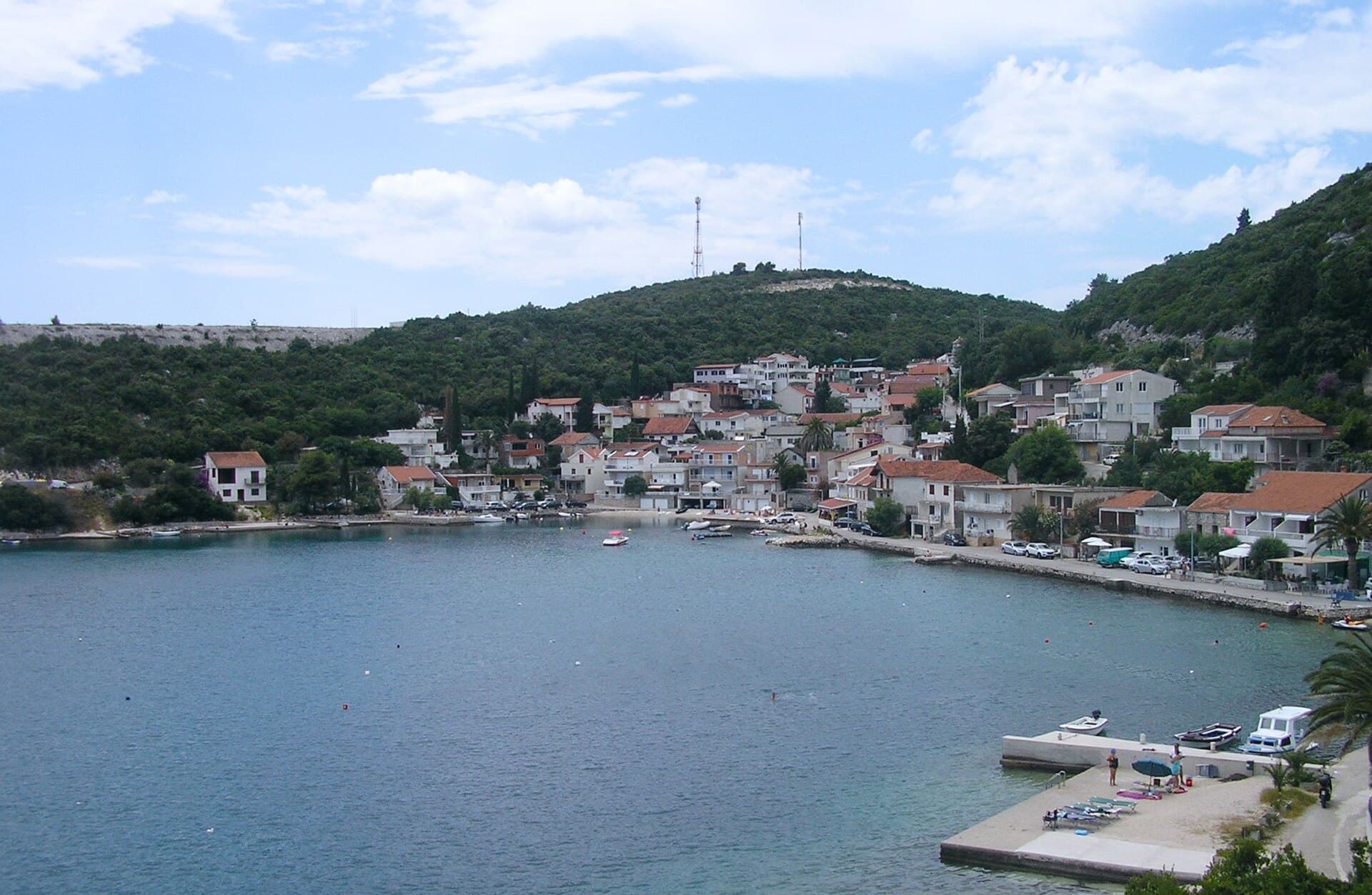
Duboka, Slivno
Village · Dalmatia – Dubrovnik
Related guides

Dubrovnik
Dubrovnik’s historic centre is organised around Stradun, yet its character changes within a few steps of that main street. At the western end beside Pile stand the Large Onofrio Fountain,…
Read the guide

Help improve this page
Spot something missing or wrong? Suggest a correction, add your photo or report a problem. Editors review every suggestion before it is published.
Photo credits
- Komarna — User: (WT-shared) Matulini at wts wikivoyage · Public domain · Wikimedia Commons
- Duboka, Slivno, Lovorje, Slivno, Buk Vlaka, Vlaka, Slivno — Ma▀▄Ga · CC BY 3.0 · Wikimedia Commons
- Zavala, Slivno, Category:Komarna fort