
About this place
Križevci sits beneath the southern slopes of the Kalnik hills, where historic routes from Zagreb, Koprivnica, Bjelovar and Varaždin converge. Its medieval Upper and Lower Towns were formally united in 1752, while the centre is distinguished by two episcopal churches: the Roman Catholic Co-Cathedral of the Holy Cross and the Greek Catholic Cathedral of the Holy Trinity. A compact walking circuit links St Anne’s Church and the former Pauline monastery, the City Museum, the former synagogue and several historic squares, so the main sights require no car. Local identity is inseparable from the Križevci Statutes, a humorous code governing wine-table rituals, and from the reconciliation legend behind the Križevačko veliko spravišče festival. Križevci is also the birthplace of St Mark of Križevci, Croatia’s third canonised saint. Beyond the centre, the Prigorje vineyards lead naturally towards the medieval fortress of Veliki Kalnik, while the railway provides connections with Zagreb and Koprivnica. The combination of walkable monuments, distinctive wine customs and nearby hill country makes Križevci particularly well suited to a one-day cultural and food-focused excursion.
Križevci did not grow around a single square but along the former boundary between two medieval settlements, a division still legible in the Upper and Lower Town. King Béla IV confirmed the Lower Town’s charter in 1253, and the two municipalities finally became one town in 1752. Its religious landscape is unusually varied: the Roman Catholic co-cathedral shares the centre with the seat of the Greek Catholic Eparchy of Križevci, an institution important well beyond the city. The former synagogue now serves a public role, while local stories connect this multi-confessional heritage with vineyard customs and St Mark of Križevci.
Stays nearby
 Apartment
Apartmeni Klenovica.eu
Klenovica
Klenovica, 167 km from Križevci
up to 4 guests · 1 bedroom
The host confirms the exact price for your dates and availability.
Things to see
The Co-Cathedral of the Holy Cross is Križevci’s oldest surviving landmark; its altar combines a Crucifixion sculpture with scenes of Moses and Abraham’s sacrifice. The Baroque Church of St Anne and its former Pauline monastery date from the order’s arrival in 1665, with a broad bell tower set between the two buildings and surviving Pauline fresco fragments. The Greek Catholic Cathedral of the Holy Trinity and bishop’s residence reflect Križevci’s designation as a Greek Catholic seat in 1777. The former synagogue on J. J. Strossmayer Square was restored in 2014 and now houses the Tourist Information Centre.

Things to do
Begin at the Co-Cathedral of the Holy Cross, Križevci’s oldest surviving monument, and look for the high altar with the Crucifixion, Moses and Abraham’s sacrifice. Continue to St Anne’s Church and the former Pauline monastery on I. Z. Dijankovečkoga Street: the Paulines arrived in Križevci in 1665, and remnants of their frescoes remain inside. Finish at 5 J. J. Strossmayer Square, where the restored former synagogue reopened as the Tourist Information Centre on 18 September 2014. For the city’s Greek Catholic heritage, walk on to the Cathedral of the Holy Trinity and the bishop’s residence, a complex adapted to the Eastern rite from 1801.
Food and drink
For a meal in the centre, the tourist board lists Bilikum Bistro & Bar on St Florian Square, serving dishes based on seasonal produce, and Restaurant Tomislav on Strossmayer Square. Gornjevinska klet in Gornje Vine specialises in traditional cooking, while Zlatna dolina on Kalničke punte Street is listed as opening only at weekends. The name bilikum itself refers to Križevci’s wine customs, making a Prigorje wine a particularly fitting addition to lunch. For desserts and pancakes, the tourist board suggests KTC Gradska kavana on St Florian Square; travellers should fit weekend-only venues into their itinerary accordingly.
Practical information
Practical information
The tourist board occupies the city’s former synagogue, making this distinctive central building a practical first stop for maps and local stories. The principal churches, museum and squares are clustered in the centre, although visits to sacred interiors should be planned around services. Public bicycles provide an option for reaching sights beyond the walking core; KPC lists a €1 account activation fee and app-based unlocking. Križevačko veliko spravišče is traditionally held in mid-June, when accommodation and traffic in the centre are noticeably busier than on an ordinary weekend in Križevci.
Parking
Križevci operates four public parking zones, covering street spaces on Strossmayer Square and Preradovićeva and Jelačićeva streets, as well as off-street facilities at Ban Lacković Square and beside the library. According to Križevci Business Centre information available in 2026, charges apply from 7:00 to 19:00 on weekdays and 7:00 to 15:00 on Saturdays; Sundays and public holidays are free. The zones use different colours, so visitors should check the machine or sign at their chosen space for the applicable tariff. For the compact historic centre, parking once and continuing on foot is the simplest approach.
Getting there and around
Križevci has a railway station on the corridor linking the city with Zagreb, Dugo Selo and Koprivnica. The 2025/26 HŽ Passenger Transport timetable remains valid until 12 December 2026, although construction towards Koprivnica may bring temporary alterations and replacement buses. The bus station is on Petra Zrinskog Street, close to the walkable centre. Drivers approach from Zagreb, Bjelovar, Koprivnica or Varaždin, following routes that continue Križevci’s long-standing role as a transport crossroads in northern Croatia.
Frequently asked questions
Where should a walking tour of Križevci begin?
Start at the Co-Cathedral of the Holy Cross, then continue past St Anne’s Church and the former synagogue to the Greek Catholic Cathedral of the Holy Trinity.
What is a bilikum?
A bilikum is a distinctive drinking vessel associated with the toasts and rules of the Križevci Statutes.
When is Križevačko veliko spravišče held?
The festival is traditionally held in mid-June and re-enacts the reconciliation of Križevci’s townspeople and the Kalnik plum nobles.
Is parking charged on Sundays?
Under the rules published for 2026, public parking in Križevci is free on Sundays and public holidays.
Nearby

Erdovec
Village · Central Croatia

Related guides
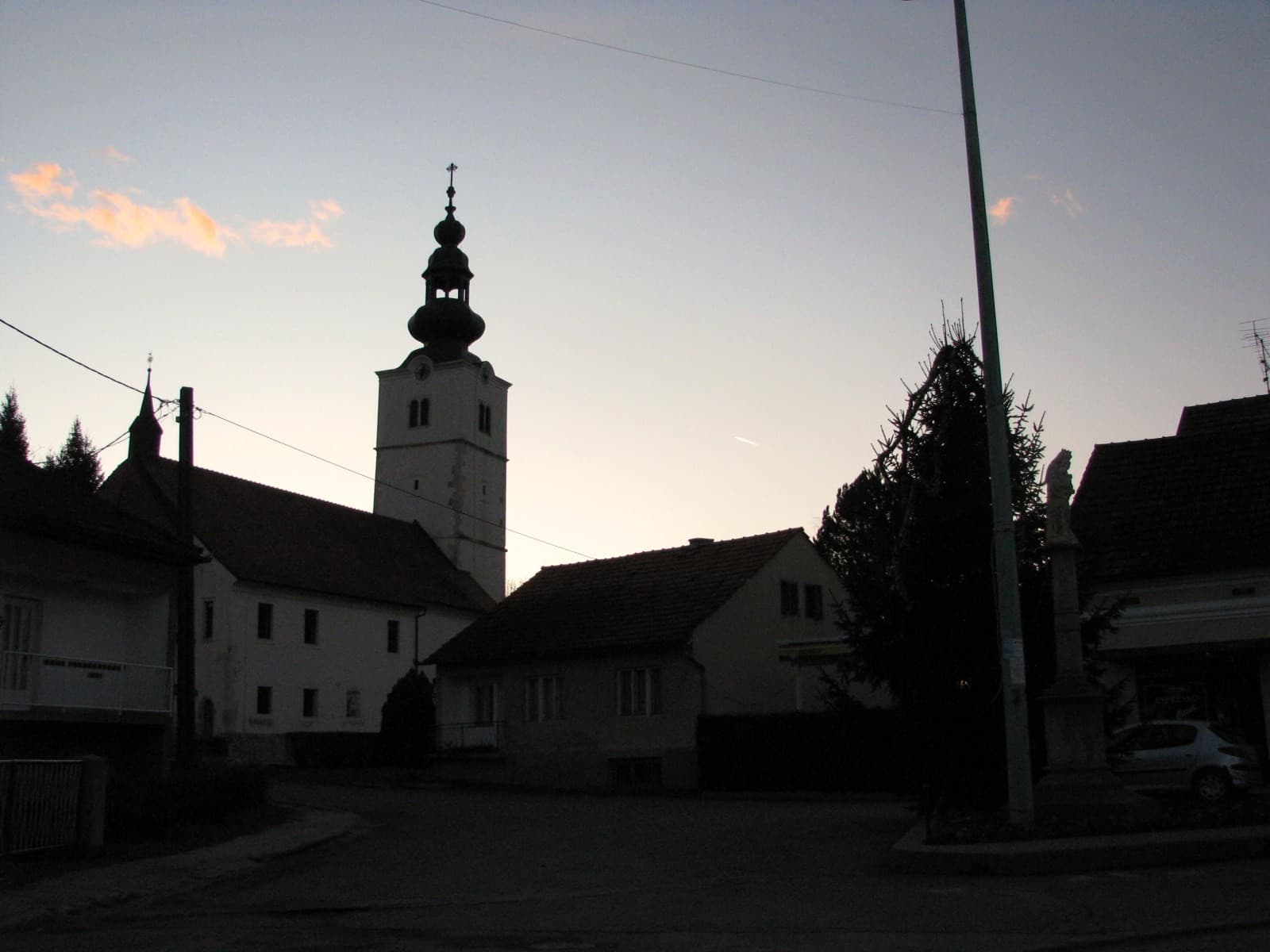
Tuhelj
The population of the municipality has fallen from a peak of 3,780 in 1971 to 2,043 in 2021, and 61 people were lost in the last census decade alone. Eleven settlements, from Banska Gorica…
Read the guide

Help improve this page
Spot something missing or wrong? Suggest a correction, add your photo or report a problem. Editors review every suggestion before it is published.
Photo credits
- Križevci, Erdovec, Guščerovec, Sveta Helena, Križevci — Fraxinus · CC BY-SA 4.0 · Wikimedia Commons
- Križevci Cathedral, Co-Cathedral of the Holy Cross, Križevci — SpeedyGonsales · CC BY-SA 3.0 · Wikimedia Commons
- Pavlinski samostan i crkva sv. Ane u Križevcima


