
Vrbanja
About this place
Vrbanja occupies the flat, wooded corner of south-eastern Slavonia where cultivated fields meet the oak forests of Spačva. Its local identity has an unusually strong literary thread: forester and writer Josip Kozarac served here and composed some of his best-known work while living in Vrbanja. The village school was founded in 1831 and now bears the name of Mara Švel-Gamiršek, another writer associated with the settlement. Vrbanja’s religious landmark is the parish church of the Most Holy Name of Mary, while a small wayside chapel in Kolodvorska Street forms part of the locally recognised heritage. The wider municipality also includes Soljani and Strošinci; in woodland beside the Studva near Soljani, traces of the medieval Zvjezdangrad fortification survive. Vrbanja station on the Vinkovci–Gunja railway gives this small Spačva-area community a useful connection that many rural settlements lack. A visit is therefore less about a conventional attraction circuit and more about encountering the literary and forestry landscape of Slavonia before continuing by rail or road towards Spačva, Gunja or Županja.
Vrbanja stands on the edge of Spačva, where forestry, farming and literature are closely intertwined. Josip Kozarac worked here as a forester and wrote works inspired by the Slavonian woodland, while the village school has maintained an educational tradition dating to 1831. Its present name commemorates writer Mara Švel-Gamiršek, who was born in the area. The Church of the Most Holy Name of Mary marks the centre, and Kolodvorska Street retains a wayside chapel recorded as local heritage. Around Vrbanja, the flat scenery shifts directly from arable fields into Spačva’s dense oak stands.
Things to see


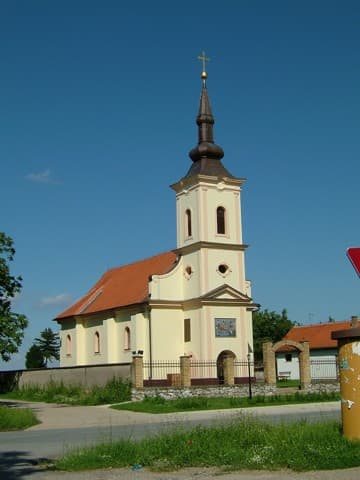
Church of the Nativity of the Virgin
Landmark · Srijemske Laze
church in Srijemske Laze, Croatia
28 km from Vrbanja
Stays
No stays listed here yet
Things to do
Walk through central Vrbanja to the Church of the Most Holy Name of Mary, then look for the small wayside chapel in Kolodvorska Street recorded in the municipality’s conservation documentation. Explore the village’s literary layer near the Mara Švel-Gamiršek school and through the story of Josip Kozarac, whose forestry service in Vrbanja informed his writing about Slavonian woods. Continue towards Soljani for the remains of medieval Zvjezdangrad beside the Studva. The fort lies in difficult woodland and is not arranged as an easy visitor site, so any approach must reflect current path conditions.
Tours and activities
AdAd · partner offers: GetYourGuideThe partner handles booking, payment and support. StayBravo may earn a commission on bookings made through these links.How we choose offersGetYourGuide offers are selected and ordered by GetYourGuide based on the name of the nearest larger town or national park; we do not influence their selection and do not use data about you.GetYourGuide · Vrbanja
We show GetYourGuide offers once you allow their cookies.
Practical information
Getting there and around
Vrbanja has a station on the R105 regional railway from Vinkovci through Drenovci to the state border, positioned between Spačva and Drenovci stations. HŽ Passenger Transport’s 2025/26 timetable shows local trains linking Vrbanja with Vinkovci and Gunja; some services do not run on Saturdays, Sundays or public holidays, so the travel date matters. Trains towards Vinkovci call at Spačva, Otok and Privlaka, while Drenovci and Gunja follow in the opposite direction. Vinkovci is the useful interchange for onward rail journeys towards Zagreb, Osijek and other Croatian destinations. Drivers reach Vrbanja on the local road network of the Spačva area, while the village station stands on Kolodvorska Street.
Frequently asked questions
Which writer worked in Vrbanja?
Josip Kozarac served in Vrbanja as a forester and wrote some of his finest work there.
Does Vrbanja have a railway station?
Yes, Vrbanja is a stop on the Vinkovci–Gunja railway; check the current HŽPP timetable for service frequency and weekend operation.
Where is Zvjezdangrad?
The remains of medieval Zvjezdangrad lie beside the Studva in woodland near Soljani, at a difficult and undeveloped site.
Nearby
Vrbanja
Open in OpenStreetMap(opens in a new tab)Smaller places
straight-line distance
Related guides

Osijek
Tvrđa and the centre around the main square are distinct starting points for understanding Osijek. The former emphasises the fortified historic quarter and Baroque architecture; the latter…
Read the guide

Vukovar
A cultural visit to Vukovar has several separate centres of gravity. Eltz Palace and the City Museum address the city and its inhabitants across different periods. Vučedol reaches much…
Read the guide

Stubičke Toplice
Stubičke Toplice derives almost its entire identity from thermal water and the Zagorje landscape. There is no large urban historic core; green spaces, bathing facilities and traces of the…
Read the guide
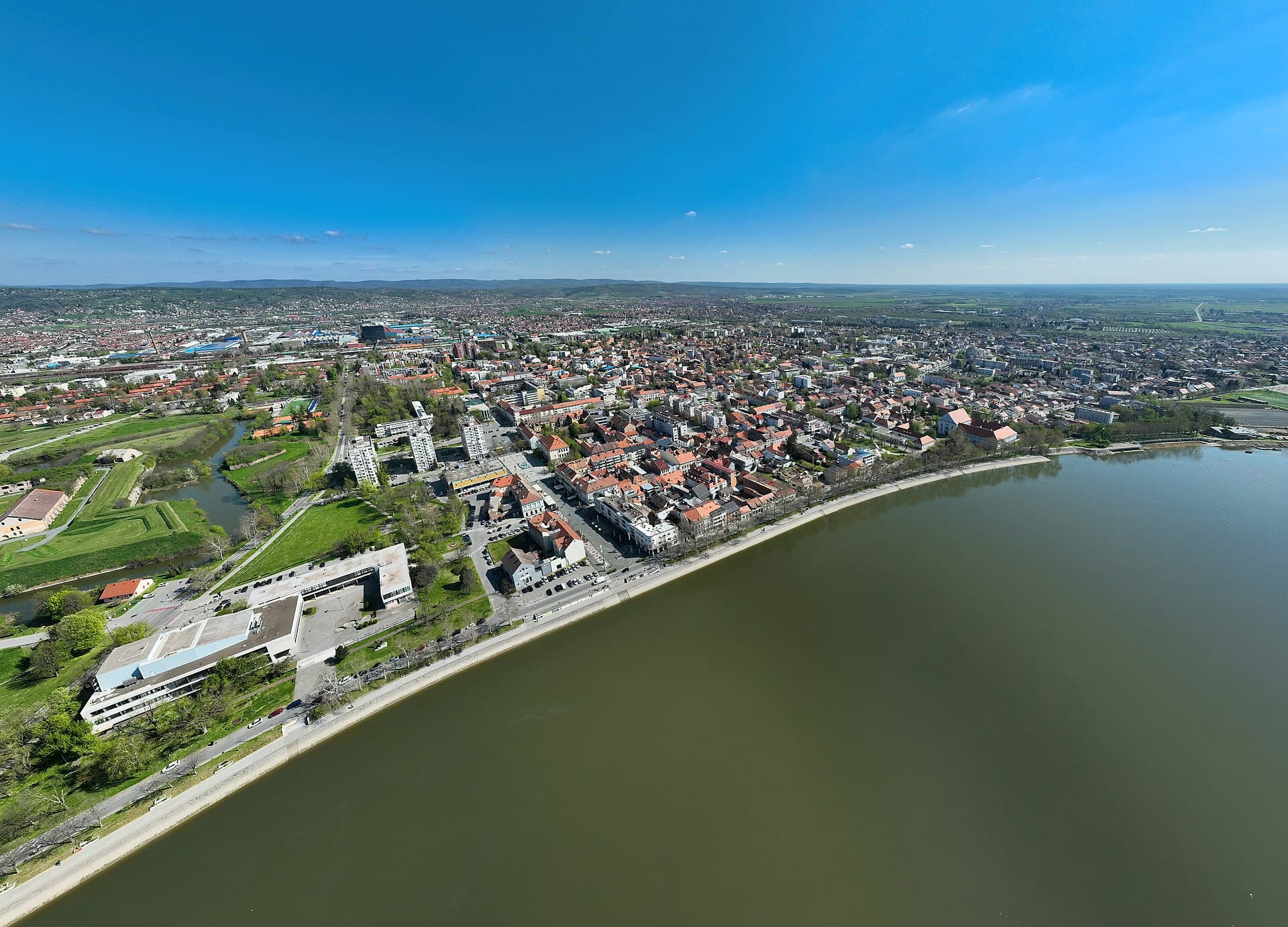
Slavonski Brod
Slavonski Brod developed around one of the major crossings of the Sava, and that border and transport role left a strong mark on the city. Brod Fortress represents the eighteenth-century…
Read the guide
Know Vrbanja? Correct us
Tell us in your own words what is not accurate. We check right away.Do not enter personal data. Corrections are checked by the StayBravo AI assistant; changes to the description are approved by an editor. Use the form instead
Do you know Vrbanja?
Help the guests who come after you.
Help us complete
Nothing is published without an editor’s review.Report illegal content
Photo credits: Vrbanja — Soljanac at Croatian Wikipedia (CC BY-SA 3.0) · Soljani — Goran Mihalj (Public domain) · Drenovci — Original uploader was Soljanac at hr.wikipedia (CC BY-SA 3.0) · Posavski Podgajci — Sandor Bordas (CC BY-SA 3.0) · Račinovci, St. Petka's Church — MirkoS18 (CC BY-SA 3.0) · Lipovac, Nijemci, Apševci — Petar Milošević (CC BY-SA 3.0) · Bošnjaci Forestry Museum — Vunić (CC BY-SA 4.0) · Church of St. George — MirkoS18 (CC BY-SA 4.0) · Church of the Nativity of the Virgin — Suradniksuradnik (CC BY-SA 3.0) · Osijek — Rp031 (CC BY-SA 4.0) · Vukovar — Bybbisch94, Christian Gebhardt (CC BY-SA 4.0) · Stubičke Toplice — MOs810 (CC BY-SA 4.0) · Slavonski Brod — Petar Milošević (CC BY-SA 4.0)