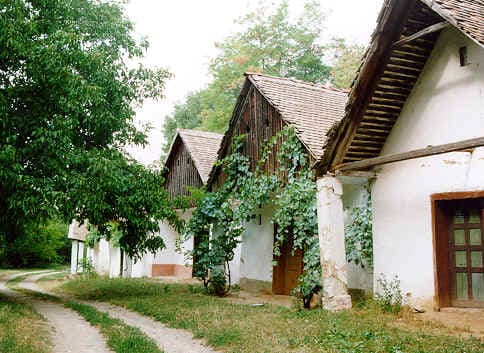
Draž
About this place
Draž is a Baranja village at the centre of a municipality stretching from the slopes of Bansko brdo to the Danube’s backwaters in Croatia’s far northeast. Its story is inseparable from nearby Batina, Topolje, Gajić, Podolje and Duboševica, whose wine cellars, Šokac traditions and borderland scenery create a distinctive Danube landscape. A rewarding first circuit links the Šokac House in Topolje, the Church of Saints Peter and Paul and the Battle of Batina Monument overlooking the river. Walkers can follow part of the Baranja Mountaineering Route through vineyard country towards the Trojnaš viewpoint, while long-distance cyclists meet EuroVelo 6 within the municipality. The Old Danube and more than 400 hectares of fishing waters give Draž a waterside identity quite unlike inland Baranja’s open fields. Visitor services are dispersed rather than concentrated in the village, making a car or bicycle useful for reaching the municipality’s principal sights. Access to heritage venues such as the Šokac House should be arranged in advance. The Draž Tourist Board, at Braće Radića 58, provides local information and coordinates announced visits.
Draž belongs to a compact Danube borderland where the plain rises into Bansko brdo, known locally simply as Planina. Vineyard slopes are cut by surduci, deeply sunken lanes, while traditional gatori wine cellars survive in the hillside and are recognised in the municipal spatial plan as valuable built heritage. Towards the Danube, cultivated ground gives way to former channels and backwaters, most notably the Old Danube. The municipality also includes Batina, Gajić, Podolje, Topolje and Duboševica, so its visitor attractions are spread among several villages rather than gathered in one centre. Proximity to the meeting point of Croatia, Hungary and Serbia has shaped a local blend of Šokac customs, viticulture and life beside the river.
Things to see
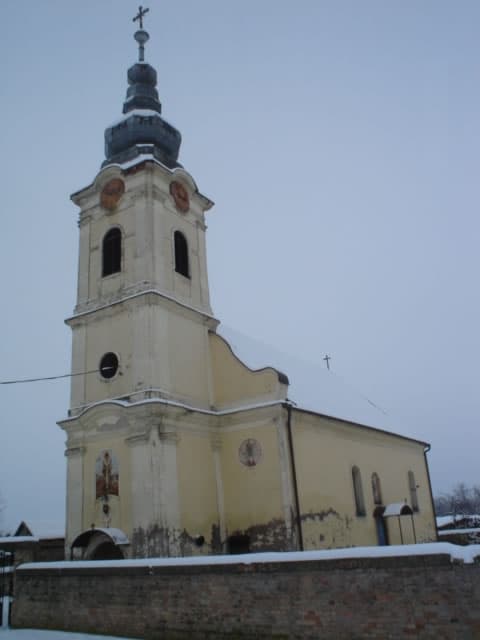
The Šokac House in Topolje presents the material culture of Baranja’s Šokci through traditional dress, household objects and farming tools; the property opens by prior arrangement. Nearby, the Church of Saints Peter and Paul stands apart from the modern village and belongs to the protected religious heritage of the Draž area. Above the Danube at Batina rises the Victory Memorial, a registered cultural property associated with the Second World War Battle of Batina. The municipal spatial plan also records the prehistoric and Roman sites of Gradac and Sredno at Batina and the Kobilica–Veliki Baratvud site at Draž. Together, these places reveal a local sequence extending from archaeology and sacred architecture to Šokac ethnography and twentieth-century commemoration.

 Nature park

Esterhazy castle in Darda
Landmark · Darda
Esterházy Castle in Darda is a three-winged Baroque and Neoclassical residence by Lake Đola, shaped during the 18th and early 19th centuries.
26 km from Draž
Stays
No stays listed here yet
Things to do
Begin in Draž by climbing through the vineyard landscape towards the Trojnaš viewpoint, where the slope of Bansko brdo meets the Baranja plain. Continue to Topolje and its Šokac House, whose costumes, tools and domestic objects evoke the life of Baranja’s Šokci; arrange entry with the local tourist board beforehand. In the same village, seek out the isolated Church of Saints Peter and Paul, one of northern Baranja’s defining religious monuments. Reserve the afternoon for Batina, combining views over the Danube with the monumental Victory Memorial dedicated to the Battle of Batina. Energetic visitors can link parts of this circuit by bicycle on EuroVelo 6 or follow marked stretches of the Baranja Mountaineering Route through the municipality.
Food and drink
Dining in Draž is more likely to mean a pre-arranged meal at a traditional household than a conventional restaurant visit. The local tourism portal highlights Baranja fish stew, spicy meat čobanac, Šokac-style beans cooked in an earthenware pot, cured meats and handmade dough specialities preserved by the area’s Šokac families. As many rural hosts do not keep standard restaurant hours, tastings and meals should be arranged beforehand through the host or the Draž tourist office. Travellers seeking a broader choice of established restaurants are directed across Bansko Hill to Suza and Zmajevac, two of Baranja’s best-known wine villages.
Tours and activities
AdAd · partner offers: GetYourGuideThe partner handles booking, payment and support. StayBravo may earn a commission on bookings made through these links.How we choose offersGetYourGuide offers are selected and ordered by GetYourGuide based on the name of the nearest larger town or national park; we do not influence their selection and do not use data about you.GetYourGuide · Osijek
We show GetYourGuide offers once you allow their cookies.
Practical information
Practical information
The Draž Tourist Board is located at Braće Radića 58; its published 2026 visitor hours are Monday to Friday, 8 a.m. to 3 p.m. Contact the office before visiting the Šokac House because the Topolje property admits visitors by prior arrangement. The municipality’s main sights are divided among Draž, Topolje and Batina, so a one-day itinerary involves several short drives or a substantial bicycle circuit. Sturdy footwear is useful on Bansko brdo, where approaches cross vineyards, sunken surduci lanes and sections of the Baranja Mountaineering Route. Fishing on the Old Danube and the area’s other waters should be organised through authorised local managers and requires the appropriate permit.
Frequently asked questions
How can I visit the Šokac House?
Visits to the Šokac House in Topolje must be arranged in advance with the Draž Tourist Board.
Does EuroVelo 6 cross Draž municipality?
Yes, the international Danube cycling route EuroVelo 6 crosses Draž municipality.
Where is the Battle of Batina Memorial?
The monumental Victory Memorial stands at Batina on high ground above the Danube.
What are the gatori of Draž?
Gatori are traditional wine cellars dug into the slopes of Bansko brdo and recognised by the Draž spatial plan as valuable built heritage.
Where is the Trojnaš viewpoint?
Trojnaš lies in the vineyard landscape of Bansko brdo within Draž municipality.
Nearby
Draž
Open in OpenStreetMap(opens in a new tab)Larger towns
Smaller places
straight-line distance
Related guides

Osijek
Tvrđa and the centre around the main square are distinct starting points for understanding Osijek. The former emphasises the fortified historic quarter and Baroque architecture; the latter…
Read the guide

Vukovar
A cultural visit to Vukovar has several separate centres of gravity. Eltz Palace and the City Museum address the city and its inhabitants across different periods. Vučedol reaches much…
Read the guide

Stubičke Toplice
Stubičke Toplice derives almost its entire identity from thermal water and the Zagorje landscape. There is no large urban historic core; green spaces, bathing facilities and traces of the…
Read the guide
Slavonski Brod
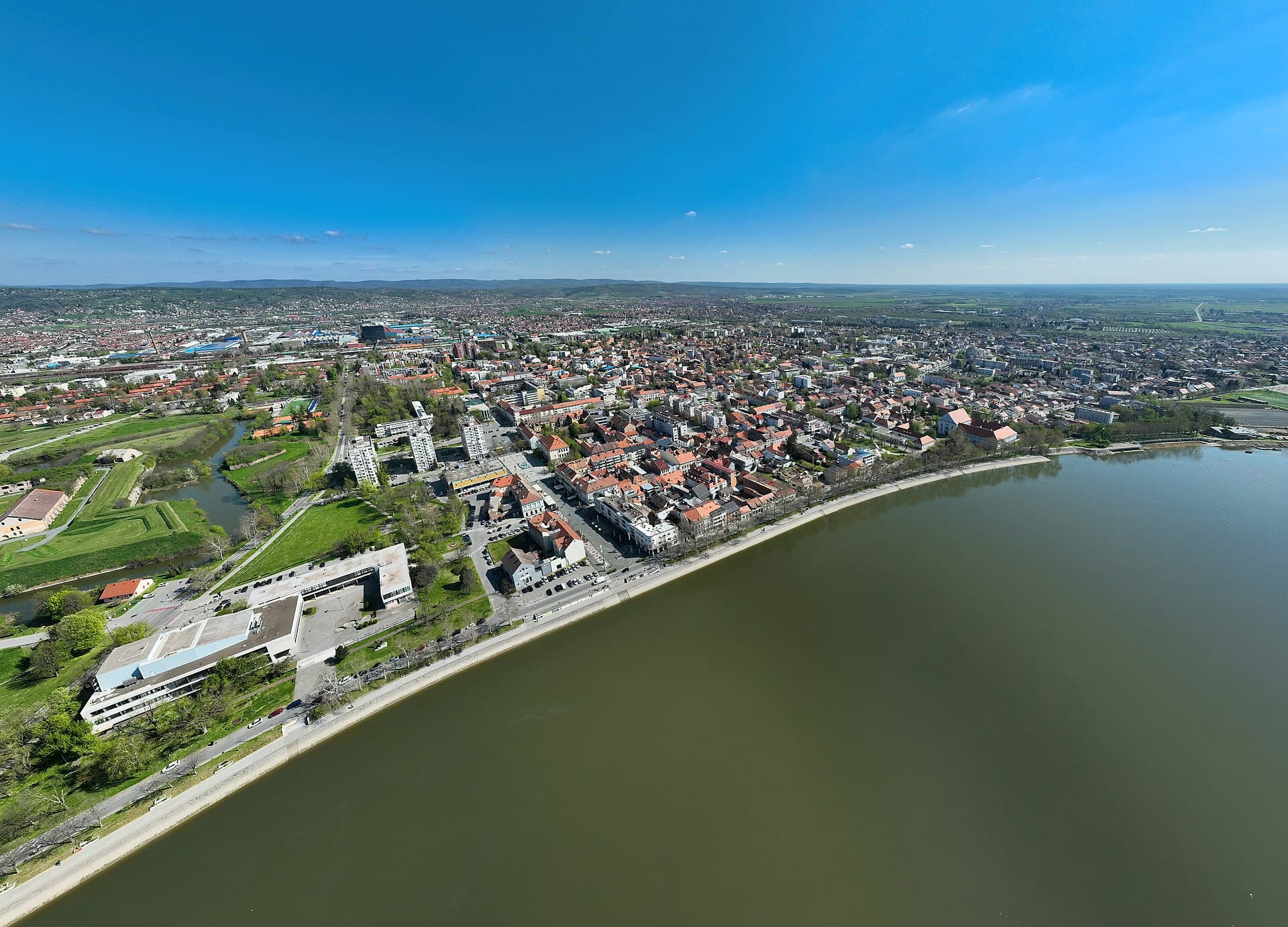
Slavonski Brod developed around one of the major crossings of the Sava, and that border and transport role left a strong mark on the city. Brod Fortress represents the eighteenth-century…
Read the guide
Know Draž? Correct us
Tell us in your own words what is not accurate. We check right away.Do not enter personal data. Corrections are checked by the StayBravo AI assistant; changes to the description are approved by an editor. Use the form instead
Do you know Draž?
Help the guests who come after you.
Help us complete
Nothing is published without an editor’s review.Report illegal content
Photo credits: Draž — PANONIAN (CC BY 3.0) · Topolje — MirkoS18 (CC BY-SA 4.0) · Zmajevac, Kneževi Vinogradi, Kopački Rit Nature Park — Misalalic (CC BY-SA 4.0) · Suza, Kneževi Vinogradi — Flammard (CC BY-SA 3.0) · Branjina — Belirac (CC BY-SA 3.0) · Kotlina, Kneževi Vinogradi — Roland Puskaric (CC BY-SA 4.0) · Duboševica — Szajci (CC BY-SA 4.0) · Popovac — Wéber György (CC BY-SA 3.0) · Church of St. George — Wéber György (CC BY-SA 3.0) · Church of St. Nicholas — Ljubomir Damjanovic (CC BY-SA 3.0) · Esterhazy castle in Darda — Biljanabekic (CC BY-SA 2.5) · Osijek — Rp031 (CC BY-SA 4.0) · Vukovar — Bybbisch94, Christian Gebhardt (CC BY-SA 4.0) · Stubičke Toplice — MOs810 (CC BY-SA 4.0) · Slavonski Brod — Petar Milošević (CC BY-SA 4.0)