Batina
About this place
Batina occupies the right bank of the Danube, four kilometres downstream from the river’s entry into Croatia and 46 kilometres from Osijek. Part of Draž municipality, the village is squeezed between the water and the vineyard-covered slopes of Banska kosa, bringing riverside scenery, sunken lanes and elevated viewpoints unusually close together. Its defining landmark is the Battle of Batina Memorial Complex on Gradac, commemorating the fighting of November 1944. Antun Augustinčić’s 26.5-metre Victory monument rises above an ossuary containing the remains of 1,297 Red Army soldiers. The adjoining memorial hall has two galleries and a permanent exhibition devoted to the battle. Batina’s deeper past survives in Bronze and Iron Age finds, the Roman fort of Ad Militare and the Baroque Chapel of St John of Nepomuk, built in 1756. A bridge completed in 1974 carries the road across the Danube towards the border crossing and Bezdan in Serbia. EuroVelo 6 also passes through this landscape, while the Baranja hiking circuit opens a route into the vineyards, traditional cellar lanes and viewpoints around Draž municipality.
Batina’s character comes from its position on the Danube’s right bank, beneath Banska kosa and immediately beside the Serbian border. The modern settlement dates from 1720, although Gradac and the foot of the ridge preserve evidence ranging from the Bronze and Iron Ages to the Roman fort of Ad Militare. The lower village is tied to its river landing and the bridge towards Bačka, while vineyards, sunken lanes and traditional cellars climb above the houses. This compact meeting of a Danube port, Baranja wine slopes and the monumental memory of the 1944 battle gives Batina an identity unlike the other villages of Draž municipality.
Things to see
Batina’s principal sight is the Battle of Batina Memorial Complex, opened in 1976 on the ground where the fiercest fighting took place in November 1944. Its Victory obelisk, created by Antun Augustinčić and erected in 1947, reaches 26.5 metres including a seven-metre bronze figure. Twenty-seven steps rise to the upper platform, while an ossuary beneath the monument holds the remains of 1,297 Red Army soldiers. The ensemble also includes a memorial park and a museum display inside the memorial hall. Down by the Danube, the much smaller Baroque Chapel of St John of Nepomuk, built in 1756, honours Batina’s patron saint.

 Nature park
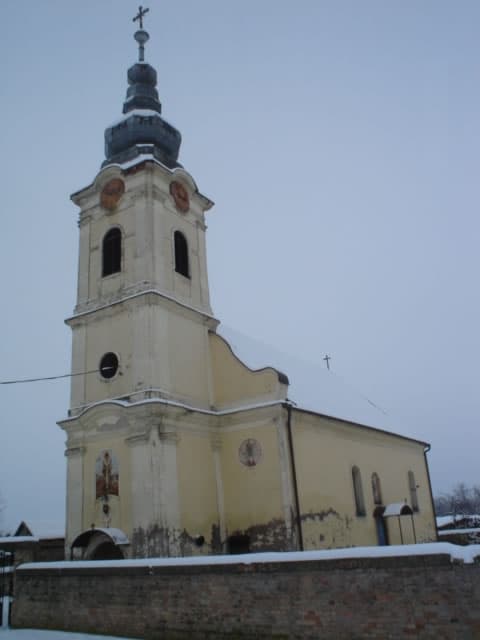

Esterhazy castle in Darda
Landmark · Darda
Esterházy Castle in Darda is a three-winged Baroque and Neoclassical residence by Lake Đola, shaped during the 18th and early 19th centuries.
28 km from Batina
Stays
No stays listed here yet
Things to do
Begin on the Gradac plateau, where the Victory monument overlooks the Danube and the flatlands of Bačka. Continue into the memorial hall, whose two galleries contain a permanent exhibition on the Battle of Batina, then descend towards the river and the 1756 Chapel of St John of Nepomuk. For a more active second half, leave Batina along the Baranja hiking circuit or EuroVelo 6. In the surrounding vineyards, look for surduci—deeply cut lanes—and gatori, cellars dug into Banska kosa; local routes extend towards Draž, Gajić, Podolje and Topolje.
Food and drink
Set on the Planina Zapad slope above Batina, La Vida Panorama combines a restaurant and small guesthouse with a terrace facing the Danube and the horizons of Croatia, Hungary and Serbia. Introduced in 2026 as a contemporary Baranja food-and-wine destination, it is listed by the local tourist board at Planina Zapad 139. Its location works particularly well for lunch after visiting the nearby Battle of Batina memorial, while the culinary setting draws on Baranja wines and the Danube’s fish traditions. Since the restaurant stands apart from Batina’s riverside centre on Banska Kosa, booking a table in advance is sensible when travelling specifically for lunch or dinner.
Tours and activities
AdAd · partner offers: GetYourGuideThe partner handles booking, payment and support. StayBravo may earn a commission on bookings made through these links.How we choose offersGetYourGuide offers are selected and ordered by GetYourGuide based on the name of the nearest larger town or national park; we do not influence their selection and do not use data about you.GetYourGuide · Osijek
We show GetYourGuide offers once you allow their cookies.
Practical information
Practical information
Visits to the memorial hall and organised interpretation of the Draž area should be arranged in advance with the local tourist board, which also handles pre-booked visits to the Šokac House in nearby Topolje. Batina is a border village: the DC212 state road continues across the Danube bridge to an international road crossing, so travellers heading to Bezdan must carry the documents required for entry into Serbia. Walkers and cyclists remaining in Batina can link Gradac, the memorial hall and the riverbank without crossing the frontier. Sturdy footwear is sensible on Banska kosa because its vineyard lanes are deeply cut and uneven.
Parking
Visitors to the Battle of Batina Memorial Complex can leave their car in the dedicated parking area at Gradac, then approach the Victory monument and its Danube viewpoint on foot. Parking at the memorial is described as free, avoiding the need to search for space among the houses on Batina’s steep hillside. La Vida Panorama at Planina Zapad 139 occupies a separate site above the village, so restaurant guests should follow the access road to the property rather than leave their vehicle by the memorial. Driving again is the practical choice for reaching the Danube bank, as Gradac, the Planina slope and lower Batina sit at noticeably different elevations.
Getting there and around
Drivers reach Batina on the DC212 state road, which crosses the village and continues over the 51st Division Bridge to the Serbian border checkpoint. Completed in 1974, the Danube bridge links Croatian Baranja with Bačka; Batina lies roughly 46 kilometres north-east of Osijek by road. The formally designated border area extends for 960 metres, beginning near the junction of Vladimira Nazora and Košut Lajoša streets and continuing beyond the midpoint of the bridge. Cyclists can approach on EuroVelo 6, the international Danube route that connects Batina’s riverbank with other settlements in Draž municipality.
Frequently asked questions
How far is Batina from Osijek?
Batina lies about 46 kilometres north-east of Osijek.
Who created the Victory monument?
The Victory monument was created by Croatian sculptor Antun Augustinčić and erected in 1947.
Does EuroVelo 6 pass through Batina?
Yes, the EuroVelo 6 Danube cycling route runs through Draž municipality and Batina.
Can you drive from Batina into Serbia?
The DC212 crosses the 51st Division Bridge to the Batina international border checkpoint towards Bezdan.
What is inside the memorial hall?
The memorial hall contains two galleries and a permanent museum exhibition about the Battle of Batina.
Nearby
Batina
Open in OpenStreetMap(opens in a new tab)Larger towns
Smaller places
straight-line distance
Related guides

Osijek
Tvrđa and the centre around the main square are distinct starting points for understanding Osijek. The former emphasises the fortified historic quarter and Baroque architecture; the latter…
Read the guide

Vukovar
A cultural visit to Vukovar has several separate centres of gravity. Eltz Palace and the City Museum address the city and its inhabitants across different periods. Vučedol reaches much…
Read the guide

Stubičke Toplice
Stubičke Toplice derives almost its entire identity from thermal water and the Zagorje landscape. There is no large urban historic core; green spaces, bathing facilities and traces of the…
Read the guide
Slavonski Brod
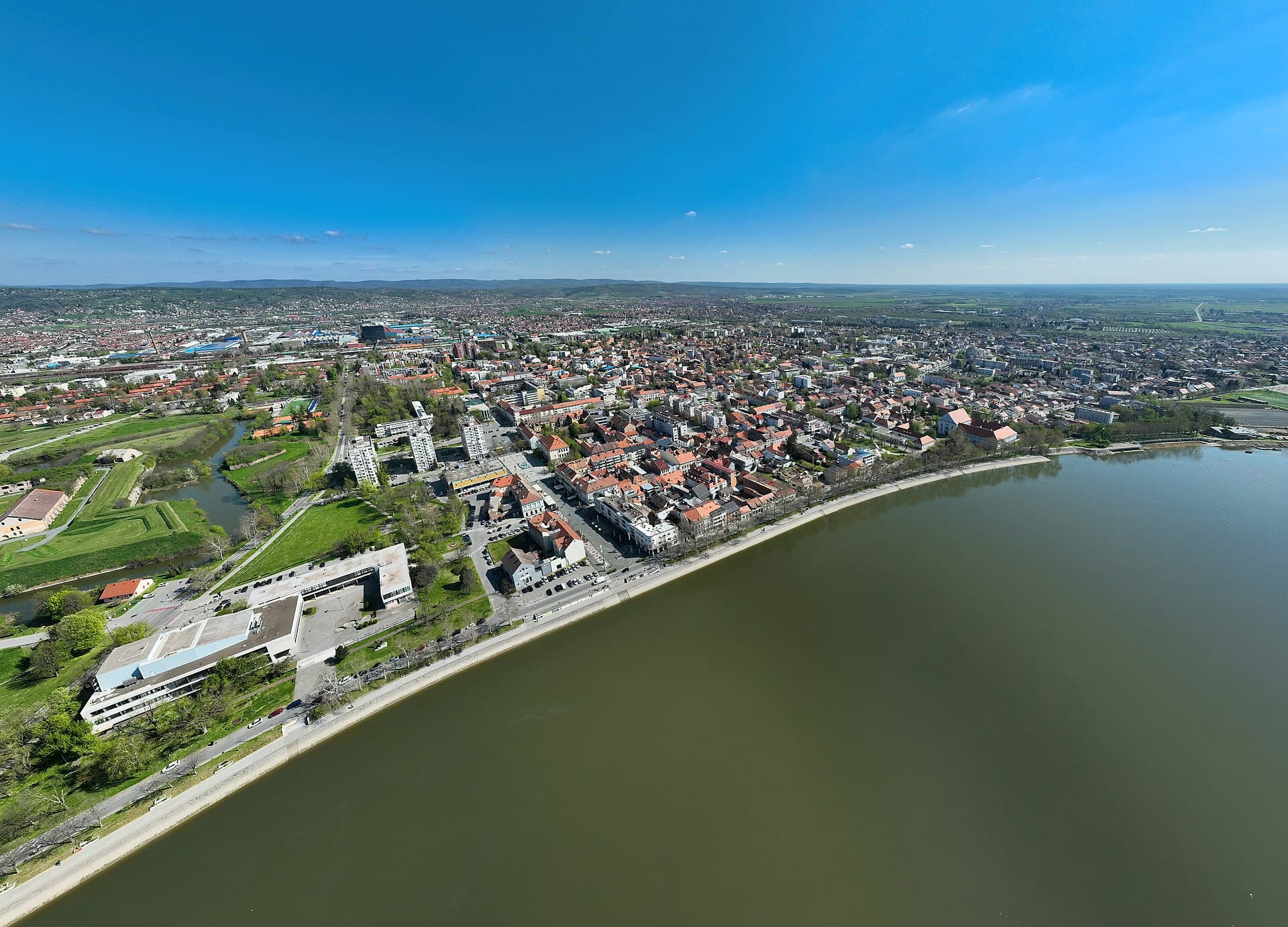
Slavonski Brod developed around one of the major crossings of the Sava, and that border and transport role left a strong mark on the city. Brod Fortress represents the eighteenth-century…
Read the guide
Know Batina? Correct us
Tell us in your own words what is not accurate. We check right away.Do not enter personal data. Corrections are checked by the StayBravo AI assistant; changes to the description are approved by an editor. Use the form instead
Do you know Batina?
Help the guests who come after you.
Help us complete
Nothing is published without an editor’s review.Report illegal content
Photo credits: Draž — PANONIAN (CC BY 3.0) · Zmajevac, Kneževi Vinogradi, Kopački Rit Nature Park — Misalalic (CC BY-SA 4.0) · Suza, Kneževi Vinogradi — Flammard (CC BY-SA 3.0) · Topolje — MirkoS18 (CC BY-SA 4.0) · Kotlina, Kneževi Vinogradi — Roland Puskaric (CC BY-SA 4.0) · Branjina — Belirac (CC BY-SA 3.0) · Duboševica — Szajci (CC BY-SA 4.0) · Church of St. George — Wéber György (CC BY-SA 3.0) · Church of St. Nicholas — Ljubomir Damjanovic (CC BY-SA 3.0) · Esterhazy castle in Darda — Biljanabekic (CC BY-SA 2.5) · Osijek — Rp031 (CC BY-SA 4.0) · Vukovar — Bybbisch94, Christian Gebhardt (CC BY-SA 4.0) · Stubičke Toplice — MOs810 (CC BY-SA 4.0) · Slavonski Brod — Petar Milošević (CC BY-SA 4.0)