
Darda
About this place
Darda is a Baranja municipal centre 14 kilometres north of Osijek, occupying lowland terrain beside the Osijek–Pécs railway and the road corridor towards Beli Manastir and Hungary. Its defining landmark is Esterházy Castle, a U-shaped, three-wing residence surrounded by an English-style park and facing Lake Đola. A monumental Art Nouveau garden gate marks the approach from the village, while the Baroque Church of St John the Baptist stands immediately north of the complex. Darda also carries a strong Ottoman-era association: the celebrated Suleiman Bridge across the Drava wetlands ended in this area, a story now recalled by the historical TardaFest. A compact visit can link the church, castle grounds and Đola lakeside, although the castle is best treated as an exterior heritage stop because it has no regular museum function. With both railway and road links to Osijek, Darda also provides a convenient southern-Baranja base for journeys towards Bilje, Beli Manastir and other destinations north of the Drava.
Darda belongs firmly to Baranja, despite lying only 14 kilometres from Osijek and maintaining everyday road and rail connections with the city. The settlement occupies flat ground at roughly 85 metres above sea level, beside the Osijek–Pécs route and close to Corridor Vc. Its historical identity centres on the ensemble of Esterházy Castle, its park and Lake Đola, occupying ground associated with the former Suleiman Bridge. Developed as an estate headquarters, the castle combines two side wings with a main range to form its characteristic U-shaped plan. Present-day Darda remains connected with agriculture and nearby Osijek, yet it stands apart from neighbouring Baranja settlements through the monumental park entrance, the Baroque Church of St John the Baptist and the local memory of the Ottoman crossing over the Drava wetlands.
Things to see
Esterhazy castle in Darda
Landmark · Darda
Esterházy Castle in Darda is a three-winged Baroque and Neoclassical residence by Lake Đola, shaped during the 18th and early 19th centuries.

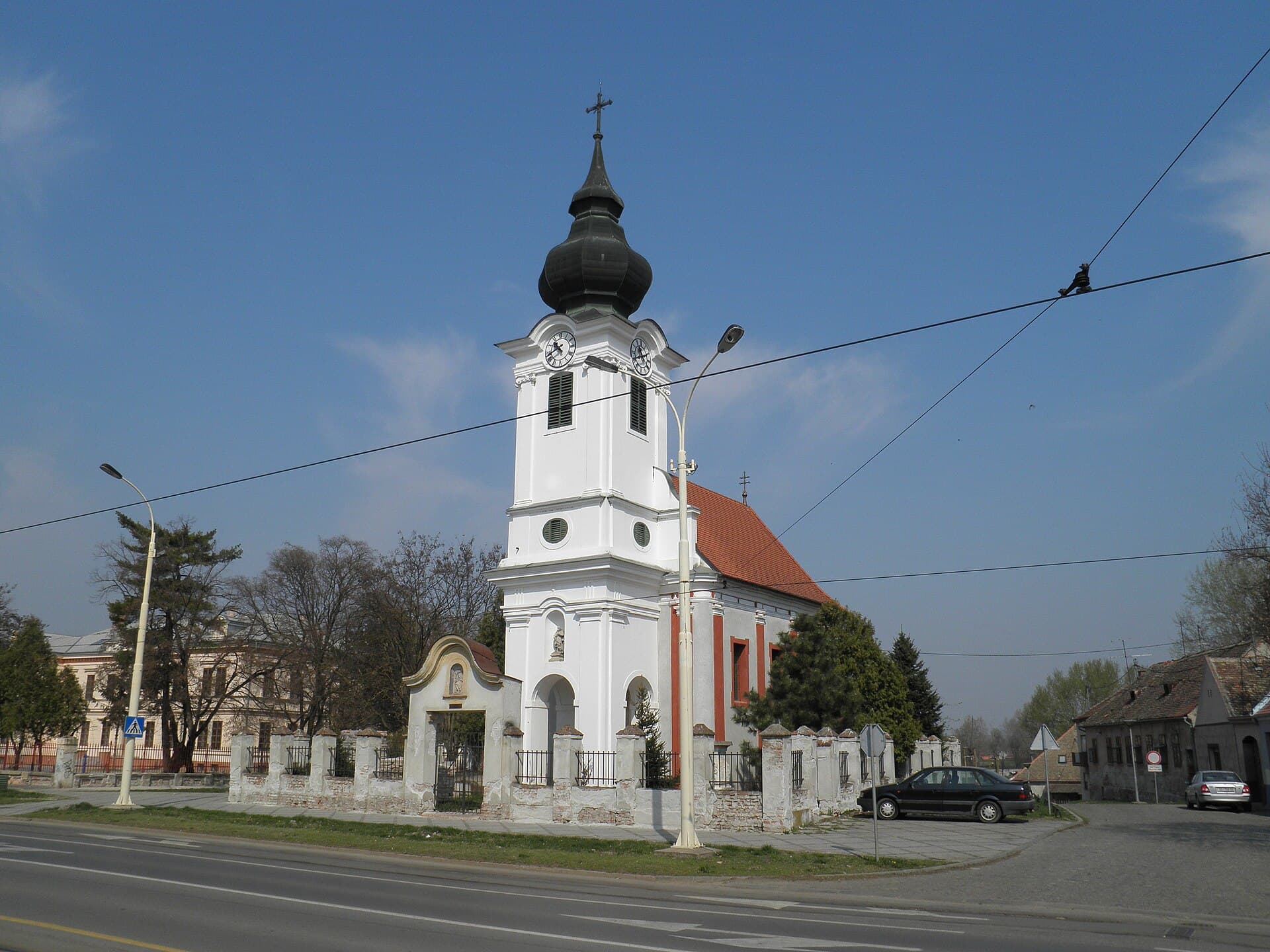

Holy Cross Church and Convent in Osijek
Landmark · Tvrđavica
convent wth church in Croatia
7 km from Darda
Stays
No stays listed here yet
Things to do
Start at the Church of St John the Baptist, then continue to the Art Nouveau portal leading into Esterházy Castle park. Look for the obelisk commemorating those killed in the First World War and view the castle façade as the centrepiece of the former estate’s three-wing composition. Behind the residence, continue towards Lake Đola, where the shore reveals the rear of the castle and the former working side of the estate. Conclude with Darda’s account of the Suleiman Bridge: the Ottoman crossing ran from Osijek across the Drava wetlands and ended near the site occupied by the castle complex. Visiting during TardaFest brings this particular chapter into sharper focus, as the historical programme uses the castle courtyard and park as its setting.
Tours and activities
AdAd · partner offers: GetYourGuideThe partner handles booking, payment and support. StayBravo may earn a commission on bookings made through these links.How we choose offersGetYourGuide offers are selected and ordered by GetYourGuide based on the name of the nearest larger town or national park; we do not influence their selection and do not use data about you.GetYourGuide · Osijek
We show GetYourGuide offers once you allow their cookies.
Practical information
Getting there and around
Darda stands on the Osijek–Pécs railway, 14 kilometres north of Osijek, and can therefore be reached by regional train or by road through southern Baranja. The principal road approach follows the D7, linking the Osijek area with Beli Manastir and the Croatian–Hungarian border; the motorway section of Corridor Vc also passes nearby. Buses serving Darda operate from Osijek’s Arriva-managed coach station, but departures should be searched for the intended travel date. Darda station provides rail connections towards Osijek and Beli Manastir, subject to the current HŽPP timetable. A car becomes more useful when combining the castle and Lake Đola with Bilje, Kopački Rit or several other Baranja stops on the same day.
Frequently asked questions
Can Esterházy Castle be visited as a museum?
Ministry of Culture documentation lists the castle as having no permanent use, so plan an exterior visit to the complex and park rather than a regularly open museum.
What is Lake Đola?
Lake Đola lies behind Esterházy Castle, beside land that once formed part of the Darda estate’s working area.
How far is Darda from Osijek?
The Croatian Encyclopedia places Darda 14 kilometres north of Osijek.
Nearby
Darda
Open in OpenStreetMap(opens in a new tab)straight-line distance
Related guides

Osijek
Tvrđa and the centre around the main square are distinct starting points for understanding Osijek. The former emphasises the fortified historic quarter and Baroque architecture; the latter…
Read the guide

Vukovar
A cultural visit to Vukovar has several separate centres of gravity. Eltz Palace and the City Museum address the city and its inhabitants across different periods. Vučedol reaches much…
Read the guide

Stubičke Toplice
Stubičke Toplice derives almost its entire identity from thermal water and the Zagorje landscape. There is no large urban historic core; green spaces, bathing facilities and traces of the…
Read the guide
Slavonski Brod
Slavonski Brod developed around one of the major crossings of the Sava, and that border and transport role left a strong mark on the city. Brod Fortress represents the eighteenth-century…
Read the guide
Know Darda? Correct us
Tell us in your own words what is not accurate. We check right away.Do not enter personal data. Corrections are checked by the StayBravo AI assistant; changes to the description are approved by an editor. Use the form instead
Do you know Darda?
Help the guests who come after you.
Help us complete
Nothing is published without an editor’s review.Report illegal content
Photo credits: Darda — Biljanabekic (CC BY-SA 2.5) · Bilje — rom@nski photo (CC BY 2.0) · Vardarac — Tórizs (CC BY-SA 3.0) · Čeminac — IvanOS (CC BY-SA 3.0) · Osijek — Rp031 (CC BY-SA 4.0) · Lug, Bilje — Donatus Darko Tepert (CC BY-SA 3.0) · Osijek Zoo and Aquarium, Holy Cross Church and Convent in Osijek — Roko Poljak (CC BY-SA 4.0) · St. Roch Chapel in Gornji Grad (Osijek) — Mister No (CC BY 3.0) · Vukovar — Bybbisch94, Christian Gebhardt (CC BY-SA 4.0) · Stubičke Toplice — MOs810 (CC BY-SA 4.0) · Slavonski Brod — Petar Milošević (CC BY-SA 4.0)