Klana
About this place
Klana lies north-west of Rijeka at an elevation of 564 metres, in the mountainous meeting point of the Rijeka hinterland, Gorski kotar and the Slovenian border. Although administratively part of Primorje-Gorski Kotar County, high ground separates the settlement from the sea and gives it a harsher climate than coastal Kvarner. Above the village, at 628 metres, stand the conserved remains of Gradina Castle, once a defensive and customs post around which Klana developed. Archaeological finds from Gradina include a bronze coin of the fourth-century emperor Maxentius; the castle itself was badly damaged by the 1870 earthquake and by the subsequent reuse of its stone to rebuild local houses. A gentle marked route reaches Gradina from central Klana in about 15 minutes. A more demanding walk climbs to the 933-metre viewpoint of Pliš, while nearby Studena provides access to remains of the late Roman Liburnian limes. The Klana Mountain Trail links forests, summits and historic points before finishing in Studena. Klana is therefore a mountain base for walking, archaeology and woodland outings in Rijeka’s hinterland, not a seaside bathing destination.
Klana is a mountain settlement 564 metres above sea level, positioned between Rijeka’s hinterland, Gorski kotar and Slovenia. Its municipality also encompasses Breza, Škalnica, Lisac and Studena, while forestry and timber processing have long reflected the surrounding landscape. The village grew below Gradina, a fortification that once controlled the movement of goods from Carniola towards Rijeka. Hills separating Klana from Kvarner reduce the influence of warm maritime air, producing a harsher climate than on the coast. The Church of St Jerome adds another historical layer: a stone bearing a Glagolitic inscription and the year 1495 was incorporated into the building. Klana’s identity is therefore rooted in woodland, its borderland position and an old transport corridor leading to Rijeka.
Stays
No stays listed here yet
Things to see
Things to do
From central Klana, follow the marked route to Gradina; the easy climb to the castle remains at 628 metres takes about 15 minutes. Conserved foundations reveal a site associated with late Roman defence, medieval lords and the destructive earthquake of 1870. For a longer outing, continue from the hamlet of Laze along the forest path to Pliš, a 933-metre viewpoint reached by a moderately demanding walk of about two hours. Another option begins in Studena, around two kilometres from Klana, where an easy one-hour trail reaches remnants of the third- and fourth-century Liburnian limes. Experienced walkers can extend the Studena route to the 1,377-metre summit of Obruč.
Practical information
Getting there and around
Klana is linked to the Rijeka area by road through Viškovo, and a new connecting road opened in 2019 shortened journeys between Rijeka and the municipality. Rijeka is approximately 15 kilometres from Klana’s business zone, while the nearest motorway access is listed at about ten kilometres. Local scheduled transport in Klana Municipality forms part of the KD Autotrolej network serving Rijeka and its surrounding towns and municipalities. Travellers should check Autotrolej’s current 2026 timetable because suburban departures are less frequent than services within Rijeka. A car remains more convenient for reaching Studena, Lisac and the trailheads for Pliš, Gradina, the Liburnian limes and Obruč.
Frequently asked questions
How long is the walk from Klana to Gradina?
The easy marked route to the Gradina castle remains at 628 metres takes about 15 minutes.
Where can the Liburnian limes be seen near Klana?
A marked walk of about one hour from Studena reaches remains of the third- and fourth-century wall.
Is Klana a seaside swimming destination?
Klana sits at 564 metres in Rijeka’s mountainous hinterland, so its defining attractions are forest and hiking trails rather than seaside beaches.
Related guides
Rab
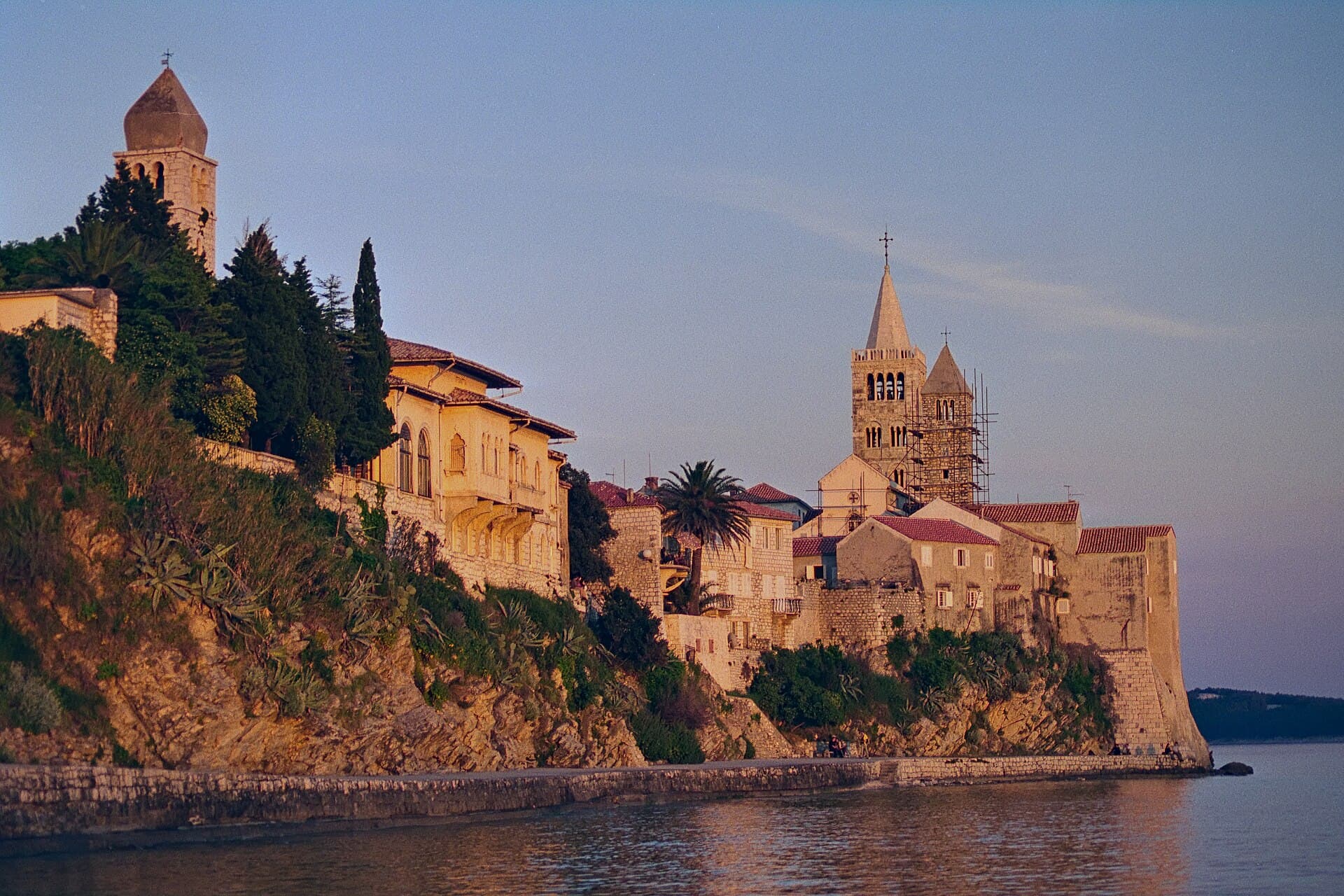
Rab's old town has a clear silhouette, but it rewards more than a postcard view. Its four towers mark distinct religious sites: the Assumption of Mary, St John the Evangelist, St Andrew and…
Read the guide
Help improve this page
Spot something missing or wrong? Suggest a correction, add your photo or report a problem. Editors review every suggestion before it is published.
Photo credits
- Klana — Johann Weikhard von Valvasor · Public domain · Wikimedia Commons
- Lipa — Goran Moravček · CC BY-SA 3.0 · Wikimedia Commons
- Rab — Herbert Ortner · CC BY 4.0 · Wikimedia Commons
- Mali Lošinj — K. Korlevic · Public domain · Wikimedia Commons
- Opatija — Jimmy Harris · CC BY 2.0 · Wikimedia Commons