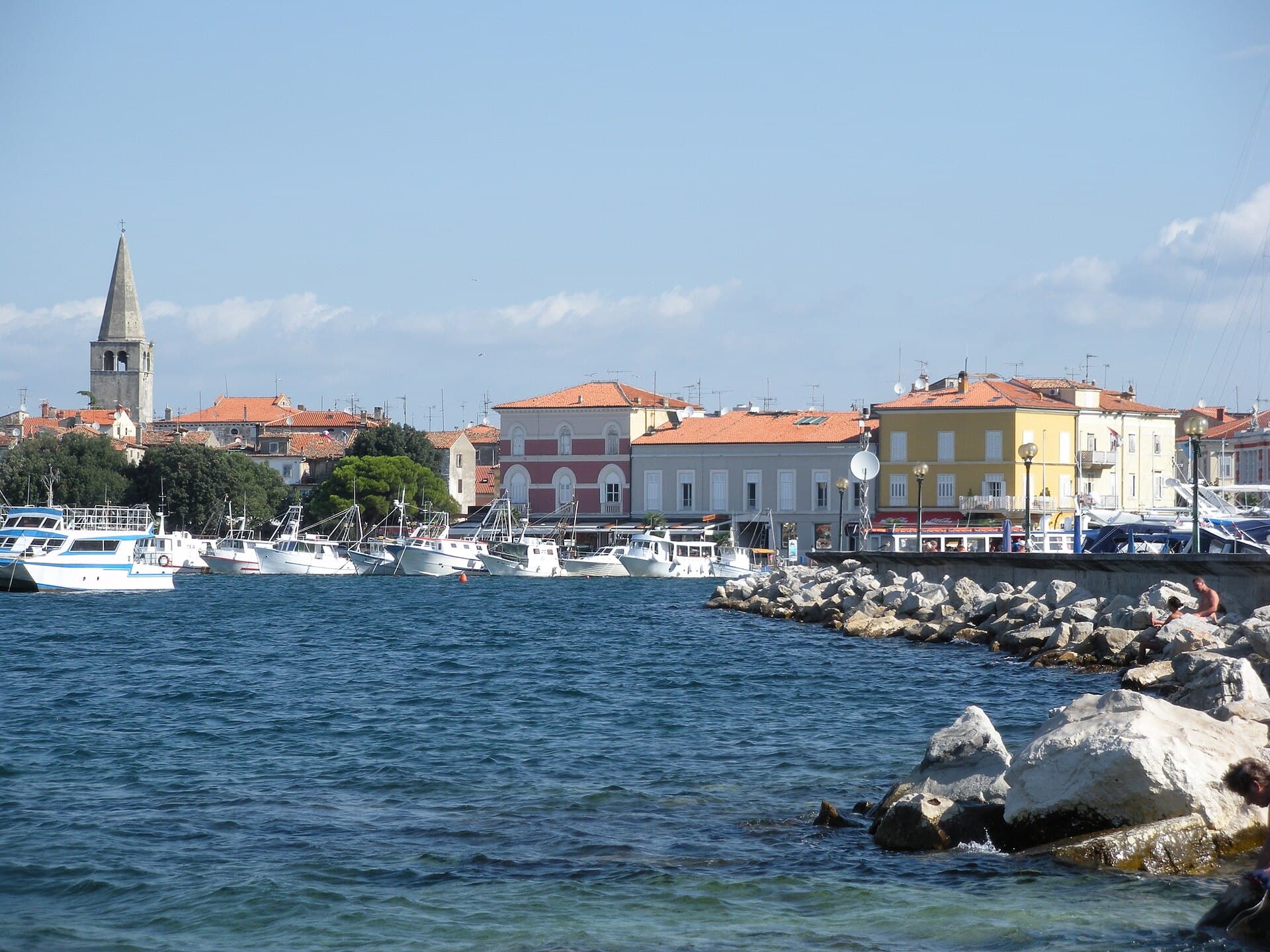
Kršan
About this place
Kršan is a small historic settlement about 15 kilometres north of Labin, on the road linking Labin with Pazin. Its old quarter grew around Kršan Castle, a fortified complex first recorded as Castrum Carsach in 1274. Beyond the town gate, narrow stone passages lead between old houses and defensive structures dominated by a square tower. The castle courtyard preserves a 15th-century Gothic doorway and a stone wellhead dated 1666. Kršan is also associated with the Istrian Demarcation, an important Glagolitic legal text whose manuscript copy was discovered here in the mid-19th century. The village occupies a useful position between the Labin area, Čepić Field and the slopes of Učka, while the wider municipality reaches Plomin Bay and the Kvarner coast. This unusual geography makes it possible to combine the medieval centre with Plomin’s hilltop heritage, walks on Učka or swimming near Plomin Luka, Brestova and Zagorje. Kršan works particularly well as a quiet base for exploring eastern Istria by car rather than as a conventional seaside resort.
Kršan’s character comes from its fortified quarter overlooking the former Lake Čepić and present-day Čepić Field. The castle entered written records in 1274, and the lanes and houses of today’s old village gradually developed beside its walls. A square tower, town gate, Gothic doorway and well dated 1666 create the compact appearance of a former feudal seat. The nearby parish church of St Anthony the Abbot contains furnishings largely dating from the 18th century, while the cemetery chapel of St James belongs to the 15th century. Modern Kršan looks towards the Labin area for services and transport, yet its position between Učka, Plomin and inland Istria gives it a markedly different atmosphere from the resorts along the Adriatic shore.
Stays nearby
 Apartment
Apartmeni Klenovica.eu
Klenovica
56 km from Kršan
up to 4 guests · 1 bedroom
The host confirms the exact price for your dates and availability.
Things to see

Kršan Castle
Landmark · Kršan
Beaches
Kršan village itself does not sit on the seafront, so swimming requires a drive to the municipality’s coastal settlements. Dražice, also known locally as Copacabana, lies around Plomin Luka at the inner end of Plomin Bay. Bobina is a smaller coastal spot near Zagorje, whereas Brestova faces the more exposed Kvarner side and also serves as the ferry port for Cres. The local tourist board’s 2024 programme specifically covered seasonal cleaning at Dražice, Bobina and Brestova, as well as underwater cleaning around Plomin Luka. A car is the practical option because these bathing places are separated from one another and from Kršan’s medieval core, with local roads reaching the coast through the Plomin and Vozilići area.
Things to do
Begin at the old town gate and walk through Kršan’s stone-built core towards the square tower and inner courtyard of the castle. Look for the Gothic doorway and the wellhead bearing the date 1666, then continue to the Church of St Anthony the Abbot and the cemetery chapel of St James. Spend the second half of the day in Plomin, the fortified hill settlement above the deep bay of the same name, entering through its surviving northern gate and exploring its tight web of lanes. Plomin’s parish church contains a stone tabernacle dated 1499, Renaissance choir stalls and a 17th-century altar. Finish by descending towards Plomin Luka or by continuing towards viewpoints and walking routes on Učka’s western slopes.
Practical information
Getting there and around
Kršan is easiest to reach by car from Labin, roughly 15 kilometres away, or from the direction of Pazin. Roads across the municipality connect Plomin, Vozilići, Čepić Field and the Učka Tunnel corridor, but private transport remains the practical choice for reaching the old village, beaches and scattered hamlets. Travellers arriving by intercity coach can use Labin as the main transfer point: Arriva’s bus station there has services to Zagreb, Rijeka, Pula and other cities, followed by a local connection or taxi to Kršan. Ferries for Cres depart from Brestova, a coastal port within Kršan Municipality. Cycling suits shorter local outings, although riders should expect substantial climbing between the shoreline, hilltop Plomin and the inland settlements.
Frequently asked questions
When was Kršan Castle first recorded?
The castle was first recorded in 1274 under the name Castrum Carsach.
Can you swim in Kršan village?
The village is inland; the nearest coastal options are around Plomin Luka, with Bobina and Brestova elsewhere in the municipality.
Where was a copy of the Istrian Demarcation found?
A manuscript copy of this Glagolitic legal document was discovered in Kršan in the mid-19th century.
Nearby

Vozilići
Village · Istria

Related guides

Novigrad
Novigrad-Cittanova developed on Istria’s north-western coast near the mouth of the Mirna, in a maritime setting that shaped centuries of fishing and trade. The historic centre still…
Read the guide
Help improve this page
Spot something missing or wrong? Suggest a correction, add your photo or report a problem. Editors review every suggestion before it is published.
Photo credits
- Kršan, Kršan Castle — Croq · CC BY-SA 3.0 · Wikimedia Commons
- Vozilići, Polje Čepić — SIG SG 510 · CC0 · Wikimedia Commons
- Apartmeni Klenovica.eu — Apartmani Klenovica.eu · courtesy of the property owner
- Novigrad — Sl-Ziga · Public domain · Wikimedia Commons