About this place
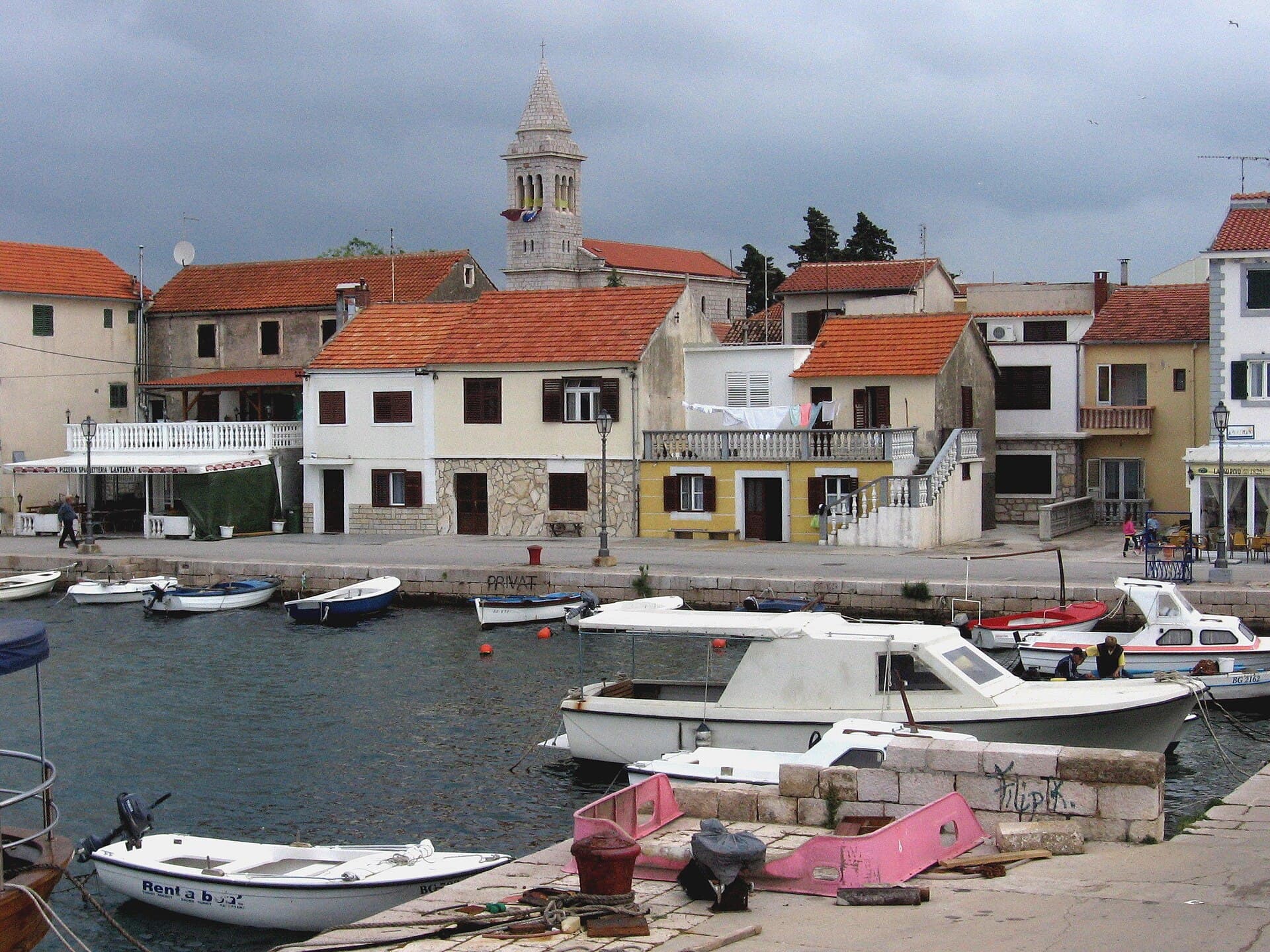
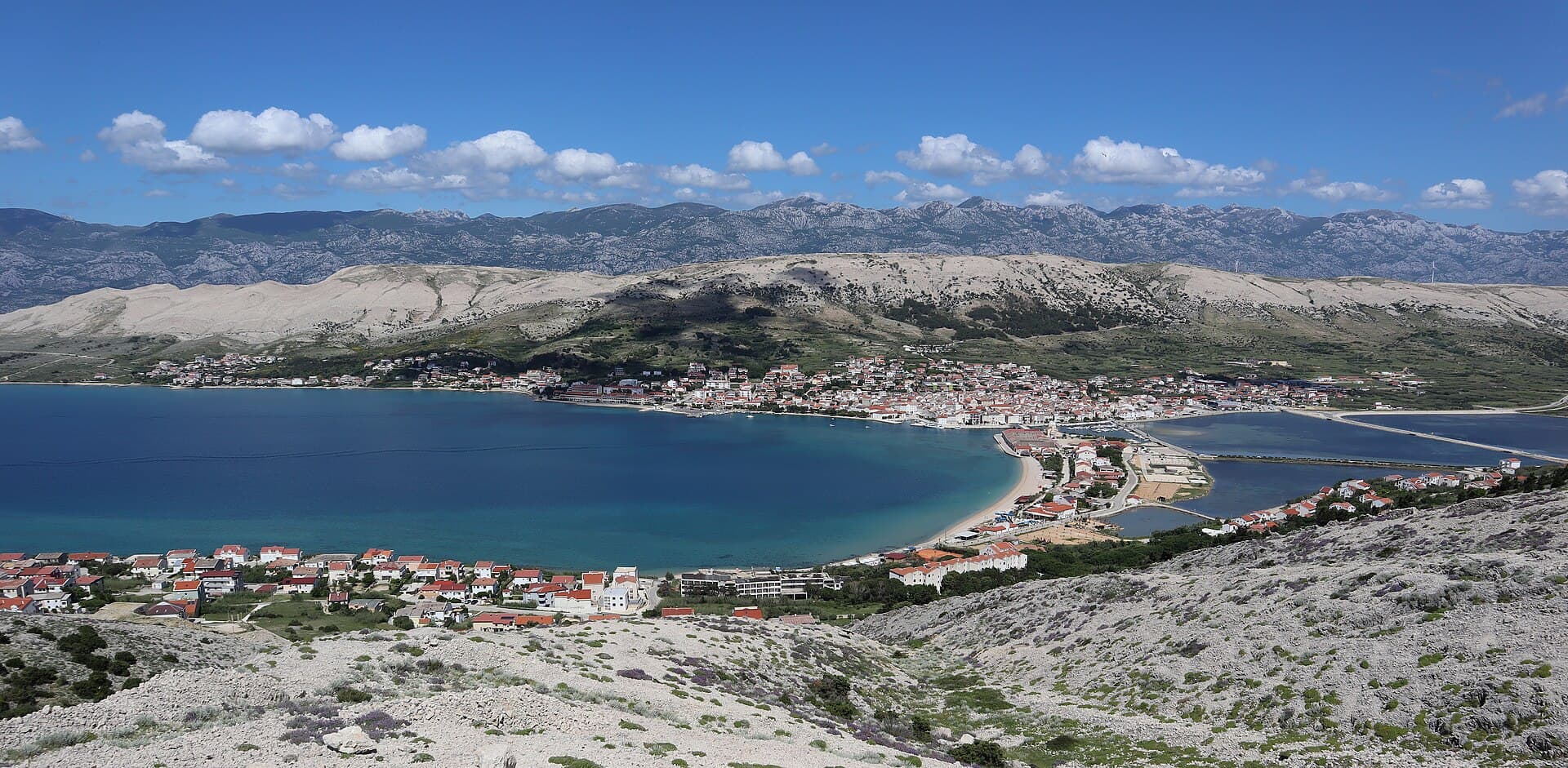
Vrana is a historic inland village behind Pakoštane, positioned between the Adriatic coast and the northwestern side of Lake Vrana Nature Park. Its defining monument is the ruined medieval town and monastery complex. Benedictines first occupied this royal estate, followed by the Knights Templar and, after their suppression in 1312, the Hospitallers. A short distance away stands Mašković Han, an unfinished 17th-century caravanserai commissioned by Jusuf Mašković, a Vrana native who rose high in the Ottoman administration. The natural continuation of a visit is Crkvine, the entrance to the ornithological reserve between Vrana and Pakoštane, where a 600-metre wooden educational trail crosses the lakeside reed beds. Vrana is not a seaside resort: Pakoštane is the practical choice for developed sea beaches, while the lake is better approached through birdwatching, walking and regulated angling. The village’s unusual strength is the opportunity to combine medieval Croatian history, Ottoman architecture and a protected wetland landscape within a single day.
Vrana is an inland settlement in the Municipality of Pakoštane, set between the fertile Ravni kotari plain and Lake Vrana. Its historical layers run from the medieval Vrana estate to Maškovića Han, commissioned in 1644 by the Vrana-born Ottoman admiral and court official Jusuf Mašković. The restored han now contains a collection of finds from Vrana and Pakoštane, including underwater artefacts, cannonballs and Ottoman tombstone fragments. The lake is more than a backdrop: springs near Vrana supplied a Roman aqueduct to Zadar. This makes Vrana an unusual meeting point of Ottoman architecture, the remains of the old town and the protected wetland landscape.
Stays nearby
 Apartment
Apartmeni Klenovica.eu
Klenovica
Klenovica, 139 km from Vrana
up to 4 guests · 1 bedroom
The host confirms the exact price for your dates and availability.
Things to see
Vrana’s principal landmark is its ruined fortified monastery, occupied by Benedictines from the late 11th century. The Templars controlled it from the 12th century, and the Hospitallers succeeded them after the order’s suppression in 1312, explaining the familiar name Priory of Vrana. The second essential monument is Mašković Han, a monumental 17th-century lodging house begun for travellers and caravans by the Ottoman dignitary Jusuf Mašković. The remains of Saint Catherine’s church at the village entrance add another visible fragment to this unusually layered historical site.
Beaches
Vrana has no Adriatic beach; the nearest developed swimming spot is at Camp Crkvine on Lake Vrana, close to the village. A grassy strip beneath pine trees leads to a pebbly edge, while reeds and sedges line the shallow sections. Nature Park documentation identifies Crkvine as the lake’s only developed beach, with the other access points remaining low-use natural shores. For a salt-water dip, Prosika channel offers a narrow connection between the lake and the sea. The beaches of Pakoštane lie roughly seven kilometres south of Lake Vrana.
Things to do
Start the morning among the ruins of Vrana’s old town and monastery, where the succession of Benedictines, Templars and Hospitallers is easiest to understand. Continue to Mašković Han and its museum display, then descend toward the Crkvine visitor centre between Vrana and Pakoštane. Its level, 600-metre wooden trail crosses the ornithological reserve and includes eight interpretation panels. Finish by driving through Radašinovci to Kamenjak: the plateau, approximately 283 metres above sea level, overlooks the entire lake and reaches visually toward Pakoštane, Murter and the Kornati islands.
Practical information
Practical information
The most useful visitor points are Crkvine, between Vrana and Pakoštane, and Kamenjak above Radašinovci. Binoculars can be rented seasonally at Crkvine, while Kamenjak provides information, maps, souvenirs and a panoramic telescope. The park’s basic admission covers its three visitor centres and six educational trails. Seasonal fishing permits are sold at Crkvine and Prosika; angling is therefore a regulated activity rather than something automatically included in an ordinary lakeside visit.
Getting there and around
Vrana is linked by road with Pakoštane, Benkovac and the Zadar hinterland, while a car or bicycle is the most practical way to connect the park’s dispersed sites. Crkvine lies 2.4 kilometres from Pakoštane on the road toward Vrana; for Kamenjak, continue from Vrana past Mašković Han toward Radašinovci. The park’s three principal visitor centres are more than 15 kilometres apart, and their combined circuit requires at least three hours. Liburnija Zadar lists Vrana in its suburban network, although travellers should check the current 2026 departure before setting out.
Frequently asked questions
How long is the Crkvine trail?
The wooden Crkvine trail is 600 metres long, has eight interpretation panels and takes about 45 minutes to complete.
Is Crkvine suitable for pushchairs?
The level Crkvine boardwalk is officially identified as suitable for pushchairs and wheelchairs.
Who controlled the Priory of Vrana?
After the Benedictines, the complex passed to the Templars and then to the Hospitallers following the Templars’ suppression in 1312.
Can binoculars be rented near Vrana?
Binoculars can be rented seasonally at the Crkvine visitor centre at the entrance to the ornithological trail.
Nearby

Šopot
Village · Dalmatia – Zadar

Related guides
Novalja
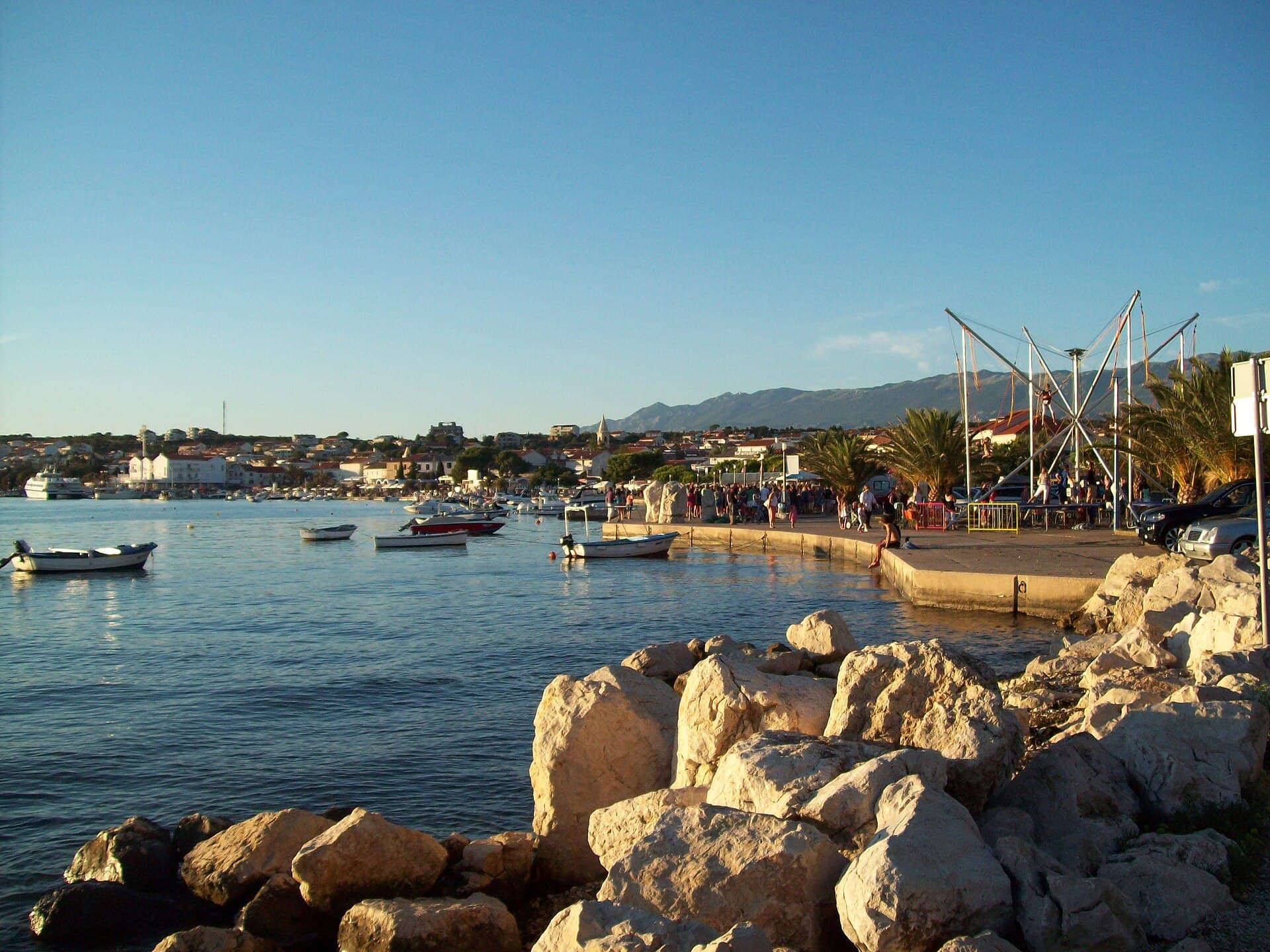
Novalja curves around a bay on Pag’s western shore, with the waterfront, Trg Bazilike and streets around Mala crikva forming the centre. Landing places and restaurants line the water, while…
Read the guide
Help improve this page
Spot something missing or wrong? Suggest a correction, add your photo or report a problem. Editors review every suggestion before it is published.
Photo credits
- Vrana — Bojovnik · CC BY-SA 4.0 · Wikimedia Commons
- Šopot — Roberta F. · CC BY-SA 3.0 · Wikimedia Commons
- Gornja Jagodnja — Mocira · CC BY-SA 4.0 · Wikimedia Commons
- Pakoštane — Roman Klementschitz, Wien · CC BY-SA 3.0 · Wikimedia Commons
- Old Town of Vrana