About this place
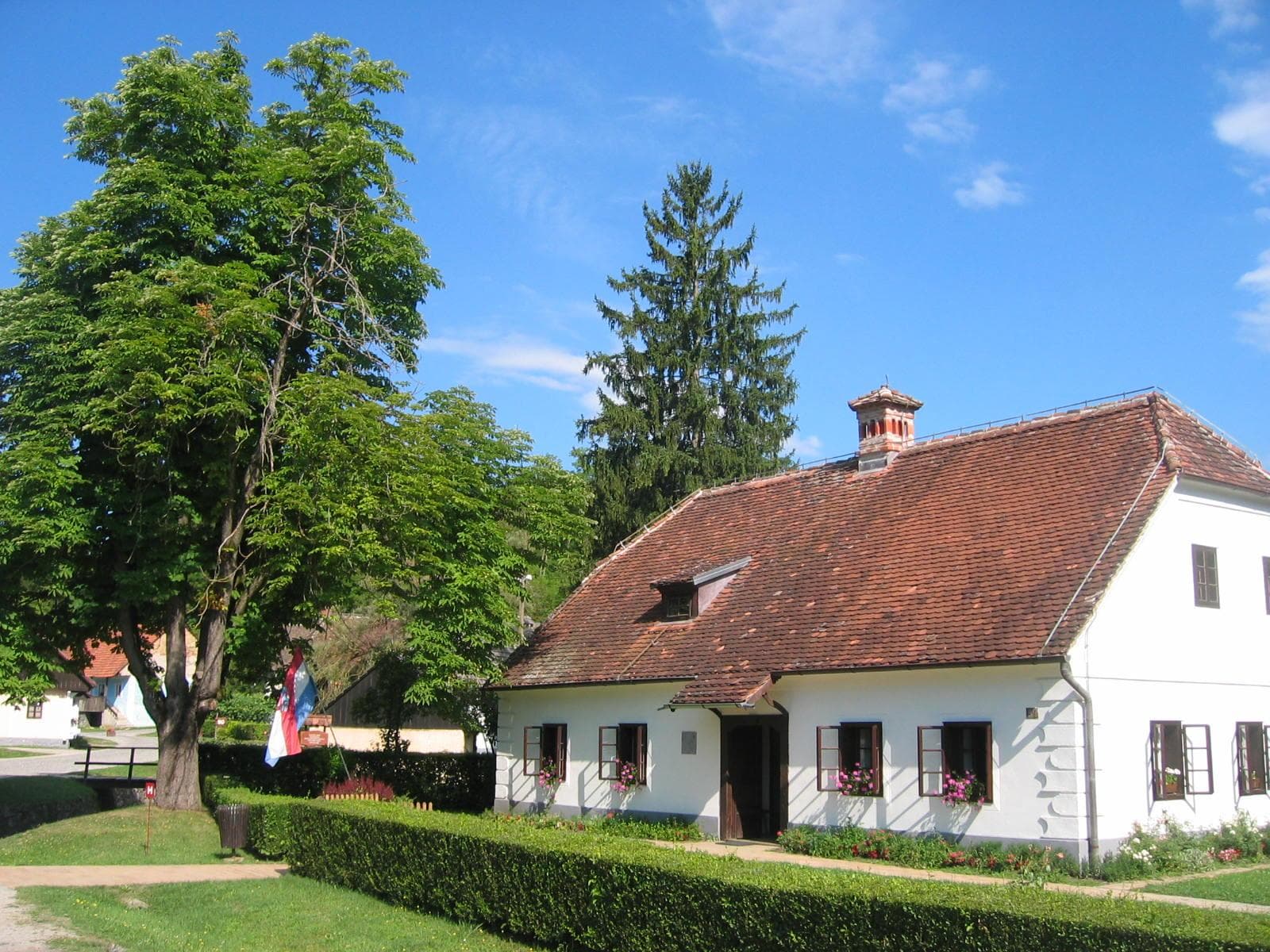
Kumrovec lies beside the Sutla on the Croatian–Slovenian border, yet its visitor experience is centred on the Staro Selo Museum. Croatia’s largest in-situ ethnographic museum contains roughly forty preserved traditional buildings and displays devoted to Zagorje homes, farming and crafts around the turn of the 20th century. At the heart of the protected village ensemble is the birthplace of Josip Broz Tito, now containing historical and ethnographic exhibits, with a sculpture by Antun Augustinčić in the courtyard. The museum extends well beyond political history: houses and farm buildings interpret blacksmithing, pottery, weaving and other trades, while its collections include furniture, tools, ceramics, textiles, toys and folk instruments. After the visit, Krčma Kod Starog offers a terrace facing the museum and Tito’s birthplace. Roads connect Kumrovec with Klanjec, Zabok and Zaprešić, but public-transport journeys require advance planning. A natural continuation is Klanjec and nearby Zelenjak, where the monument to the Croatian anthem stands in the Sutla valley. Allow at least several hours to explore Staro Selo properly rather than treating it as a quick photo stop.
Kumrovec stands beside the Sutla River on the Slovenian border, with the Staro selo Museum as its defining landmark—the largest open-air museum in Hrvatsko zagorje. Its preserved and restored cottages and farm buildings recreate village life at the turn of the 20th century. The centrepiece includes Josip Broz Tito’s birthplace and the Broz family smallholding. Beyond the architecture, the displays explore blacksmithing, wheelwrighting, gingerbread making, pottery, flax and hemp processing, and the former village school. Since 1993, the museum has formed part of the Museums of Hrvatsko zagorje.
Stays nearby
 Apartment
Apartmeni Klenovica.eu
Klenovica
Klenovica, 126 km from Kumrovec
up to 4 guests · 1 bedroom
The host confirms the exact price for your dates and availability.
Things to see
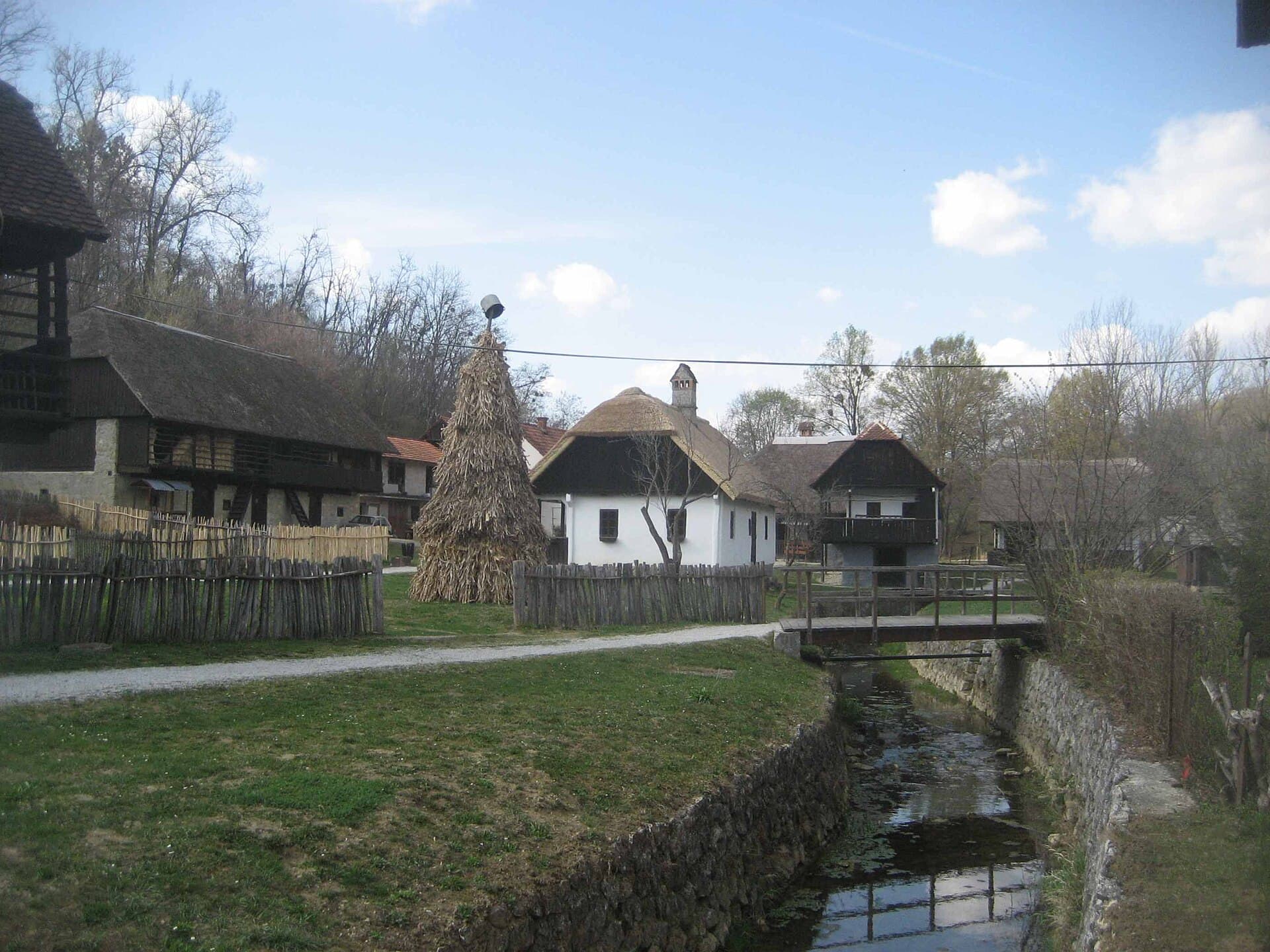
The principal attraction is the Staro Selo Museum, Croatia’s largest in-situ ethnographic museum. Its roughly forty preserved structures include houses, barns and other farm buildings, with permanent exhibitions depicting village life in Zagorje around the turn of the 20th century. Josip Broz Tito’s birthplace stands at the centre and contains ethnographic and historical displays; Antun Augustinčić’s sculpture of Tito was placed in its courtyard in 1948. Architectural details deserve close attention: timber and stone construction, the hiža dwelling, barn, kočok pigsty and čatrnja well illustrate the components of a traditional Zagorje farmstead.
Things to do
Enter Staro Selo from the visitor centre and begin with Josip Broz Tito’s birthplace and Antun Augustinčić’s sculpture in its courtyard. Continue through homes and farm buildings interpreting Zagorje households, agriculture and crafts; displays cover blacksmithing, pottery, weaving, wooden toys and gingerbread making. If a demonstration or workshop is scheduled, fit it between the permanent exhibitions, as the museum’s traditional-crafts centre works with practising artisans. After exploring the museum, walk along Cesta Lijepe Naše toward central Kumrovec and finish with a meal at Krčma Kod Starog, directly opposite the historic museum quarter.
Practical information
Parking
Two paid public car parks serve visitors: one at the Kumrovec visitor centre and another along Cesta Lijepe Naše on the former Oaza site. Under the tariff published for 2026, zone-one charging applies daily, including weekends and holidays, from 07:00 to 20:00. Cars and motorcycles pay €1 per hour; the daily rate is €4 for vans, €10 for buses and €20 for campervans or caravans. A ticket must be purchased within 15 minutes, and parking is limited to 24 hours. The visitor-centre car park is the most convenient choice for entering Staro Selo.
Getting there and around
By car, Kumrovec is reached on the D205 via Klanjec, with onward connections toward Zabok and Zaprešić. For public transport, the municipality lists a bus connection from the Zaprešić area, while the county timetable includes services linking Kumrovec with Zabok and nearby settlements; some departures operate only on school days. Meštrović prijevoz runs the route through Pušća, Dubravica and Klanjec. Although a railway line passes Kumrovec, a passenger journey from Zagreb must be planned against the current timetable and may involve connections. For a day trip combining several local sights, driving remains considerably simpler.
Frequently asked questions
Is Staro Selo open on Mondays?
No. Under the published 2026 schedule, the museum is closed on Mondays in every seasonal period.
May visitors take photographs?
Photography and filming for personal use are free, but the resulting material may not be published under that permission.
Does the museum have a café?
Yes. Staro Selo has a café and souvenir shop, with a restaurant close to the complex.
Where should I park for Staro Selo?
The paid car park at the visitor centre is the most convenient; another public car park is located along Cesta Lijepe Naše.


Related guides
Tuhelj
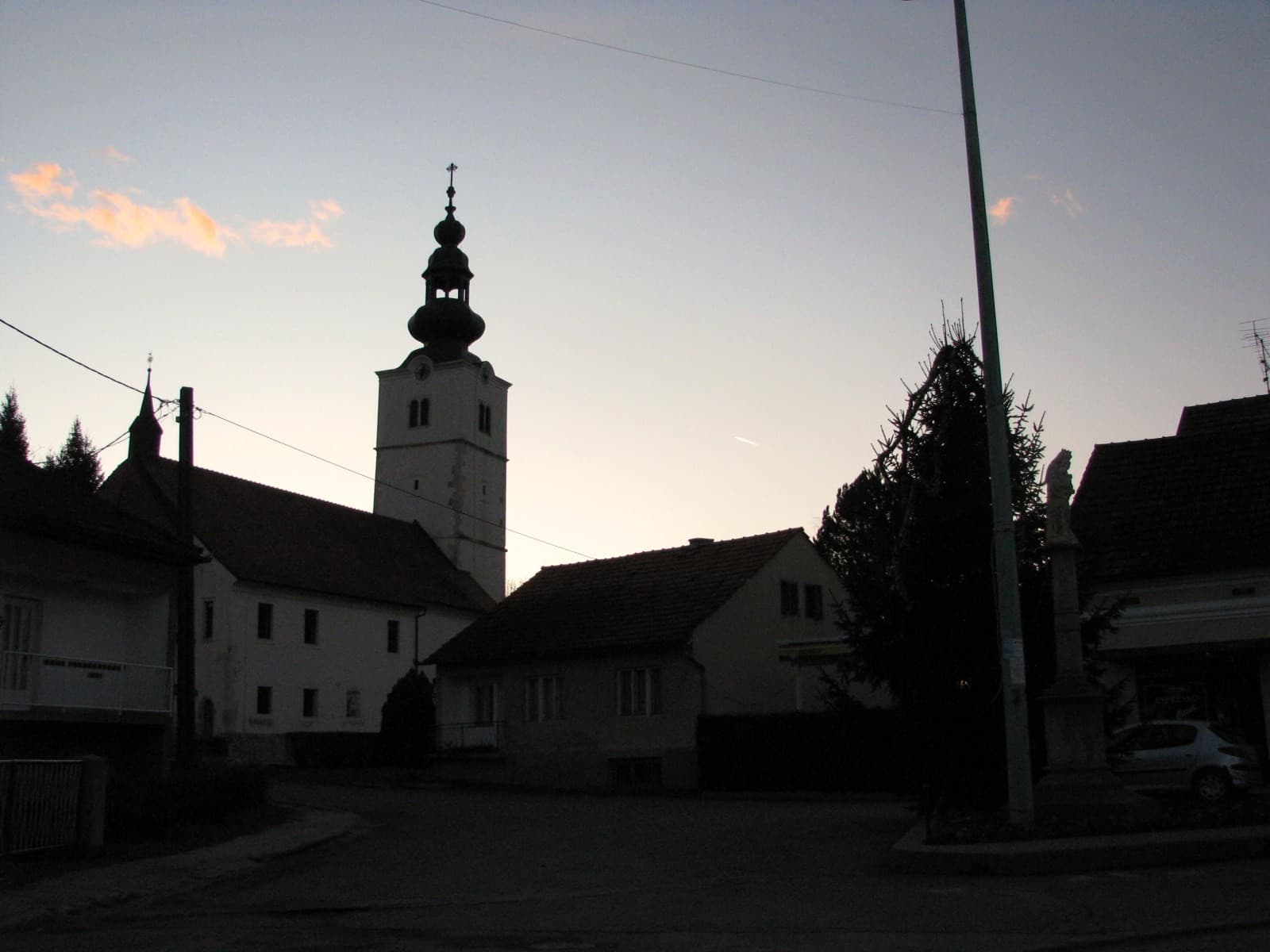
The population of the municipality has fallen from a peak of 3,780 in 1971 to 2,043 in 2021, and 61 people were lost in the last census decade alone. Eleven settlements, from Banska Gorica…
Read the guide

Help improve this page
Spot something missing or wrong? Suggest a correction, add your photo or report a problem. Editors review every suggestion before it is published.
Photo credits
- Kumrovec — Žiga · Public domain · Wikimedia Commons
- Razvor — Ex13 · CC BY-SA 3.0 · Wikimedia Commons
- Risvica — Eranyo · CC BY 3.0 · Wikimedia Commons
- Open air museum Staro selo, Kumrovec — Croq · CC BY-SA 3.0 · Wikimedia Commons
- Apartmeni Klenovica.eu — Apartmani Klenovica.eu · courtesy of the property owner
- Tuhelj

