Levanjska Varoš
About this place
Levanjska Varoš is a small Slavonian settlement west of Đakovo, standing on the D38 state road and near the former route between Đakovo and Požega. Its long history begins with a Roman milestone associated with the name Leuconum and the year 228, while medieval records mention the settlement as Nevna in 1244. Surviving traces of foundations and double defensive ditches evoke the fortress that preceded the later hilltop settlement of Varoš. The village landmark is the Church of St Anthony of Padua, a protected cultural monument whose feast is observed on 13 June. On the western approach, the stone structure known as Široka ćuprija recalls the medieval Veli drum, or Via regalis. Levanjska Varoš is therefore best suited to travellers interested in quiet, little-visited layers of Đakovo-area archaeology and religious heritage. A car and footwear suitable for unpaved approaches are useful, since the Gradina remains and other historical traces do not form part of a developed museum complex.
Levanjska Varoš draws its identity from a transition zone between the Đakovo plain and the surrounding hills, as well as from an unusually long record of settlement. The municipal chronology links Roman Leuconum with a milestone dated to 228, while the Đakovo regional museum records Roman material around the present cemetery and former forestry building. Medieval Nevna appears in written sources in 1244; forms such as Leva, Levna and eventually Levanjska Varoš spread after the estate passed to Petar Čeh de Leva. Rather than presenting a polished historic centre, the village reveals its past through scattered Roman finds, fortress earthworks, the parish church and an old route embedded in the landscape.
Things to see

 Significant landscape


Stays
No stays listed here yet
Things to do
Begin in Levanjska Varoš on the rise beside St Anthony of Padua Church, a protected monument registered as Z-1651 and distinguished by a bell tower incorporated into its façade. Continue around the present cemetery and former forestry site, where Roman objects and traces of a medieval earthwork have been recorded; any archaeological material should remain undisturbed. The municipal chronology links the settlement with Roman Leuconum in AD 228 and medieval Nevna, documented in 1244. To place those layers in a wider regional story, continue to the permanent archaeology display at the Museum of Đakovština, whose exhibits span prehistory, antiquity and the medieval to early modern periods.
Tours and activities
AdAd · partner offers: GetYourGuideThe partner handles booking, payment and support. StayBravo may earn a commission on bookings made through these links.How we choose offersGetYourGuide offers are selected and ordered by GetYourGuide based on the name of the nearest larger town or national park; we do not influence their selection and do not use data about you.GetYourGuide · Đakovo
We show GetYourGuide offers once you allow their cookies.
Practical information
Getting there and around
Levanjska Varoš stands directly on the D38 state road, making the approach from Đakovo the simplest way to visit. The village is about 21 kilometres west of Đakovo and roughly 44 kilometres north-east of Slavonski Brod, so a car is the practical option for combining it with either city and the municipality’s scattered settlements. Plan the local visit as a short road itinerary: the church is within the village, while Široka ćuprija lies on the western approach. A school bus carries pupils from outlying settlements to the primary school in Levanjska Varoš, but this dedicated service should not be treated as regular visitor transport.
Frequently asked questions
When is St Anthony celebrated in Levanjska Varoš?
The parish feast of St Anthony of Padua is observed on 13 June.
What is Široka ćuprija?
Široka ćuprija is a stone bridge on the village’s western approach, associated with the former Veli drum route between Đakovo and Požega.
Are there Roman remains in Levanjska Varoš?
Roman archaeological material has been recorded near the cemetery and former forestry building, while the local history also notes a milestone associated with Leuconum.
Nearby
Levanjska Varoš
Open in OpenStreetMap(opens in a new tab)Smaller places
straight-line distance
Related guides

Osijek
Tvrđa and the centre around the main square are distinct starting points for understanding Osijek. The former emphasises the fortified historic quarter and Baroque architecture; the latter…
Read the guide

Vukovar
A cultural visit to Vukovar has several separate centres of gravity. Eltz Palace and the City Museum address the city and its inhabitants across different periods. Vučedol reaches much…
Read the guide

Stubičke Toplice
Stubičke Toplice derives almost its entire identity from thermal water and the Zagorje landscape. There is no large urban historic core; green spaces, bathing facilities and traces of the…
Read the guide
Slavonski Brod
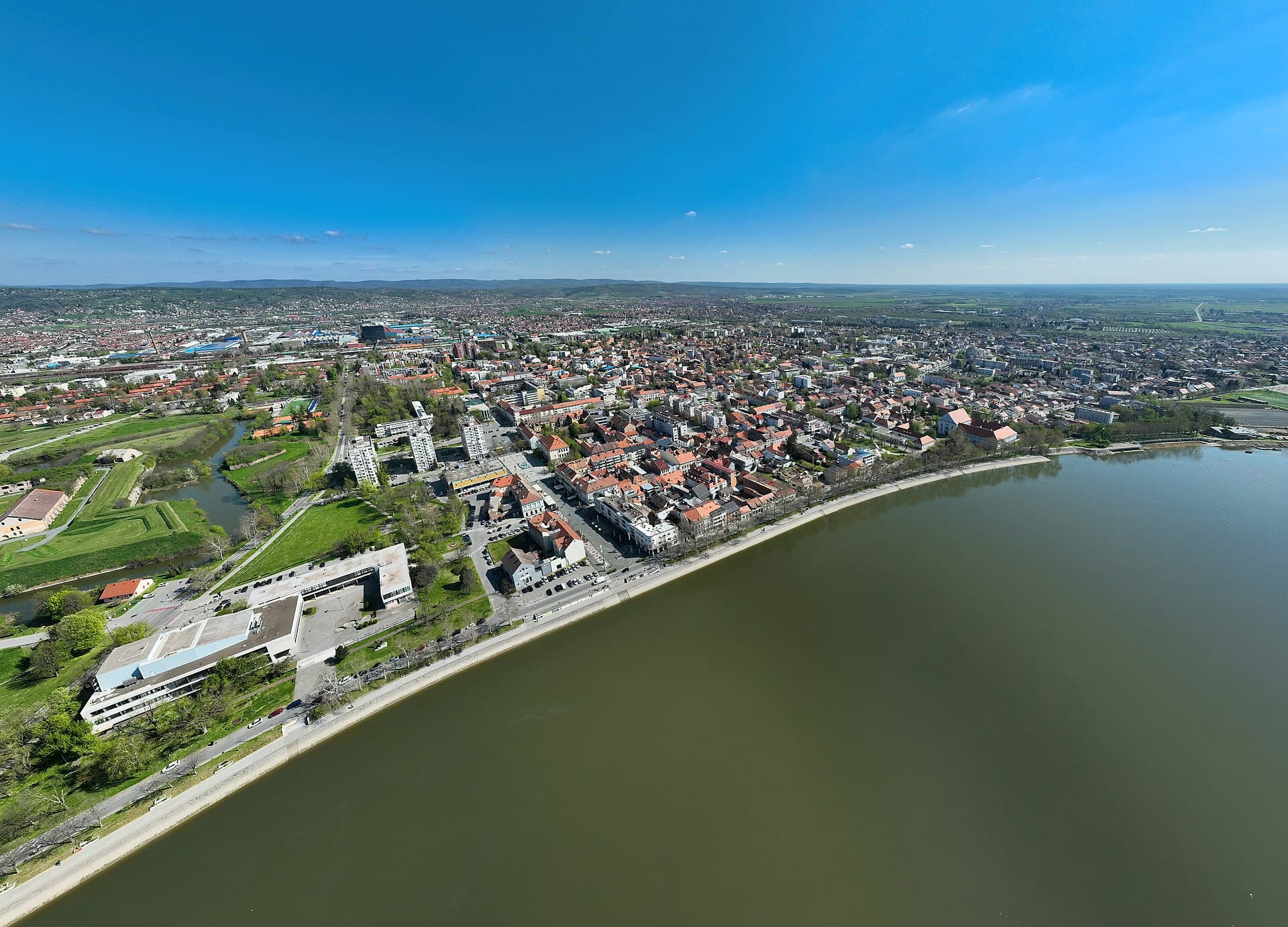
Slavonski Brod developed around one of the major crossings of the Sava, and that border and transport role left a strong mark on the city. Brod Fortress represents the eighteenth-century…
Read the guide
Know Levanjska Varoš? Correct us
Tell us in your own words what is not accurate. We check right away.Do not enter personal data. Corrections are checked by the StayBravo AI assistant; changes to the description are approved by an editor. Use the form instead
Do you know Levanjska Varoš?
Help the guests who come after you.
Help us complete
Nothing is published without an editor’s review.Report illegal content
Photo credits: Đakovo Cathedral — Author's own photo (CC BY 2.5) · Gajna — Frka (CC BY-SA 3.0) · Pejačević Manor — Flammard (CC BY-SA 3.0) · Brod Fortress — Modzzak (CC BY-SA 3.0) · Osijek — Rp031 (CC BY-SA 4.0) · Vukovar — Bybbisch94, Christian Gebhardt (CC BY-SA 4.0) · Stubičke Toplice — MOs810 (CC BY-SA 4.0) · Slavonski Brod — Petar Milošević (CC BY-SA 4.0)