
Čepin
About this place
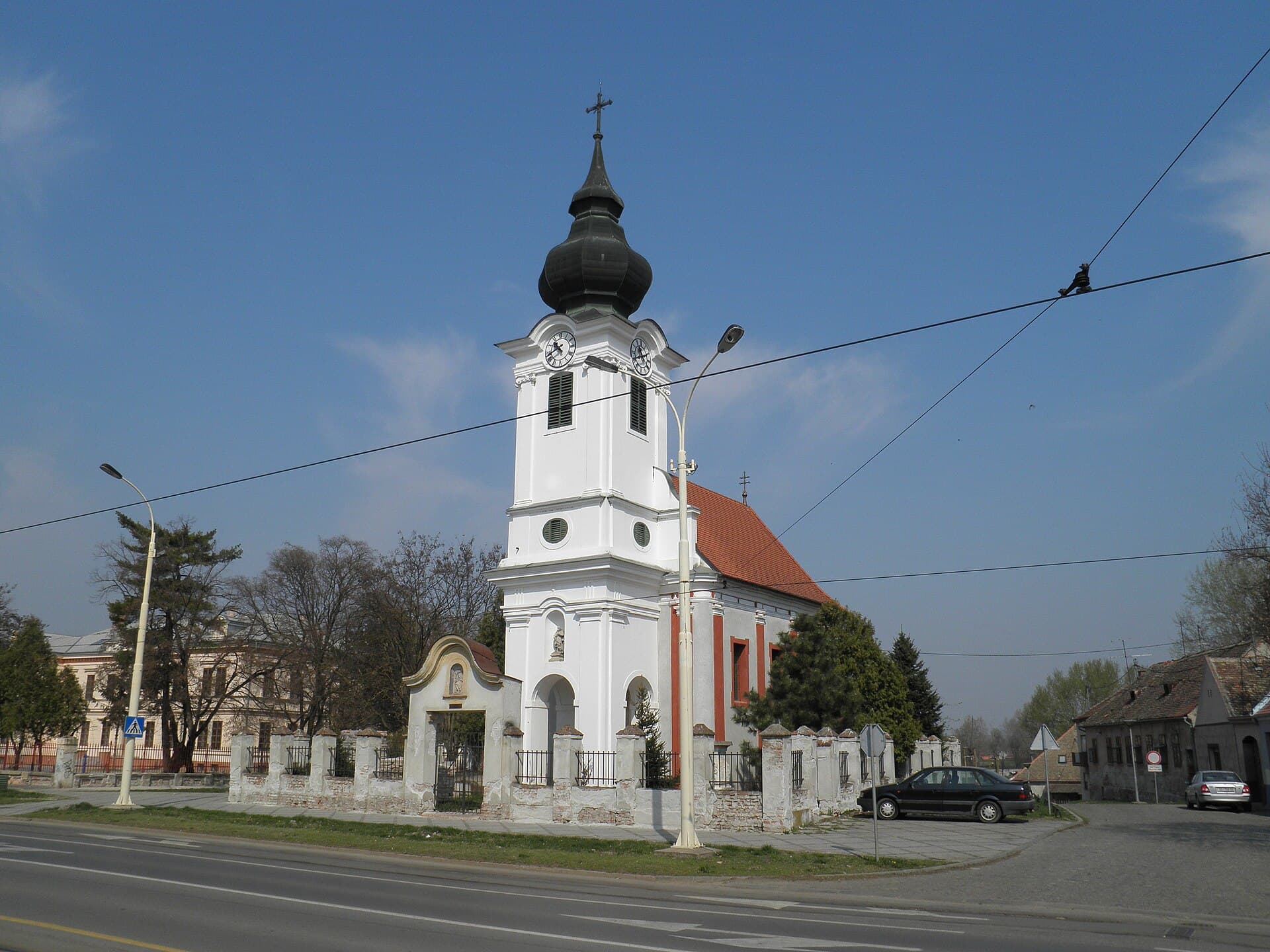
Čepin is a large Slavonian settlement 10–11 kilometres southwest of Osijek, set along the road and railway linking the Osijek area with Đakovo and Strizivojna-Vrpolje. Fertile lowland fields, farming and food production—most visibly the local oil factory—have shaped its modern identity. Its historic focus lies along Ulica kralja Zvonimira, where the late-Baroque Holy Trinity Church stands near the Neoclassical manor built for the Adamović Čepinski and Mihaljević families in the first half of the 19th century. Completed in 1769, the church contains Joseph Jacobi’s 1773 altarpiece depicting Judith and Holofernes. Čepin’s story reaches much further back: Neolithic traces have been identified at Ovčara–Rozingova pustara, Bare, Klenje and Selište. The settlement is also the administrative centre of a municipality that includes Beketinci, Čepinski Martinci, Čokadinci and Livana. Its proximity to Osijek makes Čepin a useful base for combining a compact heritage walk with the Slavonian countryside and time in the regional capital.
Čepin occupies the lowland at about 94 metres above sea level, between the Drava landscape to the north and the River Vuka to the south. Although closely tied to Osijek, 10–11 kilometres away, it retains a distinctly agricultural profile through surrounding grain fields, industrial crops and livestock farming. The Municipality of Čepin was established on 29 April 1993 and includes Beketinci, Čepinski Martinci, Čokadinci and Livana as well as its administrative centre. The settlement’s elongated form follows the former Osijek–Slavonski Šamac traffic corridor, while the western bypass has reduced through-traffic in its streets. Local landmarks include Holy Trinity Church, the Adamović–Mihaljević manor and the Croatian Meteorological and Hydrological Service radar centre.
Things to see

Stays
No stays listed here yet
Things to do
Begin a short Čepin visit on Ulica kralja Zvonimira, where Holy Trinity Church and the Adamović–Mihaljević manor form the settlement’s principal heritage grouping. Inside the church, look for its Baroque features and Joseph Jacobi’s 1773 altarpiece of Judith and Holofernes. Views of the manor and park evoke the 19th-century Čepin estate, though the building is best treated as an exterior sight unless an official visit has been arranged. Continue along part of the old Osijek–Đakovo corridor that shaped the settlement, then finish the day in Osijek, only 10–11 kilometres away. Archaeological sites such as Ovčara–Rozingova pustara are not conventional visitor attractions, but they document the area’s Neolithic past.
Tours and activities
AdAd · partner offers: GetYourGuideThe partner handles booking, payment and support. StayBravo may earn a commission on bookings made through these links.How we choose offersGetYourGuide offers are selected and ordered by GetYourGuide based on the name of the nearest larger town or national park; we do not influence their selection and do not use data about you.GetYourGuide · Osijek
We show GetYourGuide offers once you allow their cookies.
Practical information
Getting there and around
Čepin has direct road links toward Osijek and Đakovo, while its western bypass diverts part of the through-traffic away from the settlement centre. The Osijek–Strizivojna-Vrpolje railway passes the town; HŽ Passenger Transport’s timetable valid from 14 June to 12 December 2026 includes Čepin on this route, so travellers should check the service for their chosen date. The municipal development plan records upgraded bus bays and nine shelters serving local bus passengers. By car, Osijek is roughly 10–11 kilometres away, and the Čepin bypass provides access toward the major routes connecting with the A5 motorway corridor.
Frequently asked questions
What can I see in Holy Trinity Church?
Čepin’s church contains a 1773 altarpiece of Judith and Holofernes by the Viennese painter Joseph Jacobi.
Is there a manor in Čepin?
A Neoclassical manor associated with the Adamović and Mihaljević families stands in a park beside Ulica kralja Zvonimira and dates from the first half of the 19th century.
How far is Čepin from Osijek?
Central Čepin is approximately 10–11 kilometres southwest of Osijek.
Nearby
Čepin
Open in OpenStreetMap(opens in a new tab)Smaller places
straight-line distance
Related guides

Osijek
Tvrđa and the centre around the main square are distinct starting points for understanding Osijek. The former emphasises the fortified historic quarter and Baroque architecture; the latter…
Read the guide

Vukovar
A cultural visit to Vukovar has several separate centres of gravity. Eltz Palace and the City Museum address the city and its inhabitants across different periods. Vučedol reaches much…
Read the guide

Stubičke Toplice
Stubičke Toplice derives almost its entire identity from thermal water and the Zagorje landscape. There is no large urban historic core; green spaces, bathing facilities and traces of the…
Read the guide
Slavonski Brod
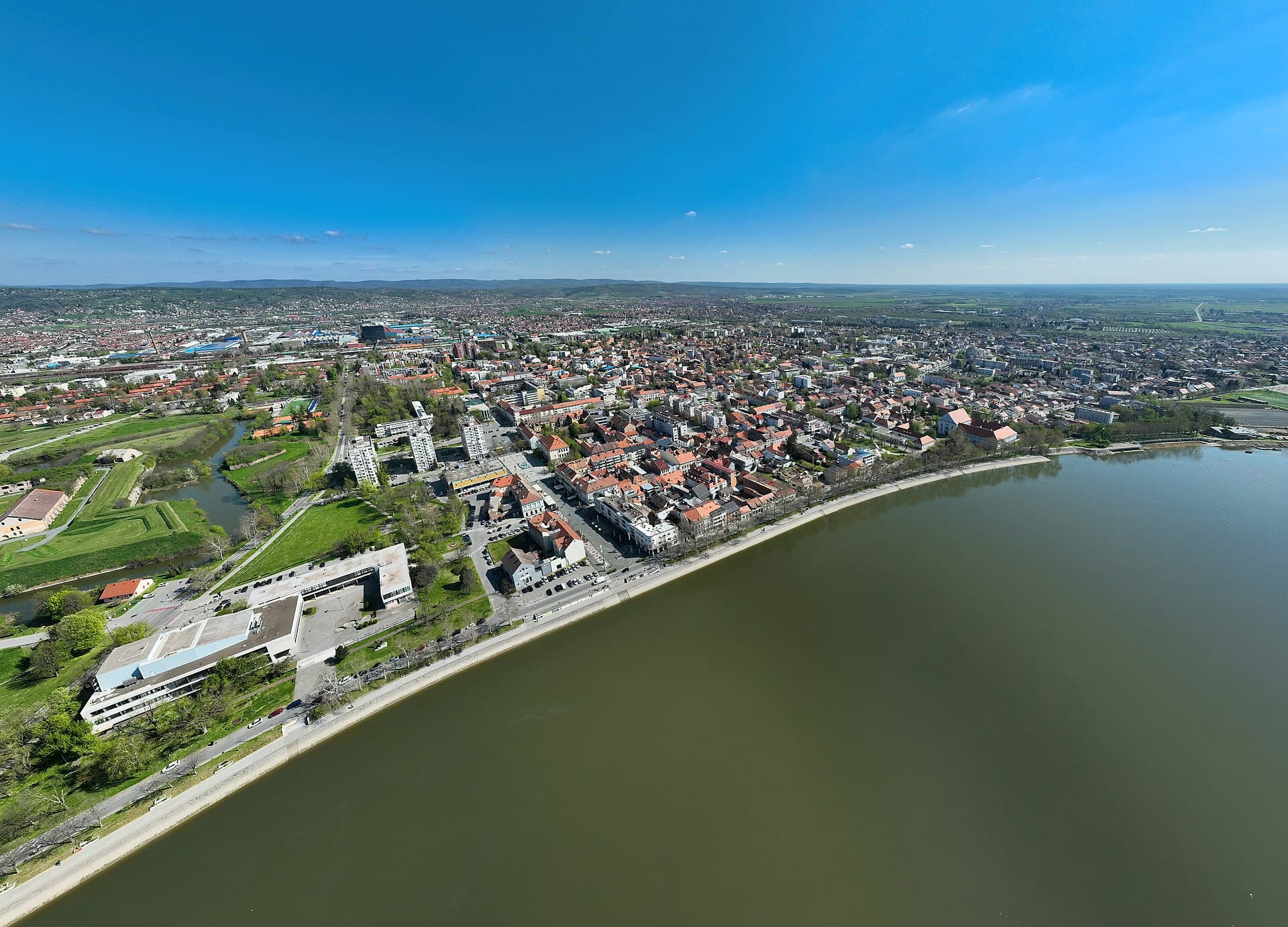
Slavonski Brod developed around one of the major crossings of the Sava, and that border and transport role left a strong mark on the city. Brod Fortress represents the eighteenth-century…
Read the guide
Know Čepin? Correct us
Tell us in your own words what is not accurate. We check right away.Do not enter personal data. Corrections are checked by the StayBravo AI assistant; changes to the description are approved by an editor. Use the form instead
Do you know Čepin?
Help the guests who come after you.
Help us complete
Nothing is published without an editor’s review.Report illegal content
Photo credits: Čepin — Flammard (CC BY-SA 3.0) · Višnjevac, Osijek — Downluke (Public domain) · Josipovac — IvanOS (CC BY-SA 3.0) · Ivanovac — Divna Jaksic (Public domain) · Osijek — Rp031 (CC BY-SA 4.0) · St. Roch Chapel in Gornji Grad (Osijek) — Mister No (CC BY 3.0) · Osijek Zoo and Aquarium — Roko Poljak (CC BY-SA 4.0) · County palace in Osijek — I would appreciate being notified if you use my work outside Wikimedia. More of my work can be found in my personal gallery. (CC BY 3.0) · Osijek Co-cathedral — Zeljkaz80 (CC BY-SA 4.0) · Vukovar — Bybbisch94, Christian Gebhardt (CC BY-SA 4.0) · Stubičke Toplice — MOs810 (CC BY-SA 4.0) · Slavonski Brod — Petar Milošević (CC BY-SA 4.0)