
About this place
Ozalj brings together aristocratic heritage, early industrial architecture and the landscape of the Kupa River in a remarkably compact setting. Its castle rises from a cliff above the water and now houses a regional museum whose collections span roughly six millennia of local history. The Zrinski and Frankopan families, the Ozalj literary circle and watercolourist Slava Raškaj—born here in 1877—give the town a cultural identity far larger than its size might suggest. Below the fortress stands the Munjara hydroelectric plant, completed in 1908 and documented inside the museum. Across the river, the Slava Raškaj bathing area doubles as a summer venue with a direct view of both Munjara and the castle. About one kilometre from the centre, the open-air Ethno Park preserves rural houses, farm buildings and objects from pre-industrial life. The most rewarding route runs from the Ethno Park and St Vitus’ Church to the castle, then descends toward the Kupa. Along that short walk, the river links noble history, electricity and Raškaj’s watercolours into a story unique to Ozalj.
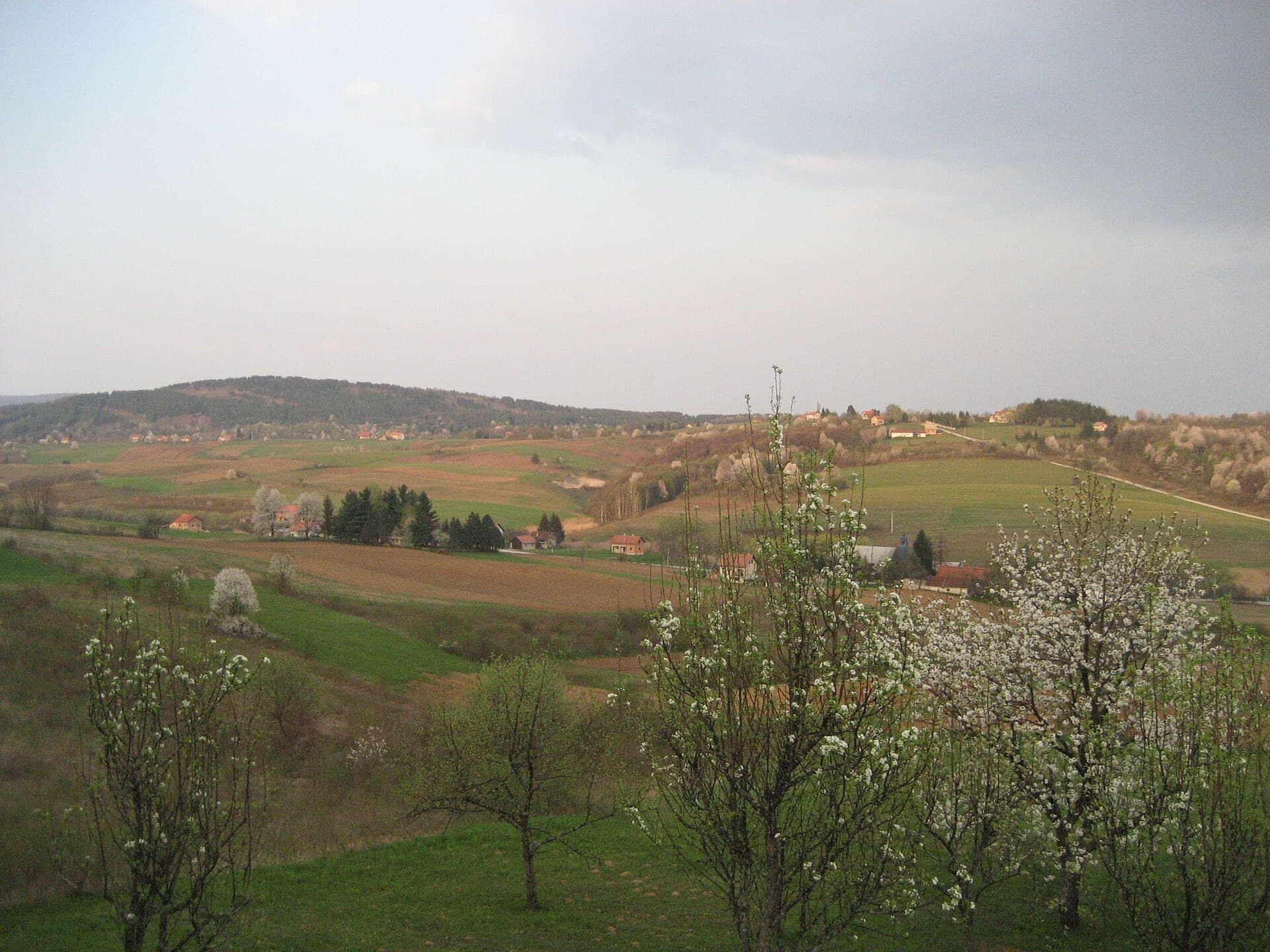
Ozalj’s character is shaped by the Kupa, the stronghold associated with the Zrinski and Frankopan families, and the art of Slava Raškaj. The upper town gathers around the castle and St Vitus’ Church, while the lower streets descend toward the 1908 hydroelectric plant and the riverside bathing area. This layered terrain creates viewpoints where a medieval fortress, an early power station and a bend in the Kupa share the same frame. The Ozalj literary circle adds another dimension, linking the estate’s noble families with an important chapter of early modern Croatian culture rather than leaving the town defined by scenery alone.
Stays nearby
 Apartment
Apartmeni Klenovica.eu
Klenovica
75 km from Ozalj
up to 4 guests · 1 bedroom
The host confirms the exact price for your dates and availability.
Things to see
Ozalj Castle is the defining landmark, occupying a cliff above the Kupa and housing the town’s regional museum. Its displays cover archaeological periods, weapons from the wars against the Ottomans, the Zrinski and Frankopan legacy, and works by Slava Raškaj. The museum also records that the Brethren of the Croatian Dragon acquired the castle in 1928. Nearby, the Ethno Park preserves furnished rural dwellings and working farm structures. Down by the river, the 1908 Munjara hydroelectric plant represents Ozalj’s industrial heritage, while the Slava Raškaj bathing area offers the classic combined view of the plant and fortress.
Things to do
Begin at the Ethno Park, about one kilometre from the centre, where vernacular houses and farm buildings introduce rural life around Ozalj. Continue uphill to the castle and regional museum, concentrating on the Zrinski and Frankopan collections and the gallery devoted to Slava Raškaj. After taking in the view from the cliff, descend past St Vitus’ Church toward Munjara and the Kupa. In summer, finish at the Slava Raškaj bathing area, home to the “Living Room on the Kupa” programme. The themed “In the Footsteps of Slava Raškaj” walk ties these stops to landscapes the artist actually painted.
Food and drink
A food-focused outing from Ozalj can include nearby Jaškovo, known locally for strudel and for the long-established Žganjer restaurant. Žganjer has operated for several decades and includes five guest rooms, making it a useful lunch stop beyond the compact town centre. In summer, the Slava Raškaj bathing area hosts the seasonal food-and-drink offer of the “Living Room on the Kupa” programme; its 2026 season was announced from early June through the end of August. The distinctive attraction there is a meal or drink facing across the river toward Munjara and Ozalj Castle.
Practical information
Practical information
The regional museum occupies Ozalj Castle at 2 Ulica Zrinskih i Frankopana. For 2026, the museum website lists admission at €6 for adults and €4 for children, students and pensioners; summer and winter opening schedules differ, so checking the date before travelling is sensible. Visitor information is available from the Kupa Area Tourist Board on +385 47 731 196. Shoes suited to the climb are useful for the castle approach, while the Ethno Park lies roughly one kilometre from the centre and works well as a separate short walk.
Getting there and around
Ozalj has a railway station on the route linking it with Karlovac and Metlika, with current departures published through HŽ Passenger Transport’s journey planner. The special “In the Footsteps of Slava Raškaj” excursion train has also linked Zagreb with Ozalj, combining rail travel with visits to the castle, museum and Munjara. Road-based public transport includes the Bubnjarci–Ozalj–Karlovac route, for which the City of Ozalj publishes stops and service notices. As both rail and bus timetables can change, travellers should check HŽPP and the city notice for their exact date.
Frequently asked questions
Where is the museum in Ozalj?
The regional museum is inside Ozalj Castle at 2 Ulica Zrinskih i Frankopana.
Can visitors swim in the Kupa at Ozalj?
Yes. The landscaped Slava Raškaj bathing area lies on the Kupa below Munjara and hosts the summer “Living Room on the Kupa” programme.
What does the Ozalj Ethno Park display?
The Ethno Park preserves traditional homes, farm buildings and original objects from pre-industrial rural life.
When was Munjara built?
Ozalj’s Munjara hydroelectric plant was built in 1908, and its story also appears in the regional museum.
Related guides

Senj
Senj occupies a narrow strip between the sea and the Velebit foothills, so its streets climb quickly from the harbour towards Nehaj Fortress. The Uskoks, the fierce bura wind, seafaring and…
Read the guide
Help improve this page
Spot something missing or wrong? Suggest a correction, add your photo or report a problem. Editors review every suggestion before it is published.
Photo credits
- Ozalj — Miroslav.vajdic · CC BY-SA 4.0 · Wikimedia Commons
- Apartmeni Klenovica.eu — Apartmani Klenovica.eu · courtesy of the property owner
- Senj — Palauenc05 · CC BY-SA 4.0 · Wikimedia Commons
- Rakovica — Modzzak · CC BY-SA 3.0 · Wikimedia Commons
- Karlobag — Orlovic · Public domain · Wikimedia Commons
- Slunj

