
About this place
Rab contains three strikingly different landscapes: sandy Lopar, the holm-oak woods of Kalifront and the rocky ridge of Kamenjak. Rajska Beach in Lopar stretches for roughly a kilometre and a half, while the Dundo reserve protects a forest of holm oak and manna ash. Above the inland village of Mundanije, Kamenjak provides a very different perspective on the island. Four bell towers line the peninsula occupied by Rab Town, belonging to the churches of the Assumption, St John the Evangelist, St Andrew and St Justine. Away from that celebrated skyline, St Peter's Church in Supetarska Draga preserves Romanesque architecture, and Kampor combines the collections of St Euphemia's monastery with a memorial to the wartime concentration camp. Along Banjol and Barbat, the virtual Juxta Mare museum explores boatbuilding, fishing and seafaring. Rab's almond cake, flavoured with citrus and maraschino, connects a visit with the island's confectionery traditions. Arrivals use three different gateways: Mišnjak, Lopar or Rab Town harbour. July's Rabska Fjera brings craftspeople and crossbowmen into the old streets, while archaeological trails lead through the countryside around Kampor, Supetarska Draga and Lopar.
Kamenjak follows Rab's northeastern side, with settlements and cultivated ground occupying the more sheltered central belt. Mundanije lies inland among fields, olive groves and island roads rather than beside a harbour. Along the southwestern shore, Barbat and Banjol extend towards Rab Town, facing the long, narrow island of Dolin. Supetarska Draga occupies a deeply indented bay, with buildings along its shores and St Peter's Church set further inland. Kalifront is Rab's conspicuously wooded peninsula, whereas the northern coves around Lopar are shaped by sandy ground and sandstone. These contrasting landforms explain why a Lopar beach holiday and a walking stay around Kampor feel quite different.
Top places
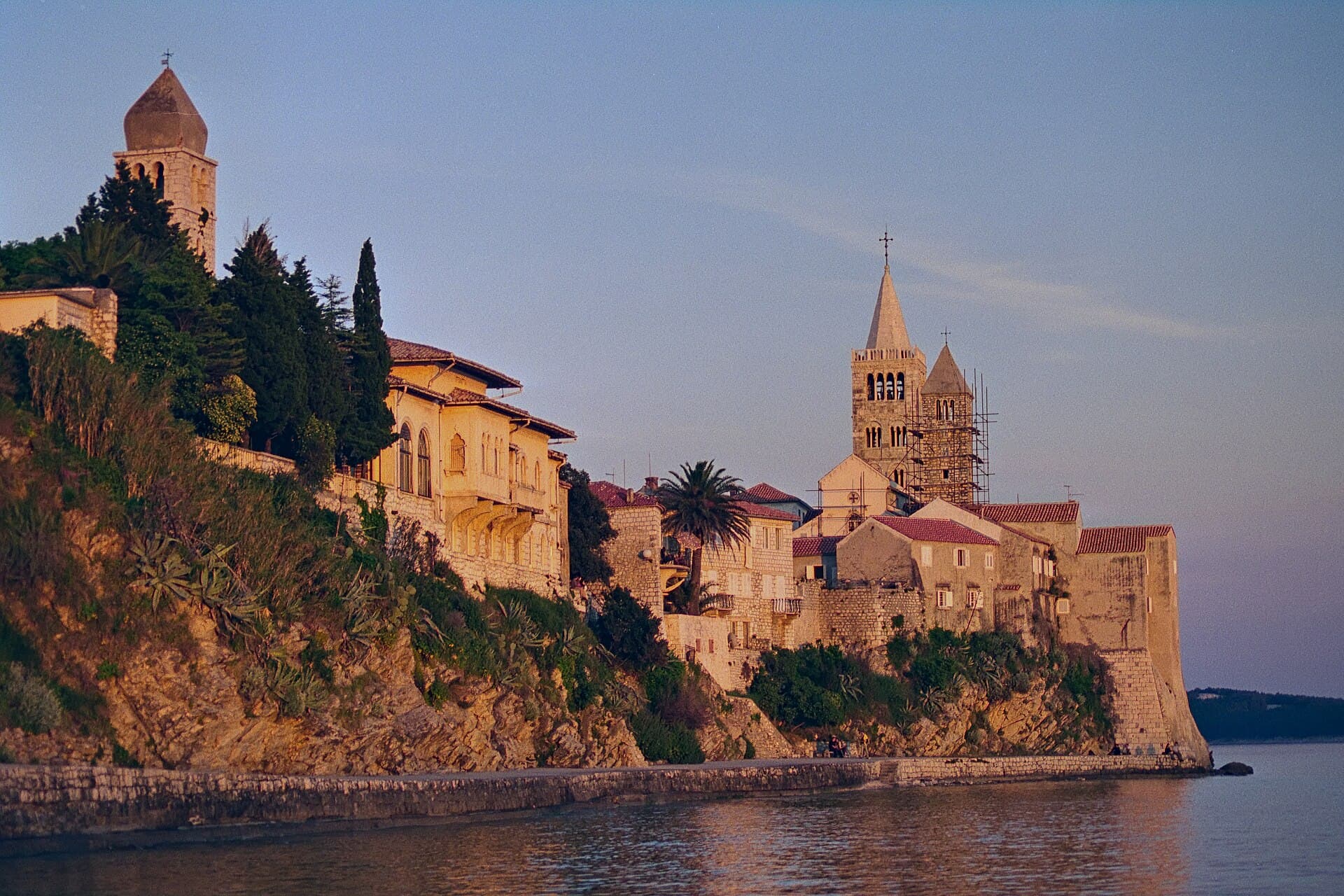
Rab
Town · Rab

Stays nearby
 Apartment
Apartmeni Klenovica.eu
Klenovica
37 km from Rab
up to 4 guests · 1 bedroom
The host confirms the exact price for your dates and availability.
Things to see
Rab's four bell towers belong to separate religious buildings: the former Cathedral of the Assumption and the churches of St John, St Andrew and St Justine. St Andrew's Benedictine monastery dates from the eleventh century; later alterations to its church left Romanesque elements beneath Baroque decoration. St Justine is associated with a collection of sacred art, extending a skyline walk into the island's religious heritage. Beyond Rab Town, the eleventh-century Romanesque basilica of St Peter stands in Supetarska Draga. At St Euphemia's monastery in Kampor, church silver, manuscripts and an ethnographic collection provide another perspective on island life, away from the town's sequence of squares and towers.

Beaches
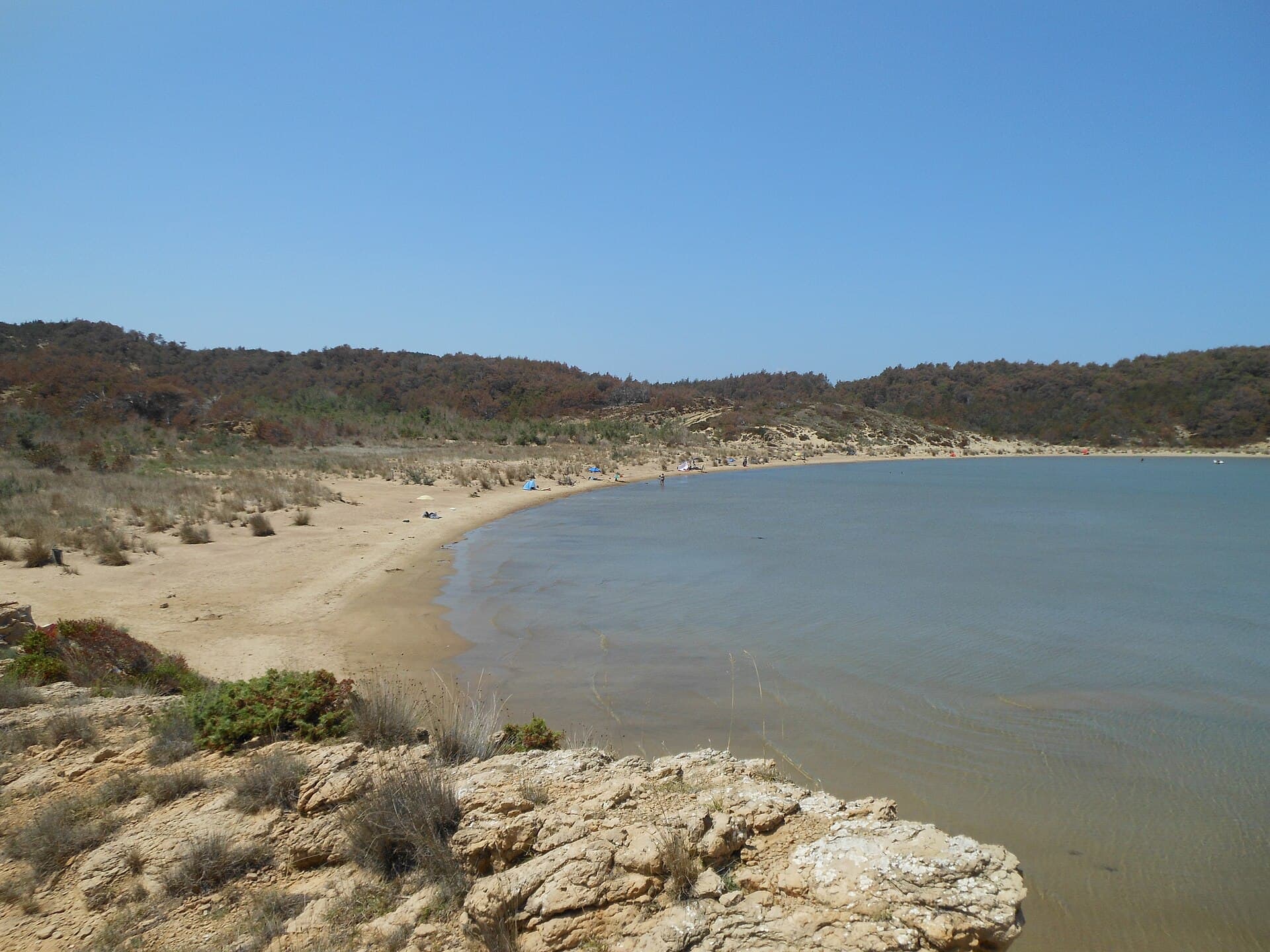
Rajska Beach follows roughly a kilometre and a half of sandy shoreline beside Lopar's San Marino area and its seafront facilities. Neighbouring Livačina offers another sandy bathing spot, with pines along the edge rather than an identical continuation of Rajska. Mel in Kampor is a separate sandy beach in a different island bay. Lopar's naturist coves also have distinct arrangements: naturism is permitted at Sahara and Ciganka, while Stolac is designated exclusively for naturist bathing. Keep these names separate when choosing a beach; the Lopar peninsula is not one continuous bathing area with a single set of rules or facilities.
Things to do
Between Banjol and Barbat, Juxta Mare turns a waterfront walk into encounters with Rab's fishermen and boatbuilders. QR codes at thirteen marked locations open photographs, video and augmented-reality objects on a phone. One of the museum's stories follows Josip Španjol, who brought experience from Austro-Hungarian Danube shipyards to Rab. Rather than occupying a single building, Juxta Mare uses the actual coastline where the island's maritime trades developed. Continue into Rab Town for a contrasting walk among the bell towers, following the historic peninsula from the area of St John's towards the Church of the Assumption at its far end.
Activities
Rab Archaeological (T)races links three walking and cycling routes totalling around forty kilometres. Capo Fronte explores Kampor, Epario covers Lopar, and Frux crosses the area between Lopar and Supetarska Draga. The accompanying app interprets archaeological remains within the countryside rather than bringing them into a conventional museum. For an uphill walk, follow the built path from Mundanije towards Kamenjak, associated with trail designer Ante Premužić. It passes Tomašić's viewpoint before reaching open rocky ground near the summit telecommunications installation. Kamenjak's exposed final approach calls for a different outing from the low woodland routes across Kalifront, even though both lie on Rab.
Day trips
From Rab, Zavratnica can be approached by excursion boat or by road after crossing to Stinica. Vojka lists a panoramic outing to the inlet, while the coastal footpath starts in Jablanac. Velebit Nature Park gives approximately 1.8 kilometres for the Jablanac-Zavratnica section, which is reserved for pedestrians rather than bicycles. A separate path descends from the village of Zavratnica above the coast. A Rab-based visit therefore offers two distinct experiences: viewing the inlet from a boat or following its stone shoreline on foot. Zavratnica belongs to Velebit Nature Park, not Northern Velebit National Park, despite the similar names.
Events
Rabska Fjera took place from 25 to 27 July 2026, marking the twenty-fifth edition of the modern festival. Its opening on St Christopher's Square brought together costumed participants, drummers and Rab's crossbowmen, while old crafts occupied the surrounding streets. The final day coincided with the feast of St Christopher, Rab's patron saint, and the crossbow tournament. Fjera consequently combines several settings rather than functioning as a single stage performance: working craftspeople in narrow lanes, ceremonial activity on the square and a competition rooted in local tradition. St Christopher's feast remains on 27 July in Rab's religious calendar beyond the festival's three-day historical presentation.
Food and drink
Šanpjer on Rab Town's waterfront focuses on fish, crustaceans and shellfish beside the King Petar Krešimir promenade. For a sweet stop, Vilma's House of Rab Cake is at Stjepana Radića 5. The island's cake combines almonds, citrus zest and maraschino in a hand-shaped pastry rather than a layered cream cake. Vilma also presents its preparation to visiting groups, although Rab's confectionery traditions extend beyond that single workshop. Kiflić in Palit makes Rab cake alongside honey biscuits, walnut rolls and poppy-seed rolls. These two sweet addresses connect the old town with a different part of the island's everyday food trade.
Practical information
Practical information
When choosing accommodation on Rab, distinguish the island from the town with four bell towers: an address in Lopar, Kampor or Barbat does not place you inside the historic centre. Mišnjak is the southeastern ferry gateway, Lopar has a separate northern terminal, and the Rijeka catamaran arrives in Rab Town harbour. Lopar's tourist office and Čovik i more interpretation centre are at Lopar 284. Juxta Mare follows the Banjol-Barbat waterfront, whereas Capo Fronte, Epario and Frux explore western and northern parts of Rab. Match the route map to your accommodation area rather than assuming these named trails all start beside the town quay.
Parking
Dundovo's parking information for 2026 places Boškopin and Slavija in zone one, while Dvorana, Dvorana II, Krug and Mali Palit belong to zone two. Brdo I and Brdo II are in zone three; Škver and Barbat Crkva are in zone four, so waterfront parking does not automatically share one category. Dundovo does not provide SMS payment in zone zero, while the other listed zones use separate m-parking numbers. Brdo parking lies behind the Imperial hotel, outside the old town. Dvorana and Dvorana II identify distinct parking areas in Palit rather than interchangeable names for one meeting point.
Getting there and around
In 2026, Rapska plovidba operates ferry route 337 between Stinica and Mišnjak, carrying passengers and vehicles between Rab and the mainland. Jadrolinija's Valbiska-Lopar ferry approaches from Krk, with a crossing of approximately eighty minutes. Foot passengers can also use catamaran route 9309, Rijeka-Rab-Novalja, which calls in Rab Town before continuing towards Pag. Jadrolinija lists one hour and forty-five minutes for Rijeka-Rab, with tickets tied to a chosen sailing. These arrival points are not interchangeable: someone waiting on the town quay will not meet a vehicle ferry arriving from Stinica at Mišnjak on the island's southeastern end.
Frequently asked questions
Where does the ferry from Stinica arrive on Rab?
Rapska plovidba route 337 arrives at Mišnjak on Rab's southeastern tip, not in the historic town harbour.
How does Dundo differ from Lopar's beaches?
Dundo is a forest reserve on Kalifront, with holm oak and manna ash; Rajska and Livačina are sandy bathing beaches in northern Rab.
What does Rab's Juxta Mare museum explore?
Juxta Mare presents boatbuilding, fishing and seafaring at thirteen marked points along the Banjol-Barbat promenade, accessed by scanning QR codes.
Where does the hiking approach to Kamenjak on Rab begin?
The marked approach starts in Mundanije and follows a built trail associated with Premužić, passing Tomašić's viewpoint before the open rocky summit area.
Related guides
Rab
Rab's old town has a clear silhouette, but it rewards more than a postcard view. Its four towers mark distinct religious sites: the Assumption of Mary, St John the Evangelist, St Andrew and…
Read the guide

Help improve this page
Spot something missing or wrong? Suggest a correction, add your photo or report a problem. Editors review every suggestion before it is published.
Photo credits
- Rab, Rab — Herbert Ortner · CC BY 4.0 · Wikimedia Commons
- Kampor — Alexandre Albore (Ruthven) · Public domain · Wikimedia Commons
- Barbat na Rabu — Aeroid · CC BY-SA 4.0 · Wikimedia Commons
- Supetarska Draga — Rabko · CC BY-SA 3.0 · Wikimedia Commons


