City of Drniš
About this place
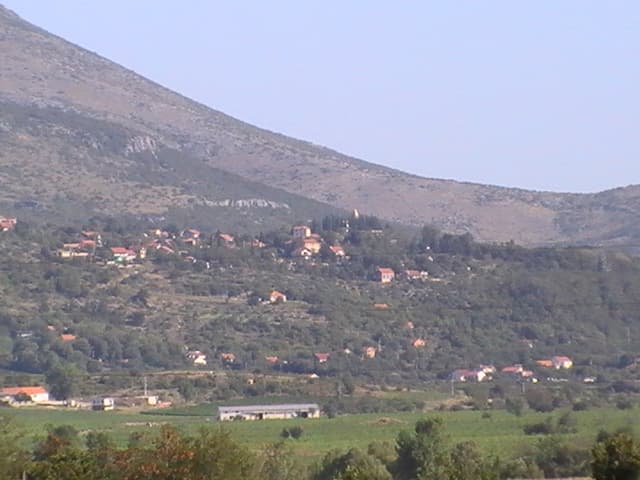
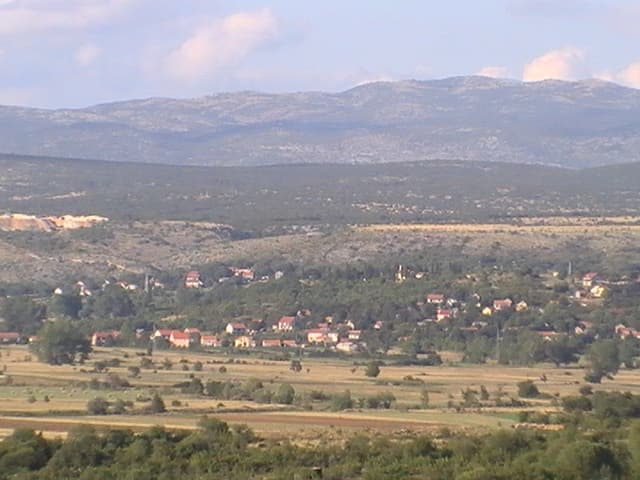
Drniš lies about 30 kilometres from Šibenik, between Mount Promina, Petrovo Polje and the canyons of the Čikola and Krka rivers. Gradina fortress rises above the town at 344 metres, overlooking Promina, the field and the rocky gorge. Drniš first appears in written records in 1494, and its Ottoman and Venetian periods left a layered religious and military heritage that includes a 16th-century minaret. Works by Ivan Meštrović form a recurring thread through the centre and a dedicated route celebrates the sculptor who spent his childhood in nearby Otavice. The Čikola canyon provides the dramatic natural counterpart: its protected section extends for 13 kilometres, reaches a depth of 130 metres, carries a fast karst river in winter and becomes almost dry in summer. Medieval strongholds including Ključica, Kamičak, Bogočin, Nečven and Trošenj punctuate the surrounding landscape. Drniš prosciutto, cheese matured in a sheepskin sack, peka dishes and Debit and Merlot wines define the area’s food culture.
Drniš is defined by Gradina, a fortress 344 metres above sea level above the Čikola canyon, with views across Promina and Petrovo polje. Its setting links the town centre with the defensive legacy of the Nelipić family and later Ottoman alterations. At the foot of Gradina stands the remnant of a 16th-century minaret: its lower section, about 12 metres high, and part of its spiral stair survive. The town museum, Meštrović works, the minaret and the Čikola riverside walk are joined by a circular route through Drniš, placing the town’s history between the fortress and the canyon.
Stays nearby
 Apartment
Apartmeni Klenovica.eu
Klenovica
Klenovica, 176 km from City of Drniš
up to 4 guests · 1 bedroom
The host confirms the exact price for your dates and availability.
Things to see
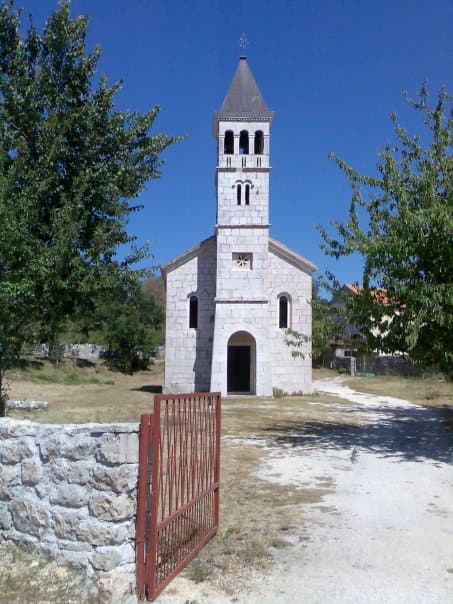
Gradina occupies a 344-metre hill above the Čikola; the surviving southern structures belong to the medieval fortification, while the central tower and north-eastern wall are associated with the Ottoman phase. The Nelipić family built Ključica in the 14th century to control the commercial route from Šibenik towards the hinterland and Bosnia. Drniš’s 16th-century minaret remains a conspicuous reminder of the period when the town contained several mosques. The City Museum and Old Mill preserve local archaeological, historical and ethnographic material. Meštrović’s works in public spaces connect Drniš with nearby Otavice, home to the Meštrović family mausoleum, formally the Church of the Most Holy Redeemer.
Things to do
Start the morning with the climb to Gradina for views over Drniš, Mount Promina, Petrovo Polje and the upper Čikola canyon. Back in the centre, follow the “In Search of Meštrović” route connecting the sculptor’s works, then visit the Drniš City Museum and the Old Mill. In the afternoon, use the Ključica viewpoint rather than entering the ruined fortress; it overlooks the largest and best-preserved medieval stronghold in the Drniš area. More active visitors can join a guided summer walk through the Čikola’s almost dry riverbed or tackle the two-kilometre via ferrata when seasonal conditions permit. Finish with Drniš prosciutto, cheese matured in a sheepskin sack and a glass of local Debit or Merlot.
Food and drink
Drniš cuisine begins with its locally cured prosciutto but extends well beyond it: official visitor material highlights cheese aged in a sheepskin sack, meat cooked under a peka, lamb, and Debit and Merlot wines. The most rewarding food excursion leads from the town centre to family farms, tasting rooms and wineries in the surrounding villages, where the prosciutto can be paired with the distinctive mature cheese. The tourist board promotes town tours accompanied by local-product tastings, while a full-day programme combines a history walk with wine tasting and lunch among vineyards and stone houses. Because many of these experiences are dispersed beyond central Drniš, tasting sessions and meals should be arranged in advance.
Practical information
Practical information
The Drniš tourist board can be reached on +385 22 888 619 or at [email protected], while the official Visit Drniš app provides mobile guidance around the town and surrounding area. Firm shoes are sufficient for Gradina, but the Čikola canyon requires more careful preparation: fast water runs through it in winter and the riverbed becomes almost dry in summer, so activities must match seasonal conditions and should use local guides. The canyon’s via ferrata is approximately two kilometres long, with the visitor programme allowing around two hours. A car greatly simplifies visits to Krka National Park, rural tasting rooms and the widely scattered medieval forts.
Getting there and around
Drniš bus station is at 7 Ulica 142. brigade; the published office hours are weekdays from 6:30 am to 2:30 pm. The tourist board’s town map marks the station, making it an easy arrival point for the centre. Gradina, the minaret and the town museum can then be reached on foot through the historic core, while Ključica Fortress and the viewpoint in the village of Ključ lie beyond town. Arrange road transport in advance for the Ključica excursion.
Frequently asked questions
How deep is the Čikola canyon?
The canyon reaches a depth of 130 metres, and its protected river-and-gorge section extends for 13 kilometres.
Can Gradina be visited?
Gradina above Drniš is accessible to visitors and overlooks the town, Mount Promina, Petrovo Polje and the Čikola canyon.
Where is the Ključica viewpoint?
The arranged viewpoint is in the village of Ključ, facing the fortress above the Čikola canyon.
Which wine should visitors try around Drniš?
Local visitor material particularly highlights Debit and Merlot alongside Drniš prosciutto, sheepskin-aged cheese and peka dishes.


Related guides

Šibenik
Three contrasting areas help explain Šibenik's historic centre: the steep lanes of Gorica, waterfront Dolac and the central streets around Kalelarga. In Gorica, stone steps climb towards St…
Read the guide
Help improve this page
Spot something missing or wrong? Suggest a correction, add your photo or report a problem. Editors review every suggestion before it is published.
Photo credits
- Žitnić, Sedramić — Wijkstrar · CC BY-SA 4.0 · Wikimedia Commons
- Drniš — Roberta F. · CC BY-SA 3.0 · Wikimedia Commons
- Kričke, Siverić, Kadina Glavica — Zrno at Serbian Wikipedia · Public domain · Wikimedia Commons