
About this place
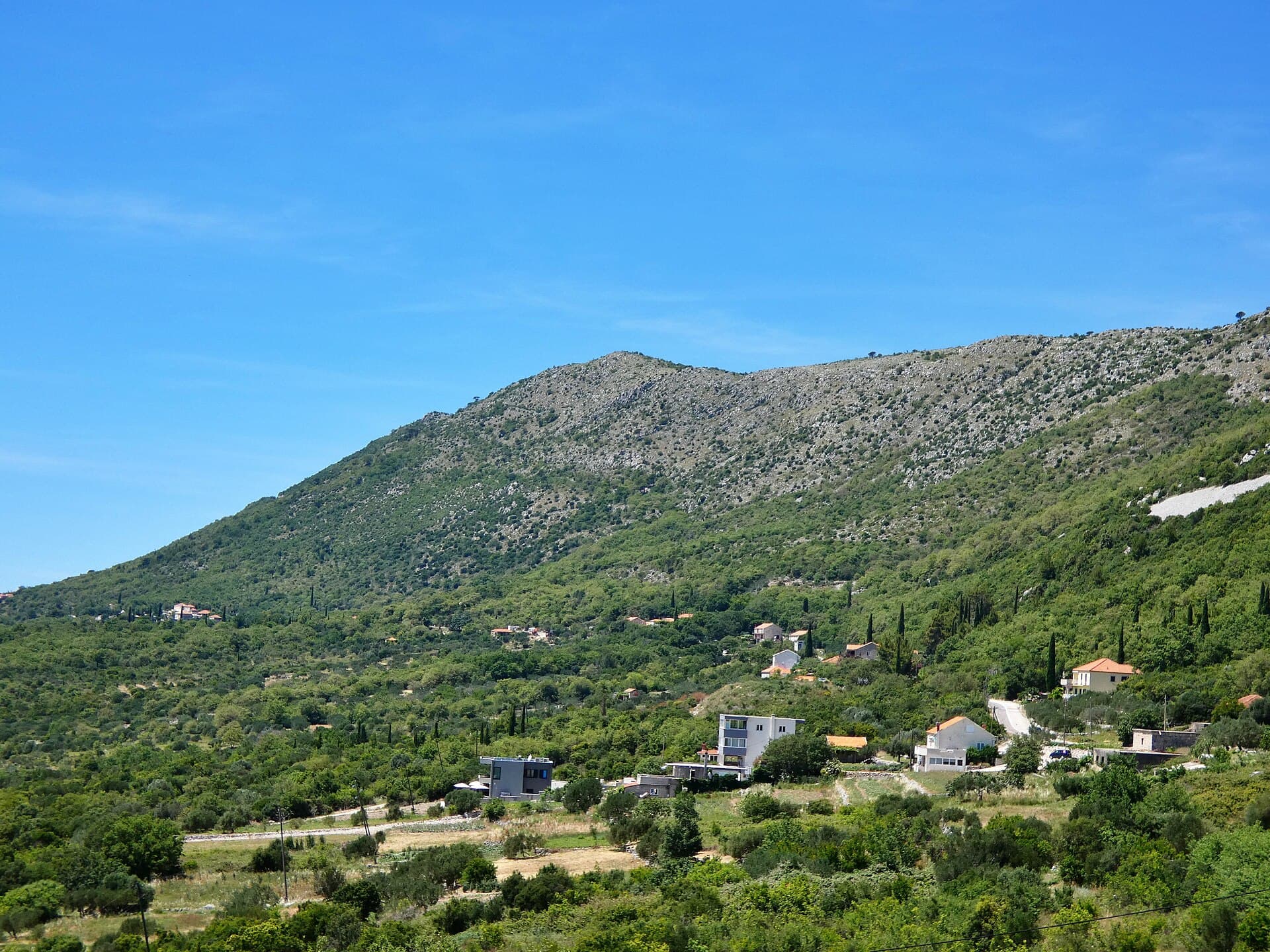
Čilipi is a large Konavle village in Dubrovnik’s hinterland, best known for Sunday folklore and its immediate proximity to Dubrovnik Airport. Rather than a seaside resort, its centre forms a compact ensemble of stone houses around St Nicholas, the largest parish church in Konavle. The church steps descend towards a square that has served as a stage for Konavle dances, the lijerica, klapa singing and elaborate traditional dress since 1967. Beside it stands the Konavle County Museum, founded in 1974 inside a building erected in 1909 for the village savings society and cultural club. Sunday creates the most coherent visit: handicraft stalls and singing begin in the morning, the museum adds context, and the dance performance follows Mass. At other times, Čilipi is a gateway to rural Konavle—stone mills, olive-oil tastings, prošek and meat cooked under the bell. The sea is geographically close but the village has no developed waterfront; swimming means travelling towards Pasjača near Popovići, Cavtat or Molunat. Airport proximity makes arrival exceptionally easy, though aircraft noise is part of the setting.
Čilipi’s identity is rooted in living Konavle heritage rather than proximity to Dubrovnik’s walls or the sea. The square before St Nicholas forms a distinctive stone ensemble enclosed by public buildings and family houses. Traditional dress, Konavle embroidery, the potkolo dance and lijerica music appear here not only as museum subjects but in a recurring Sunday programme. The nearby airport, opened in 1962, transformed the village and its tourism, while the folklore performance launched in 1967 became Čilipi’s most enduring visitor tradition.
Stays nearby
 Apartment
Apartmeni Klenovica.eu
Klenovica
Klenovica, 394 km from Čilipi
up to 4 guests · 1 bedroom
The host confirms the exact price for your dates and availability.
Things to see
St Nicholas and the square below its steps form Čilipi’s defining architectural scene and the stage for Sunday folklore. Immediately beside the square is the Konavle County Museum, founded in 1974 at the initiative of the local tourism association. Its building dates from 1909 and originally housed the village savings society and cultural club; today the collection includes male and female Konavle costumes, embroidery and domestic objects. Čilipi’s living attraction is its folklore society, established in 1967 and still performing local circle dances, wedding customs and pieces accompanied by tamburicas and the lijerica.
Beaches
Čilipi has no developed village beach or waterfront, although the settlement approaches Konavle’s steep coastal edge. The best-known nearby choice is Pasjača below Popovići, a small man-made strand of sand, gravel and pebbles beneath high cliffs. Access involves a long, steep staircase and a passage cut through the rock, making the return unsuitable for limited mobility or pushchairs. Pasjača lacks the usual beach infrastructure—there are no showers, toilets or kiosks—so water, food and sun protection should be brought from Čilipi.
Things to do
Plan a Sunday in Čilipi around the square outside St Nicholas Church. From 9 a.m., browse crafts, visit the Konavle County Museum and sample local prošek or herbal brandy while Klapa Čilipi sings. Stay after Mass for the KUD Čilipi folklore performance at 11:15 a.m. It presents Konavle dances, songs and wedding customs, accompanied by the lijerica or tamburica. For 2026, performances are listed every Sunday from 19 April to 1 November, ending with an invitation for visitors to join the dancers.
Food and drink
Čilipi’s food belongs to an agricultural and livestock-raising hinterland rather than a fishing coast. Seoska Kuća at 2 Bistroće builds its menu around home-grown or local vegetables, meat and family recipes; veal or lamb cooked under the bell is a particularly fitting advance order. Nearby Kameni Mlin at 3 Bistroće pairs charcoal grilling with tastings of olive oil, prošek, herbal rakija, dried figs and candied orange peel. The Glavinja family farm offers three of its own olive oils with fresh cheese and bread, but visits must be arranged in advance.
Practical information
Practical information
Visitor information for Čilipi is handled by the Konavle tourist board in Cavtat, while the village’s cultural facilities cluster around the square and Konavle County Museum. In 2026, the Sunday programme begins with morning activities at about 9 am and the folklore performance at 11:15, continuing from spring into early November. Check current museum hours and reserve organised tastings separately, as neither necessarily follows the folklore timetable. Because Dubrovnik Airport lies immediately beside the village, aircraft take-offs and landings can be clearly audible in Čilipi.
Getting there and around
Čilipi stands on the main road through Konavle and immediately beside Dubrovnik Airport, making it one of the most accessible villages in Dubrovnik’s hinterland by air. Libertas Dubrovnik operates suburban transport across Konavle under seasonal timetables that differ on weekdays, Saturdays, Sundays and public holidays. Current departures and live bus positions are best checked in the operator’s official app before travelling towards Cavtat or Dubrovnik. The airport shuttle is designed primarily for terminal passengers and should not be confused with the local bus serving central Čilipi.
Frequently asked questions
When is the Čilipi folklore performance?
In the 2026 season, performances take place on Sundays at 11:15, from spring into early November, with morning activities beginning around 9 am.
What does the Konavle County Museum display?
The museum preserves Konavle costumes, embroidery and ethnographic objects collected across the region.
When was the Čilipi folklore society founded?
The Čilipi folklore society was founded in 1967, continuing the work of a cultural association established in 1954.
Does Pasjača have beach facilities?
Pasjača has no showers, toilets or kiosk, and the shore is reached by steep steps through the cliff.

Related guides

Dubrovnik
Dubrovnik’s historic centre is organised around Stradun, yet its character changes within a few steps of that main street. At the western end beside Pile stand the Large Onofrio Fountain,…
Read the guide

Help improve this page
Spot something missing or wrong? Suggest a correction, add your photo or report a problem. Editors review every suggestion before it is published.
Photo credits
- Čilipi, Močići — Bjoertvedt · CC BY-SA 3.0 · Wikimedia Commons
- Gabrili, Mihanići — Ma▀▄Ga · CC BY 4.0 · Wikimedia Commons
- Zvekovica, Cavtat — Bracodbk · CC BY-SA 3.0


