
Veliko Trojstvo
About this place
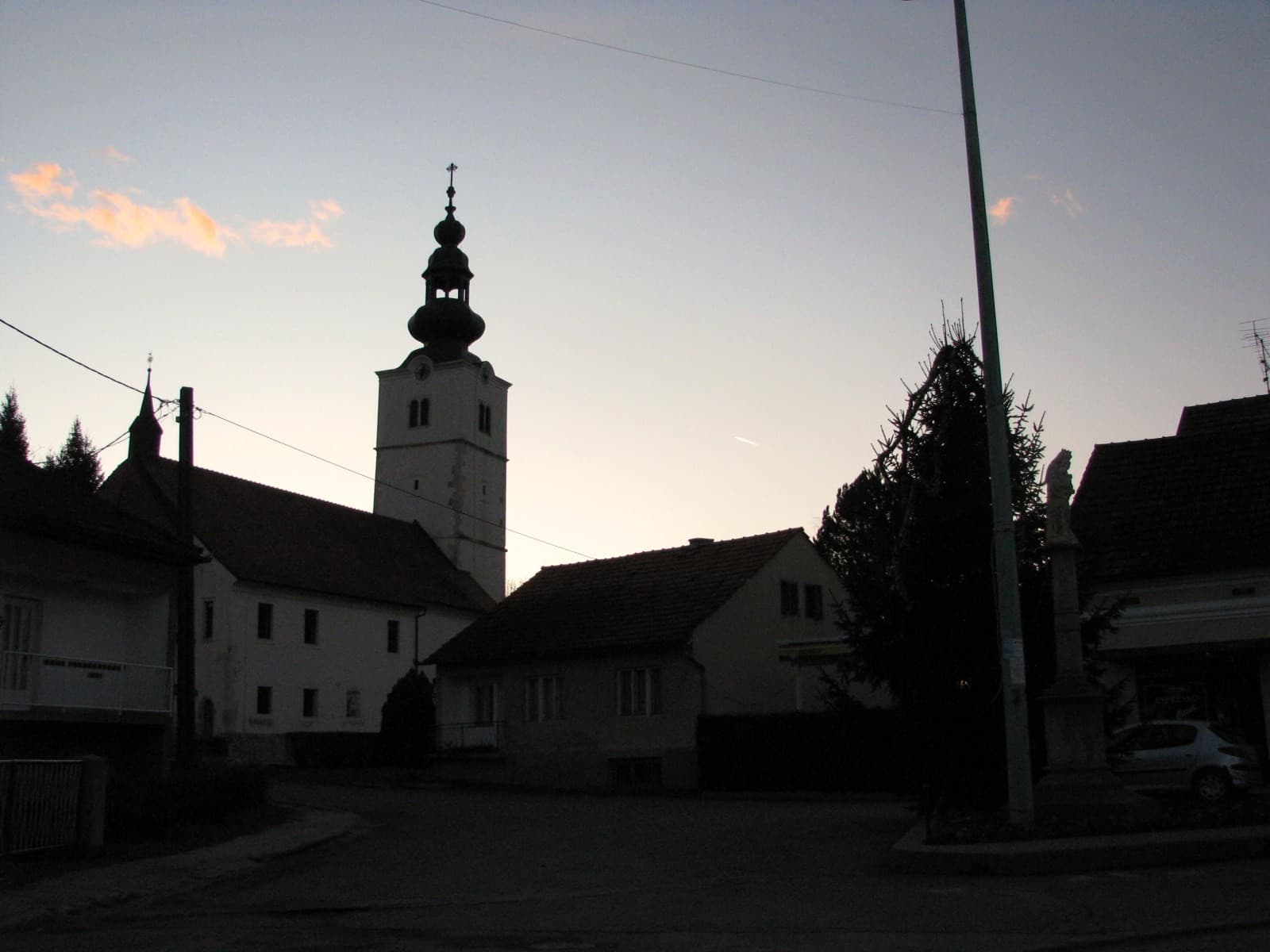
Set on the gentle slopes of Bilogora, roughly ten kilometres from Bjelovar, Veliko Trojstvo is shaped by vineyards, woodland and scattered farmsteads. Its main historic landmark is the protected Baroque Church of the Holy Trinity, built in 1779 and closely associated with the village’s identity. Nearby, the Ethno Park at 28 Braće Radića Street recreates a traditional Bilogora farmyard, complete with a wooden house, barn, granary, bread oven, well and corn crib. A collection numbering more than a thousand objects illustrates rural crafts, household work and daily life in the countryside around Bjelovar. The Bilogora Tourist Route links Veliko Trojstvo with local vineyards, wooded hills and smaller sights, including the open-air wooden-sculpture gallery Svijetle pruge. This makes the village especially well suited to a half-day excursion or an unhurried drive along Bilogora’s country roads. Veliko Trojstvo also has a rail stop on the Bjelovar–Kloštar route, while the county bus network lists a dedicated Bjelovar–Veliko Trojstvo–Bjelovar service. Together, the ethnographic collection, the Baroque church and easy access from Bjelovar give the village a distinct Bilogora character.
Veliko Trojstvo is not a compact heritage town but a Bilogora village whose points of interest continue into the surrounding hills, vineyards and settlements of the municipality. The 1779 Church of the Holy Trinity provides a clear historic focal point, while the Ethno Park preserves the layout of a traditional holding with a wooden house, barn, granary and bread oven. The Bilogora Tourist Route adds another layer to the local identity by connecting rural heritage, wine-growing country and forest scenery. The Svijetle pruge open-air gallery translates that Bilogora setting into contemporary wooden sculpture. Because these sites are spread out, Veliko Trojstvo works best as a short route through the village and its immediate countryside.
Stays
No stays listed here yet
Things to do
Begin at the Church of the Holy Trinity, whose 1779 construction date places the village’s principal religious building firmly in the Baroque period. Continue to the Ethno Park at 28 Braće Radića Street, where more than a thousand exhibits introduce Bilogora tools, household objects and traditional crafts. Admission to the park is free with advance notice using the contact published by the Bilogora–Bjelovar Tourist Board. From the collection, follow part of the Bilogora Tourist Route towards the vineyards and wooded slopes. Finish at Svijetle pruge, an open-air gallery of wooden sculptures that carries the cultural visit beyond the museum setting and into the Bilogora landscape.
Practical information
Getting there and around
Veliko Trojstvo lies about ten kilometres from Bjelovar, making that city the most direct road approach. The village has a railway stop on the Bjelovar–Kloštar line, and the 2026 HŽ Passenger Transport timetable lists trains calling at Veliko Trojstvo. Bjelovar-Bilogora County also publishes a dedicated timetable for the Bjelovar–Veliko Trojstvo–Bjelovar bus circuit. As the Ethno Park, church, vineyards and other points on the Bilogora Tourist Route do not form a single walkable cluster, a car or bicycle makes a fuller visit easier. Travellers using public transport should consult the 2026 schedules before departure, paying particular attention to services marked as not operating on weekends or public holidays.
Frequently asked questions
Where is the Veliko Trojstvo Ethno Park?
The Ethno Park is at 28 Braće Radića Street, and free visits should be arranged in advance.
When was the Church of the Holy Trinity built?
The Baroque Church of the Holy Trinity in Veliko Trojstvo dates from 1779.
Does Veliko Trojstvo have a railway stop?
Yes. Trains on the Bjelovar–Kloštar route call at Veliko Trojstvo according to the 2026 timetable.
Nearby

Maglenča
Village · Central Croatia
More nearby
Martinac, Veliko Trojstvo
Village · Central Croatia
Related guides
Tuhelj
The population of the municipality has fallen from a peak of 3,780 in 1971 to 2,043 in 2021, and 61 people were lost in the last census decade alone. Eleven settlements, from Banska Gorica…
Read the guide

Help improve this page
Spot something missing or wrong? Suggest a correction, add your photo or report a problem. Editors review every suggestion before it is published.
Photo credits
- Veliko Trojstvo, Maglenča — Fraxinus Croat · CC BY-SA 3.0 · Wikimedia Commons
- Tuhelj — Ex13 · CC BY-SA 3.0 · Wikimedia Commons
- Sveti Martin na Muri — Silverije · CC BY-SA 3.0 · Wikimedia Commons
- Velika Gorica — Frane Lovošević · CC BY-SA 3.0 · Wikimedia Commons

