Radoboj
About this place
Radoboj occupies the southern slopes of Strahinščica at about 257 metres above sea level and roughly ten kilometres from Krapina by road. First recorded as Radoboa in 1334, the settlement acquired a distinctive industrial identity after sulphur was discovered in 1811 and coal mining followed. Mining also exposed remarkably rich fossil beds containing plants, insects and other organisms; palaeobotanist Franz Unger spent decades studying material from Radoboj. The relationship between mining, geology and fossils is now interpreted at the Muzej Radboa in the village centre. A nature-and-hiking route begins by the museum and the Zagorje Nature Centre, with a ten-kilometre Strahinščica circuit and a separate 2.4-kilometre Dedek i Babica spur. The main route rises from 266 to 846 metres and combines asphalt, gravel tracks, forest paths and true mountain trail. Strahinščica is also noted for its orchids, with 32 species and subspecies recorded in the area. County bus route 561 reaches Radoboj from Krapina via Trški Vrh, covering six kilometres between its terminal stops.
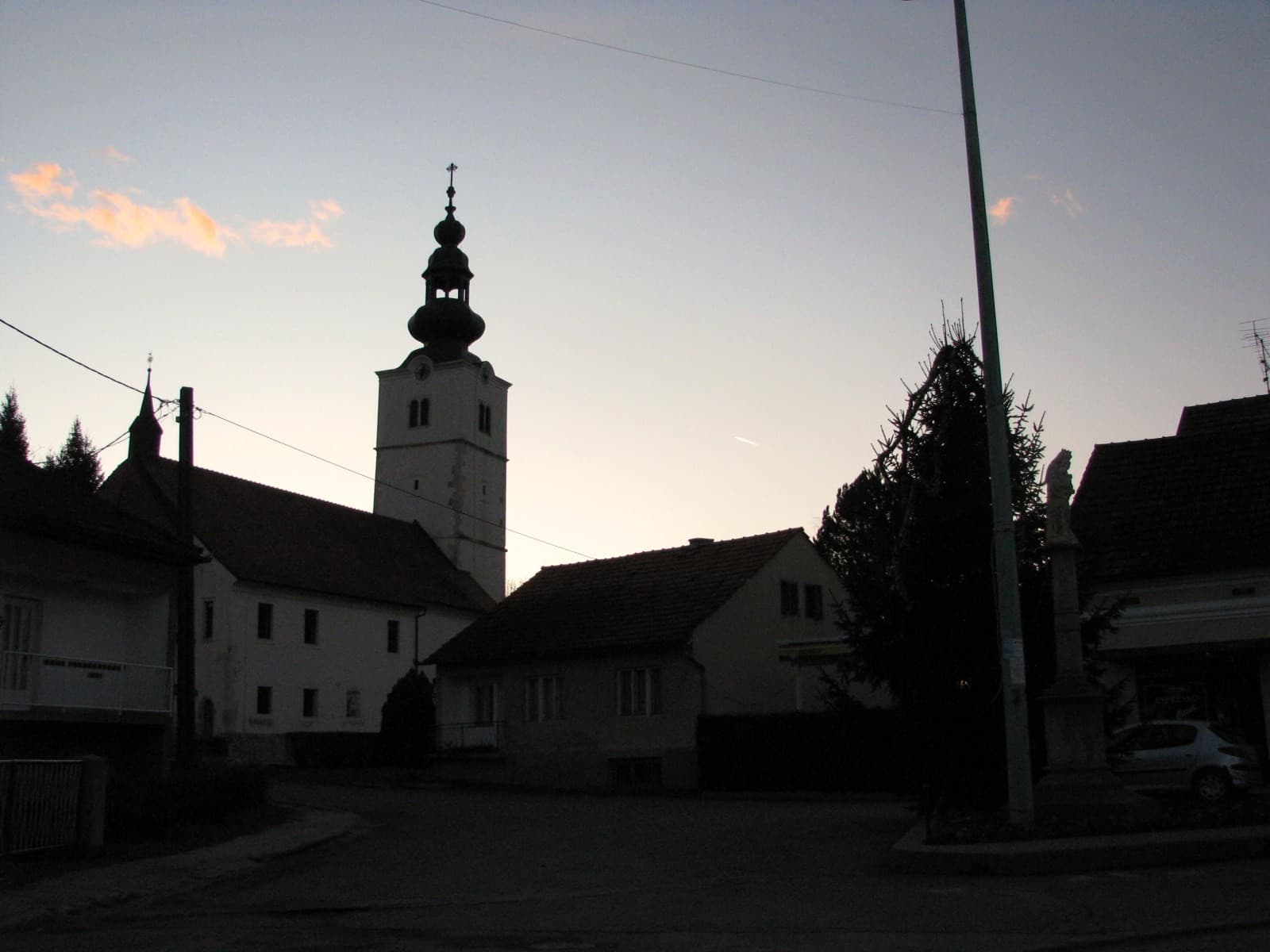
Radoboj is a municipal centre on Strahinščica’s southern side, where natural history and industrial heritage are unusually closely entwined. Sulphur was discovered in 1811, and subsequent sulphur and coal mines decisively shaped the settlement’s development. Excavation also uncovered Miocene plant and insect fossils that made Radoboj known in European scientific circles. An older layer survives in the Gothic churches of the Holy Trinity and St James, while the recorded name Radoboa confirms the village’s existence in 1334.
Stays nearby
 Apartment
Apartmeni Klenovica.eu
Klenovica
Klenovica, 145 km from Radoboj
up to 4 guests · 1 bedroom
The host confirms the exact price for your dates and availability.
Things to do
Begin at the Muzej Radboa, whose displays connect the local sulphur and coal mines with fossil discoveries and archaeological heritage. From the museum and adjoining Zagorje Nature Centre, follow the educational trail towards Strahinščica. The full mountain section is ten kilometres long and reaches 846 metres, while the shorter Dedek i Babica branch covers 2.4 kilometres and leads to a 562-metre summit. On returning, visit the Gothic Church of the Holy Trinity, remodelled in the Baroque period during the 18th century, or St James’s Church, Radoboj’s other surviving Gothic landmark.
Practical information
Getting there and around
Radoboj is about ten kilometres from Krapina by road, although the two settlements are only around four kilometres apart in a straight line. County bus route 561, operated by Presečki grupa, links Krapina and Radoboj via Trški Vrh, Lopatice, Biruši, Venca and Brozi. In the official route listing, the Radoboj terminus lies six kilometres from the first stop in Krapina. Departures published for 2026 are unevenly distributed through the day and week, so the return to Krapina should be planned before setting out for the Strahinščica trail or Muzej Radboa.
Frequently asked questions
When was sulphur discovered in Radoboj?
Sulphur was discovered in Radoboj in 1811, leading to the development of a mine.
Where does the Strahinščica trail begin?
The trail starts and finishes by the Muzej Radboa and the Zagorje Nature Centre.
How long is the Dedek i Babica trail?
The Dedek i Babica spur is 2.4 kilometres long and leads towards the 562-metre summit.
Nearby
Gornja Šemnica
Village · Central Croatia
Kraljevec Šemnički
Village · Central Croatia
Related guides
Tuhelj
The population of the municipality has fallen from a peak of 3,780 in 1971 to 2,043 in 2021, and 61 people were lost in the last census decade alone. Eleven settlements, from Banska Gorica…
Read the guide

Help improve this page
Spot something missing or wrong? Suggest a correction, add your photo or report a problem. Editors review every suggestion before it is published.
Photo credits
- Apartmeni Klenovica.eu — Apartmani Klenovica.eu · courtesy of the property owner
- Tuhelj — Ex13 · CC BY-SA 3.0 · Wikimedia Commons
- Sveti Martin na Muri — Silverije · CC BY-SA 3.0 · Wikimedia Commons
- Velika Gorica — Frane Lovošević · CC BY-SA 3.0 · Wikimedia Commons
- Stubičke Toplice — MOs810 · CC BY-SA 4.0 · Wikimedia Commons

