Konjščina
About this place
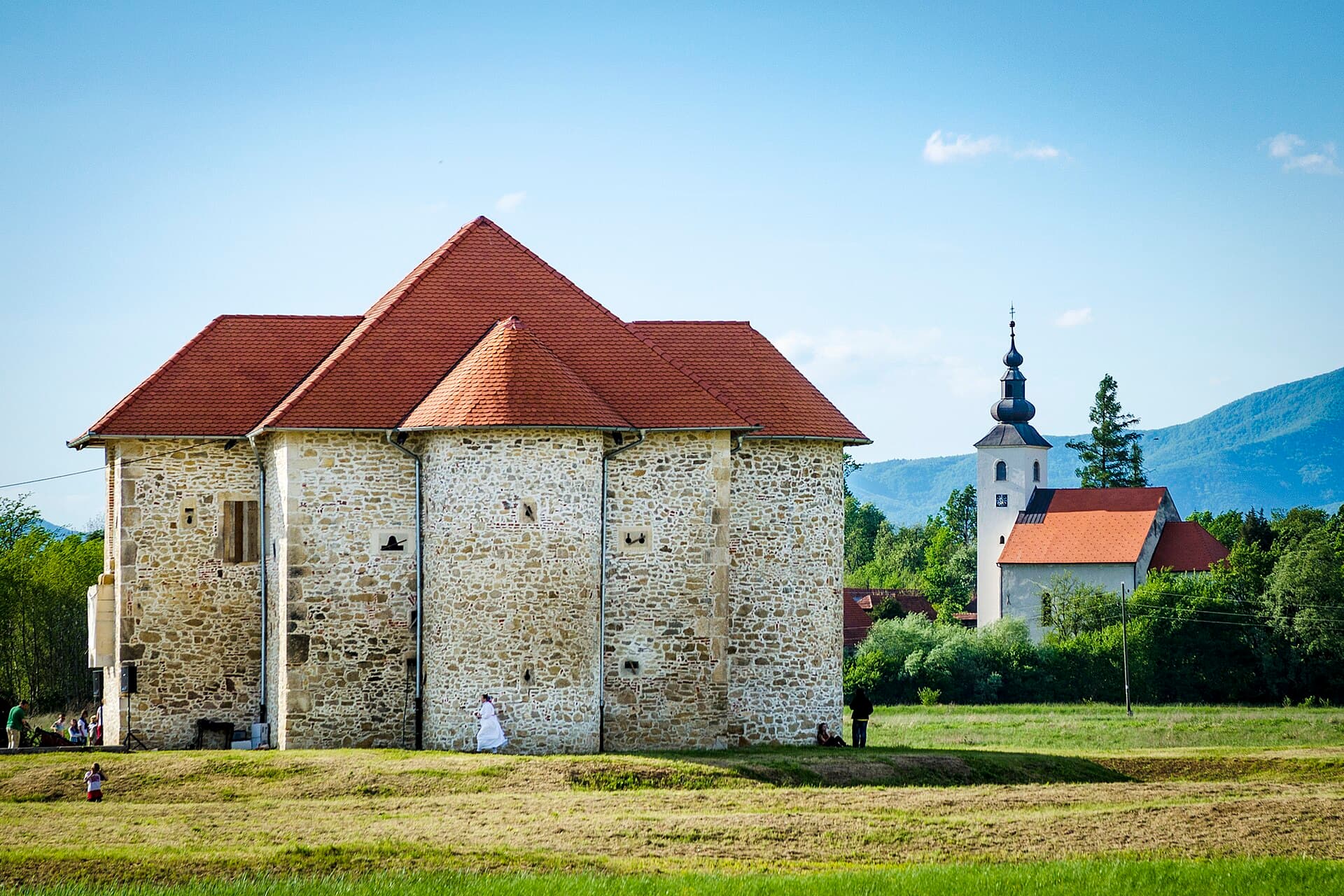
Konjščina is a Zagorje municipal centre at 168 metres above sea level, directly connected by rail with Zagreb, Zabok and Varaždin. Its character combines an industrial past with the legacy of the Counts of Konjski, whose name survives in the settlement, the fortress and the local Gradina mountaineering club. Konjščina’s Old Castle occupies low ground between branches of the Selnica stream, and its Late Gothic remains are an uncommon example of a surviving lowland stronghold in Hrvatsko zagorje. The site is tied to the battle of May 1545, when Nikola Šubić Zrinski and Juraj Wildenstein withdrew into the fort ahead of Ottoman troops. In the centre, the Baroque parish church of St Dominic, dating from 1734, forms a separate ecclesiastical stop. The railway station also marks the beginning of the 21.65-kilometre Konjščina–Ivanščica hiking route, opened in 1984 and climbing 892 metres. Konjščina can thus support either a short historical outing around the castle or a demanding full-day ascent towards Zagorje’s highest summit.
Medieval records refer to Konjščina as Selnica, while its present name preserves the memory of the landowning Konjski family. Their Late Gothic stronghold was built not on a typical Zagorje hill but on marshy ground between two branches of the Selnica stream, giving it a distinctive lowland setting. The surrounding area became a battlefield in May 1545, when Croatian forces faced Ottoman troops and Zrinski and Wildenstein sought shelter inside the fort. The Baroque Church of St Dominic, built in 1734, anchors the historic centre. More recent Konjščina was shaped by the Jertovec thermal power plant, a foundry and energy-equipment manufacturing, creating an unusual overlap of feudal, industrial and mountaineering heritage.
Stays nearby
 Apartment
Apartmeni Klenovica.eu
Klenovica
Klenovica, 148 km from Konjščina
up to 4 guests · 1 bedroom
The host confirms the exact price for your dates and availability.
Things to do
From the railway station, head first to the Old Castle, the opening checkpoint on the hiking route towards Ivanščica. At the ruins, consider how the fort used the low, wet ground between branches of the Selnica stream and recall the battle fought here in 1545. Continue to the 1734 Church of St Dominic, then follow the Selnica towards Vincek Bridge and the old mill at Galovec, a section used by Konjščina’s “Po dragomu kraju” walk. Experienced hikers can tackle the complete Konjščina–Ivanščica trail: it covers 21.65 kilometres, gains 892 metres and takes about seven hours. A shorter version finishes at Selnica after roughly three and a half hours on foot.
Practical information
Getting there and around
Konjščina has a station on the Zagreb–Zabok–Varaždin railway, between Hrašćina-Trgovišće and Donji Lipovec. HŽPP’s timetable valid from 13 April to 12 December 2026 places Konjščina at kilometre 83 in the table from Kotoriba, seven kilometres beyond Hrašćina-Trgovišće. Rail is particularly convenient for hikers because the marked route to Ivanščica begins at Konjščina station itself. Allow around seven hours for the complete walk to the summit; anyone ending the shorter section at Selnica must arrange the return journey separately. Travellers from Zagreb should confirm their chosen 2026 service and any connection at Zabok, as frequencies vary by day.
Frequently asked questions
How long is the hike from Konjščina to Ivanščica?
The marked route is 21.65 kilometres long and takes about seven hours from Konjščina station to Ivanščica.
Why is Konjščina’s Old Castle significant?
This Late Gothic stronghold of the Konjski family is associated with the May 1545 battle, after which Zrinski and Wildenstein sought refuge behind its walls.
Does the hiking trail begin by the railway?
Yes. The Konjščina–Ivanščica trail starts at the railway station, with the Old Castle serving as its first checkpoint.
Related guides
Tuhelj
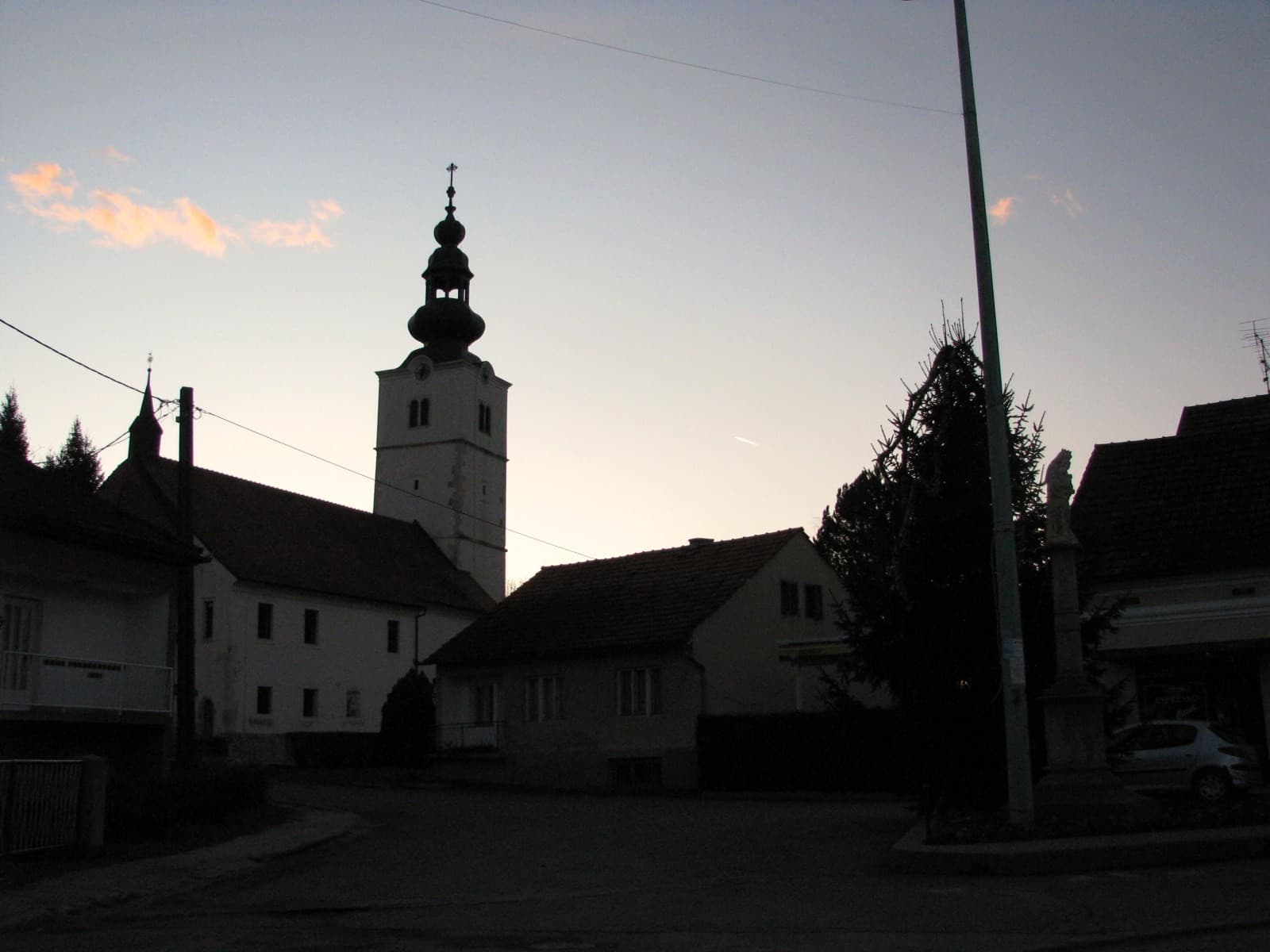
The population of the municipality has fallen from a peak of 3,780 in 1971 to 2,043 in 2021, and 61 people were lost in the last census decade alone. Eleven settlements, from Banska Gorica…
Read the guide

Help improve this page
Spot something missing or wrong? Suggest a correction, add your photo or report a problem. Editors review every suggestion before it is published.
Photo credits
- Konjščina — Bobonajbolji · CC BY-SA 4.0 · Wikimedia Commons
- Apartmeni Klenovica.eu — Apartmani Klenovica.eu · courtesy of the property owner
- Tuhelj — Ex13 · CC BY-SA 3.0 · Wikimedia Commons
- Sveti Martin na Muri — Silverije · CC BY-SA 3.0 · Wikimedia Commons
- Velika Gorica — Frane Lovošević · CC BY-SA 3.0 · Wikimedia Commons

