
Kloštar Ivanić
About this place
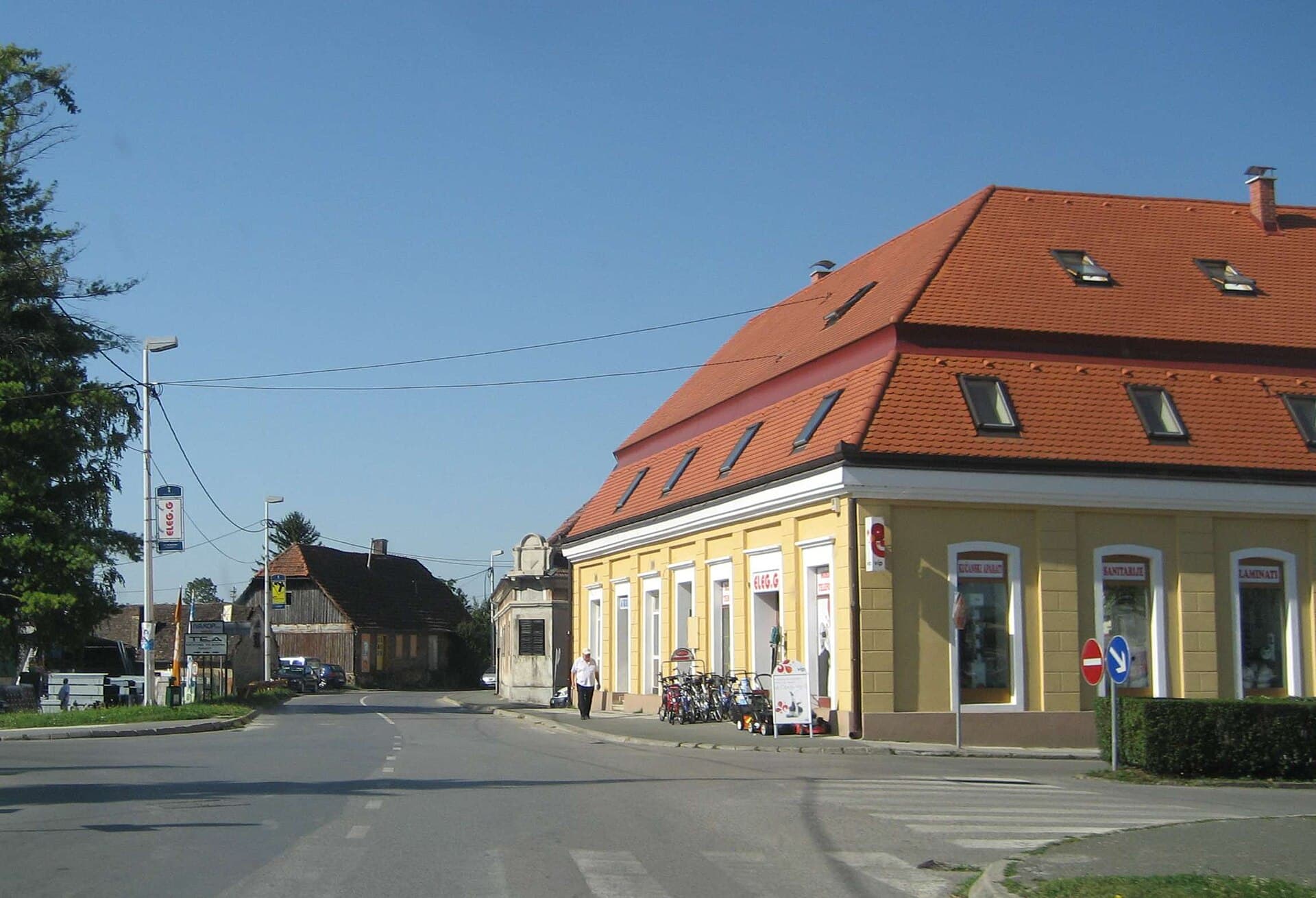
Kloštar Ivanić is a small municipal centre in Moslavina, four kilometres north-east of Ivanić-Grad, surrounded by vineyards, orchards and working farms. The word “Kloštar” preserves the memory of a medieval monastery built beside St Mary’s Church between 1227 and 1242. Tatars burned both monastery and settlement in 1242, but the complex was rebuilt by 1246 and subsequently occupied by Benedictine nuns. A second major ensemble comprises the Franciscan monastery and Church of St John the Baptist, commissioned in the early 16th century by Zagreb bishop Luka Baratin; the Franciscans moved in during 1508. The parish church of the Assumption was remodelled in the Baroque style in 1759 and retains altars, sculpture, paintings and liturgical objects. Its archive safeguards a Book of Miracles containing about sixty Kajkavian-language entries written between 1757 and 1782. Nearby Ivanić-Grad provides rail connections towards Zagreb, while county bus routes 801 and 806 serve Kloštar Ivanić itself.
Kloštar Ivanić belongs to Moslavina and stands at 159 metres above sea level, immediately beyond Ivanić-Grad. Its medieval “kloštar” is more than the source of its name: a Benedictine convent and St Mary’s Church shaped the settlement as early as the 13th century. Kloštar Ivanić later became a free market town, a status confirmed by King Sigismund in 1405. The Ottoman threat brought the district into the Military Frontier; the Franciscans abandoned their monastery in 1549 and returned in 1639. Orchards, vineyards, vegetable farming and the breeding of the Croatian Posavac horse still characterise the surroundings, alongside local deposits of oil and natural gas.
Stays nearby
 Apartment
Apartmeni Klenovica.eu
Klenovica
Klenovica, 142 km from Kloštar Ivanić
up to 4 guests · 1 bedroom
The host confirms the exact price for your dates and availability.
Things to see
Things to do
Begin with the Franciscan monastery and Church of St John the Baptist, whose façade bears Bishop Luka Baratin’s coat of arms and the carved date 1508. Examine the long polygonal sanctuary, external buttresses and Baroque alterations to what was originally a Gothic church. Continue to the parish church of the Assumption, founded beside the medieval convent and remodelled in 1759. Its parish archive preserves the Book of Miracles, a collection of Kajkavian entries from 1757–1782 associated with devotion to Our Lady of Mercy. Finish beyond the historic centre at one of the wineries or family farms included in the municipality’s tourism listings for Kloštar Ivanić.
Practical information
Getting there and around
Kloštar Ivanić lies four kilometres north-east of Ivanić-Grad, whose station is the nearest rail access point on the route towards Dugo Selo and Zagreb. The county bus network includes route 801, Prevlaka–Ivanić-Grad–Kloštar Ivanić, and route 806, Tarno–Kloštar Ivanić. The published route 801 timetable lists weekday arrivals in Kloštar Ivanić at 06:50, 07:45 and 13:30, with departures from the village shown at 13:55, 18:00 and 18:55. The 2026 railway timetable from Ivanić-Grad includes connections towards Dugo Selo and Zagreb Central Station, making a local bus-and-train combination a workable alternative to driving.
Frequently asked questions
Where does the name Kloštar Ivanić come from?
The name recalls the medieval convent, or “kloštar”, established beside St Mary’s Church in the 13th century.
What is the Book of Miracles in Kloštar Ivanić?
It is a manuscript of roughly sixty Kajkavian accounts written between 1757 and 1782 and preserved in the parish archive.
When did the Franciscans arrive in Kloštar Ivanić?
The Franciscans moved into the new monastery beside the Church of St John the Baptist in 1508.
Related guides
Tuhelj
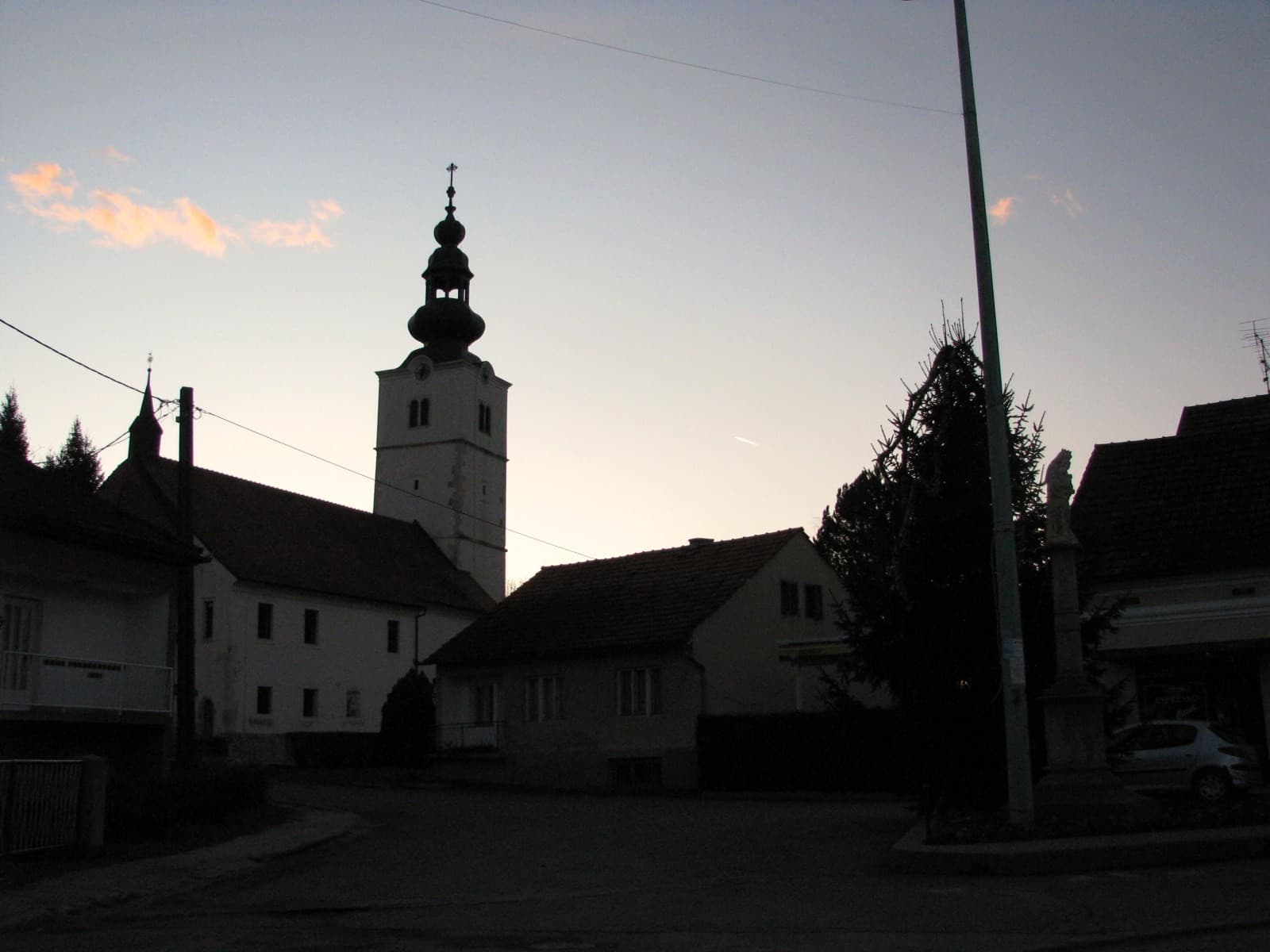
The population of the municipality has fallen from a peak of 3,780 in 1971 to 2,043 in 2021, and 61 people were lost in the last census decade alone. Eleven settlements, from Banska Gorica…
Read the guide

Help improve this page
Spot something missing or wrong? Suggest a correction, add your photo or report a problem. Editors review every suggestion before it is published.
Photo credits
- Kloštar Ivanić, Velika Gorica — Frane Lovošević · CC BY-SA 3.0 · Wikimedia Commons
- Ivanić-Grad — Croq · CC BY-SA 3.0 · Wikimedia Commons
- Apartmeni Klenovica.eu — Apartmani Klenovica.eu · courtesy of the property owner
- Tuhelj — Ex13 · CC BY-SA 3.0 · Wikimedia Commons
- Sveti Martin na Muri

