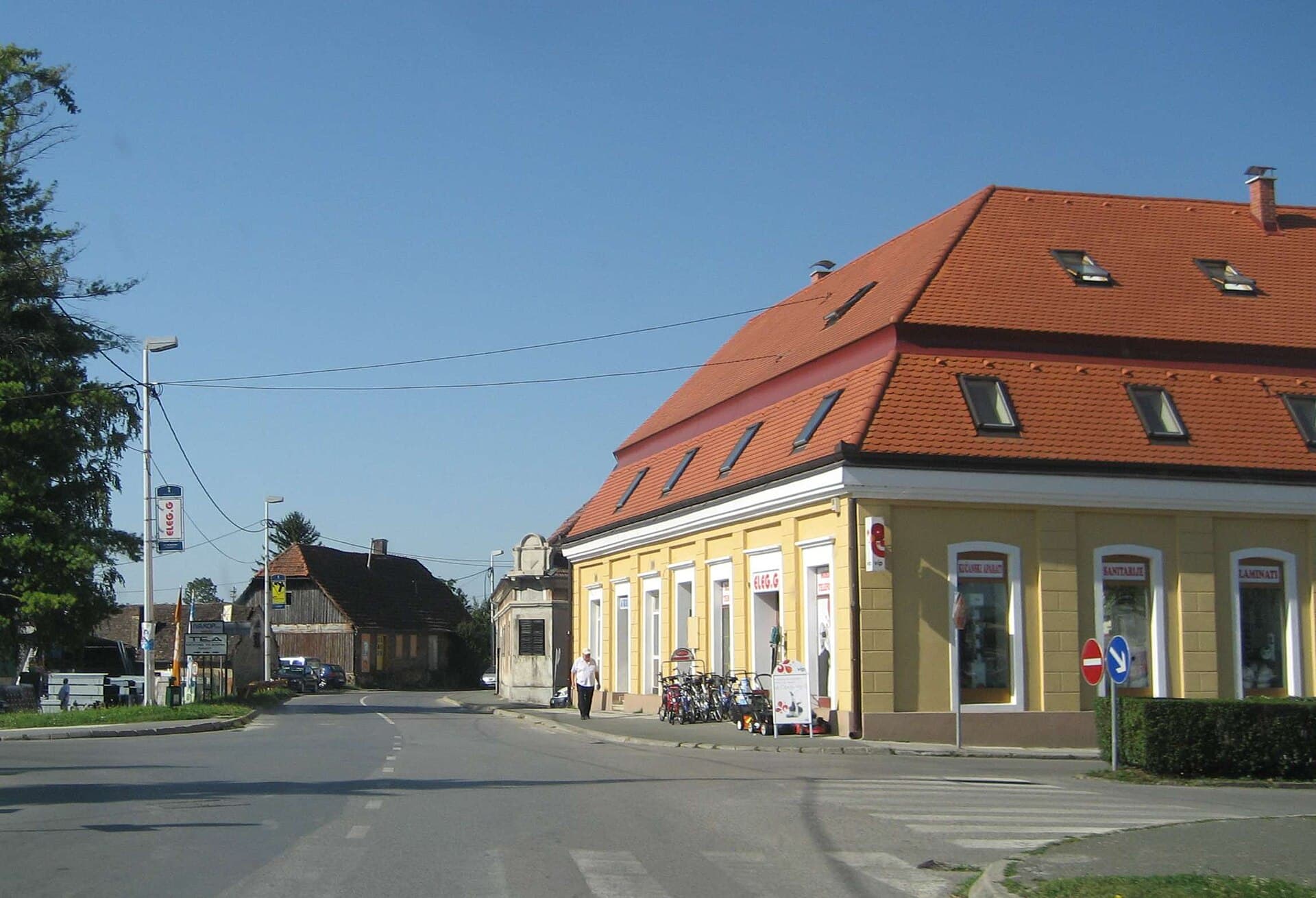
About this place
Ivanić-Grad stands beside the Lonja in western Moslavina, 38 kilometres from Zagreb on the main rail and motorway corridor towards Slavonia. It first appears in records in 1246, although today’s centre developed from a Renaissance Military Frontier fortress built in the mid-16th century against Ottoman incursions. The fort itself has disappeared, but its site survives as Park hrvatskih branitelja, now home to Ivanić-Grad Museum, St Peter the Apostle Church and interpretations of the former ramparts. Ivanić received town status in 1871, while the arrival of the railway in the late 19th century accelerated its growth as a craft and trading centre. Its most unusual modern landmark is Naftalan Special Hospital, which has used medicinal mineral oil and saline thermal water since 1989; its naphthalan deposit is the only recorded site of its kind in Europe. Petroleum heritage meets wetland ecology in Žutica forest, where an easy 2.5-kilometre nature trail passes working pumpjacks and Lonjsko Polje floodplain habitats. Local flavours include pumpkin-seed oil, bele kobase sausages, cheese-filled vankuši and bučnica, celebrated at the annual early-October Bučijada.
Ivanić-Grad brings together three identities rarely found in one small town: a Military Frontier fortress, Moslavina farming and petroleum extraction. No buildings survive from the rectangular fort with bastions and a moat, yet its footprint still shapes Park hrvatskih branitelja and the position of St Peter’s Church. The surrounding Moslavina villages contribute Škrlet vineyards, pumpkins and carved wooden houses, while oil pumpjacks rise above the floodplain forest floor in Žutica. Naftalan connects this industrial geology with medicine through treatments using naphthenic mineral oil and saline thermal water. That combination makes Ivanić-Grad more than a commuter town outside Zagreb: it is a distinctive centre of western Moslavina.
Stays nearby
 Apartment
Apartmeni Klenovica.eu
Klenovica
Klenovica, 138 km from Ivanić-Grad
up to 4 guests · 1 bedroom
The host confirms the exact price for your dates and availability.
Things to see
Ivanić-Grad Museum occupies an 1861 school building in Park hrvatskih branitelja and interprets the region from the late Middle Ages to the petroleum-led industrial era. In the same park, St Peter the Apostle Church continues the tradition of a chapel documented beside the fortress in the late 16th century; the present masonry church was built in 1831. Naftalan Special Hospital is the town’s defining modern institution, using locally sourced medicinal oil and thermal mineral water since 1989. In Žutica, the oil pumpjacks themselves have become landmarks, while the nature trail explains their unusual coexistence with the floodplain woodland of the Lonjsko Polje system.
Things to do
Begin in Park hrvatskih branitelja, where the vanished fortress can be traced in relation to St Peter’s Church and Ivanić-Grad Museum, housed in an 1861 school building. Continue along Savska Street, the historic route towards Kloštar Ivanić, and collect the “Windows into the Past” activity sheets at the visitor centre. Reserve the afternoon for the pools and wellness facilities at Naftalan Special Hospital or a bicycle ride through the surrounding villages. Nature enthusiasts should allow about 45 minutes for Žutica’s 2.5-kilometre interpretation trail, whose ten panels explain the floodplain forest, its wildlife and the oil pumpjacks operating within it.
Food and drink
Ivanić-Grad’s local table is best recognised through pumpkin-seed oil, pumpkin-filled bučnica, cheese-and-cornmeal vankuši and “bele kobase”, the distinctive Moslavina flour sausages. Rural estate Kezele in Šumećani serves kotlovina and homemade štrukli with its own wines, making it a strong choice for a regional meal outside the centre. In town, Gradska pivnica Ivanić focuses on homestyle dishes, Fratellos on Trg Vladimira Nazora offers pasta, risotto and meat dishes, and Restaurant Naftalan operates within the hospital complex. Pizzeria Rošo gives the town’s signature crop a playful role through pizza topped with pumpkin seeds.
Practical information
Practical information
The Ivanić-Grad Tourist Board is at Moslavačka 11; its published contacts are +385 1 2881 591 and [email protected]. The visitor centre and souvenir shop at Tržnica Maznica 7 sells locally produced pumpkin-seed oil and provides materials for self-guided exploration. Ivanić-Grad Museum is in Park hrvatskih branitelja, while Naftalan stands at Omladinska 23a. For 2026 the hospital publishes daily opening hours of 7:00–22:00, although individual pool, wellness or therapy services should be booked separately. The main square, museum and central park are all within an easy walk of one another.
Parking
The clearest documented visitor parking area is beside Ivanić-Grad railway station, the starting point for both the blue and light-red cycling routes. Zagreb County’s cycling guide notes ample space for leaving a car there, with Savska Street providing a walking approach to the centre and cycle routes continuing towards Kloštar Ivanić and Križ. Access roads around Park hrvatskih branitelja serve the museum and St Peter’s Church, but tourist sources publish no citywide parking-zone price list for 2026. During Bučijada, fair stalls occupy much of the centre, making the station car park a more dependable choice than searching around Trg Vladimira Nazora.
Getting there and around
Ivanić-Grad lies 38 kilometres from Zagreb beside the A3 Zagreb–Lipovac motorway, with a dedicated junction providing a straightforward drive from the capital. Its railway station is on the Dugo Selo–Novska line, which reached the town in 1899, and HŽPP includes Ivanić-Grad in Zagreb’s suburban network; departure details should be checked for the travel date because engineering works can introduce replacement buses. Maluks local routes numbered 800–806 connect the town with Križ, Kloštar Ivanić, Ježevo, Dubrava and surrounding villages. The bus station stands by Savska Street, close to the railway station.
Frequently asked questions
What makes Naftalan unusual?
Ivanić-Grad’s medicinal naphthalan deposit is the only recorded site of its kind in Europe, and the hospital has used it in treatments since 1989.
How long does the Žutica trail take?
The easy trail is 2.5 kilometres long, with the tourist board allowing roughly 45 minutes for the circuit.
Where is Ivanić-Grad Museum?
The museum occupies an 1861 former school in Park hrvatskih branitelja.
Which foods are typical of Ivanić-Grad?
Local specialities include bele kobase sausages, cheese-filled vankuši, bučnica and pumpkin-seed oil.
Related guides
Tuhelj
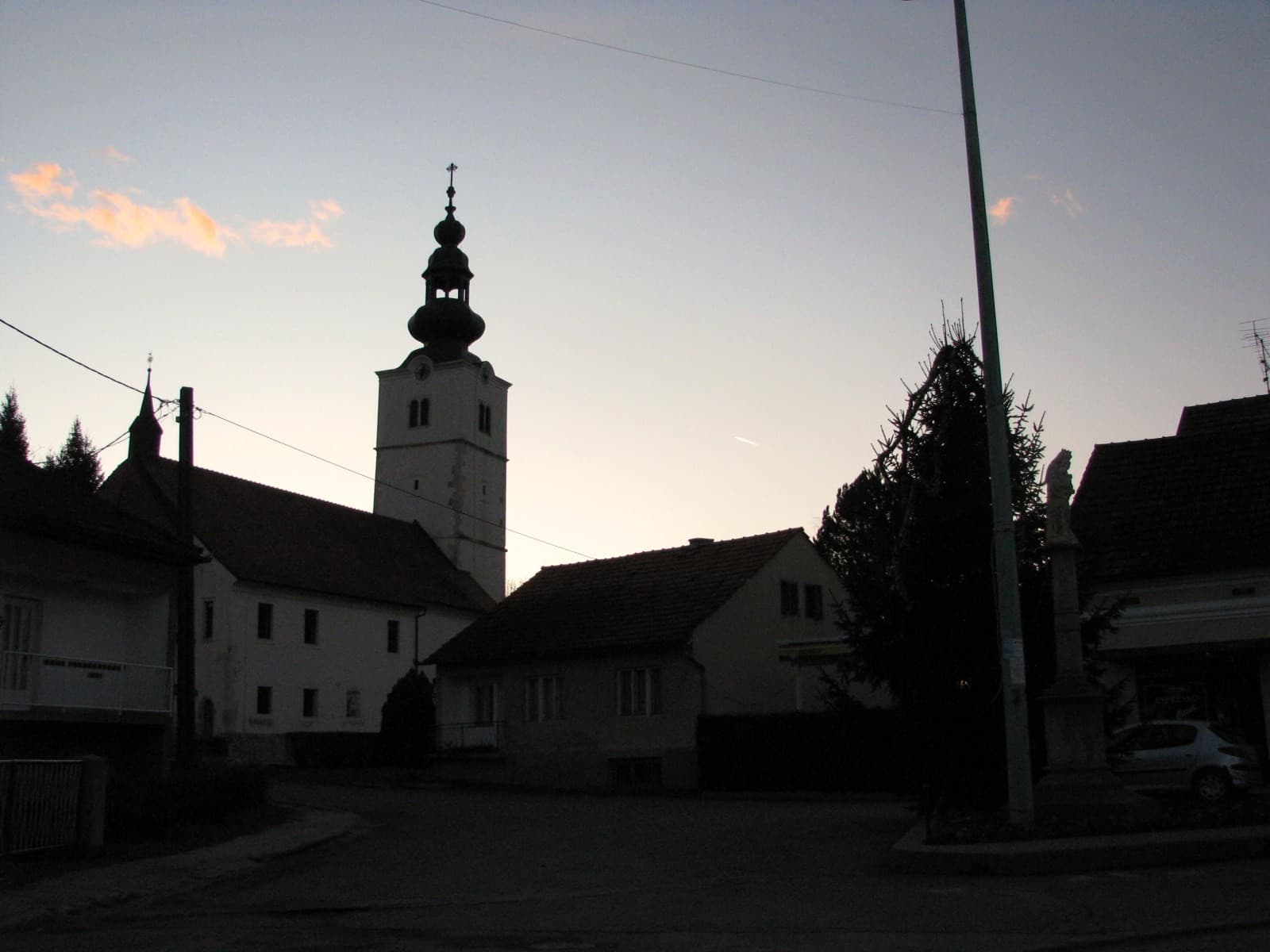
The population of the municipality has fallen from a peak of 3,780 in 1971 to 2,043 in 2021, and 61 people were lost in the last census decade alone. Eleven settlements, from Banska Gorica…
Read the guide

Help improve this page
Spot something missing or wrong? Suggest a correction, add your photo or report a problem. Editors review every suggestion before it is published.
Photo credits
- Ivanić-Grad — Croq · CC BY-SA 3.0 · Wikimedia Commons
- Apartmeni Klenovica.eu — Apartmani Klenovica.eu · courtesy of the property owner
- Tuhelj — Ex13 · CC BY-SA 3.0 · Wikimedia Commons
- Sveti Martin na Muri — Silverije · CC BY-SA 3.0 · Wikimedia Commons
- Velika Gorica — Frane Lovošević · CC BY-SA 3.0 · Wikimedia Commons

