Klenovnik
About this place
Klenovnik lies on the southern slopes of Ravna Gora, nine kilometres northwest of Ivanec, in a part of Hrvatsko Zagorje closely associated with the Drašković family. Its defining landmark is a four-winged, two-storey Renaissance castle built in 1616 as the family’s principal residence; the complex has served healthcare purposes since 1927. The hospital function means that this is not a conventional palace open for casual touring, yet the vast exterior and historic grounds still dominate the settlement. Above Klenovnik, at Vukovoj, stands the late Gothic Chapel of St Wolfgang, built in 1508 and enclosed by a fortified stone wall with firing slits. Its interior contains a Baroque high altar dating from 1650 and a pulpit made around 1745, while the elevated site overlooks the Zagorje hills. The village centre adds the Parish Church of the Holy Trinity, built in 1738 and consecrated in 1821. Klenovnik works particularly well as a focused half-day excursion linking a Renaissance residence, a Baroque parish church and a solitary Gothic chapel on Ravna Gora’s lower slopes.
Klenovnik first appears in written records in 1244, when King Béla IV granted the estate to Mihajlo, count of Varaždin. The Drašković family controlled it from the mid-16th to the mid-19th century, and Ban Ivan II Drašković commissioned the immense four-winged castle with its inner courtyard in 1616. The settlement grew between that residence and the southern slopes of Ravna Gora, where carbonate rock has produced caves and pits. Klenovnik also preserves distinctive food traditions: the making of the festive lucišćak loaf and the Christmas bread known as koledo is listed as protected intangible heritage.
Stays nearby
 Apartment
Apartmeni Klenovica.eu
Klenovica
Klenovica, 161 km from Klenovnik
up to 4 guests · 1 bedroom
The host confirms the exact price for your dates and availability.
Things to do
Start by viewing Klenovnik’s Renaissance castle from outside, remembering that it has served as a medical institution since 1927. From the centre, continue to the Church of the Holy Trinity, built in 1738, where the altars and pulpit display the Drašković coat of arms. Save the main walk for last: the climb to Vukovoj reaches the 1508 Chapel of St Wolfgang, its stone defensive enclosure, pointed Gothic entrance and a newer viewpoint beside the approach. At roughly 495 metres above sea level, benches and a children’s playground provide a reason to linger over the panorama of the Klenovnik countryside.
Practical information
Getting there and around
Klenovnik is most easily reached by road through Ivanec, approximately nine kilometres to the southeast, followed by local roads towards the foot of Ravna Gora. Varaždin is about 25 kilometres away and Trakošćan roughly 28 kilometres distant, allowing drivers to include Klenovnik in a route between the Varaždin area and the castles of northern Zagorje. As the village is not a stop on the principal regional railway, the final leg needs to be completed by road. Visitors heading to the Chapel of St Wolfgang continue from central Klenovnik towards Vukovoj and should allow for the final climb above the settlement.
Frequently asked questions
Can Klenovnik Castle be toured as a museum?
The castle has served healthcare purposes since 1927, so it should be treated as a hospital complex rather than a regularly open museum.
When was the Chapel of St Wolfgang built?
Ivan Gyulaj of Trakošćan commissioned the chapel at Vukovoj in 1508.
What is koledo?
Koledo is a traditional Christmas bread from Plemenšćina in Klenovnik municipality, and its preparation is protected as intangible cultural heritage.
Nearby
Plemenšćina
Village · Central Croatia
Vukovoj
Village · Central Croatia
Related guides
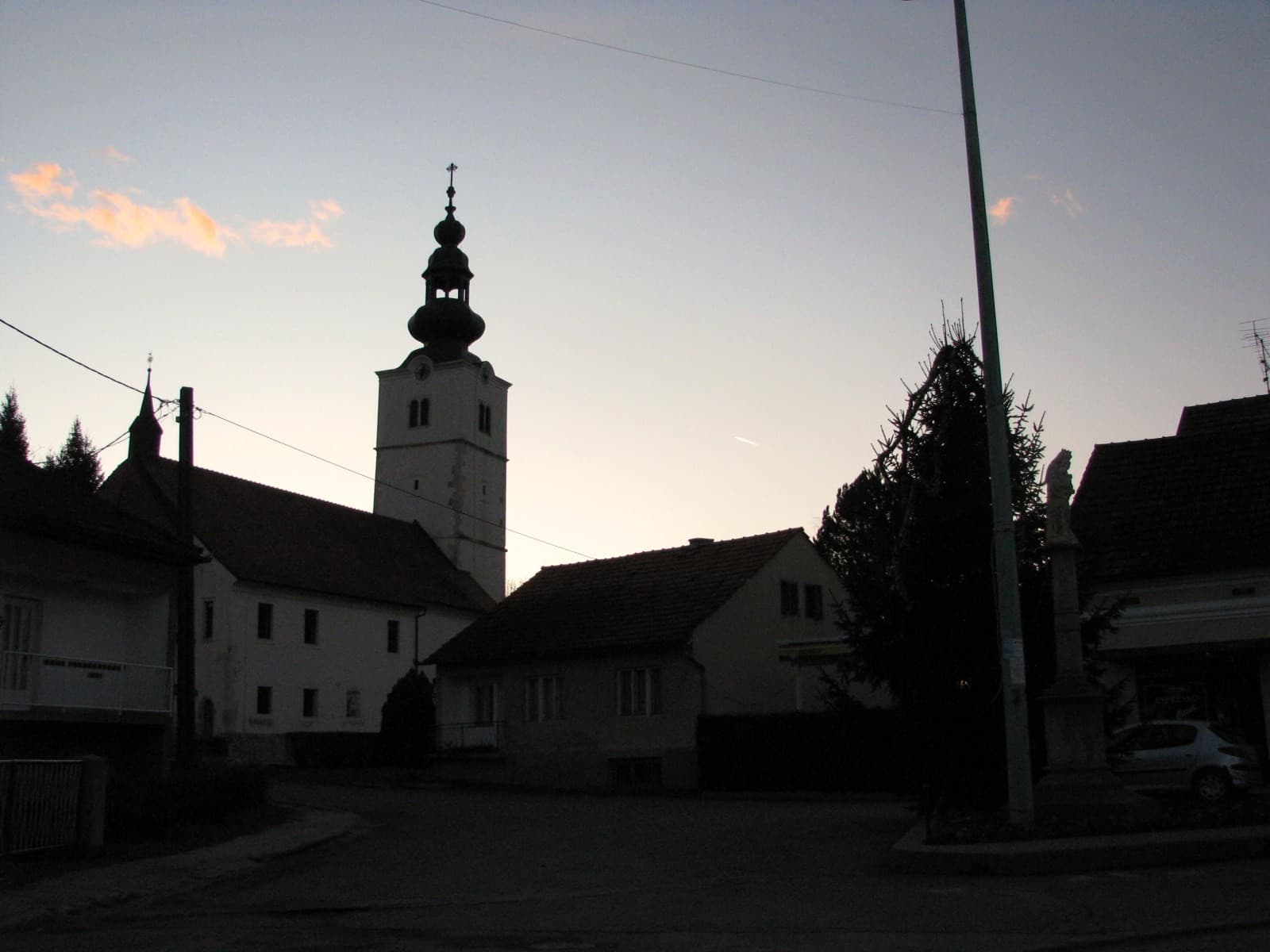
Tuhelj
The population of the municipality has fallen from a peak of 3,780 in 1971 to 2,043 in 2021, and 61 people were lost in the last census decade alone. Eleven settlements, from Banska Gorica…
Read the guide

Help improve this page
Spot something missing or wrong? Suggest a correction, add your photo or report a problem. Editors review every suggestion before it is published.
Photo credits
- Apartmeni Klenovica.eu — Apartmani Klenovica.eu · courtesy of the property owner
- Tuhelj — Ex13 · CC BY-SA 3.0 · Wikimedia Commons
- Sveti Martin na Muri — Silverije · CC BY-SA 3.0 · Wikimedia Commons
- Velika Gorica — Frane Lovošević · CC BY-SA 3.0 · Wikimedia Commons
- Stubičke Toplice — MOs810 · CC BY-SA 4.0 · Wikimedia Commons

