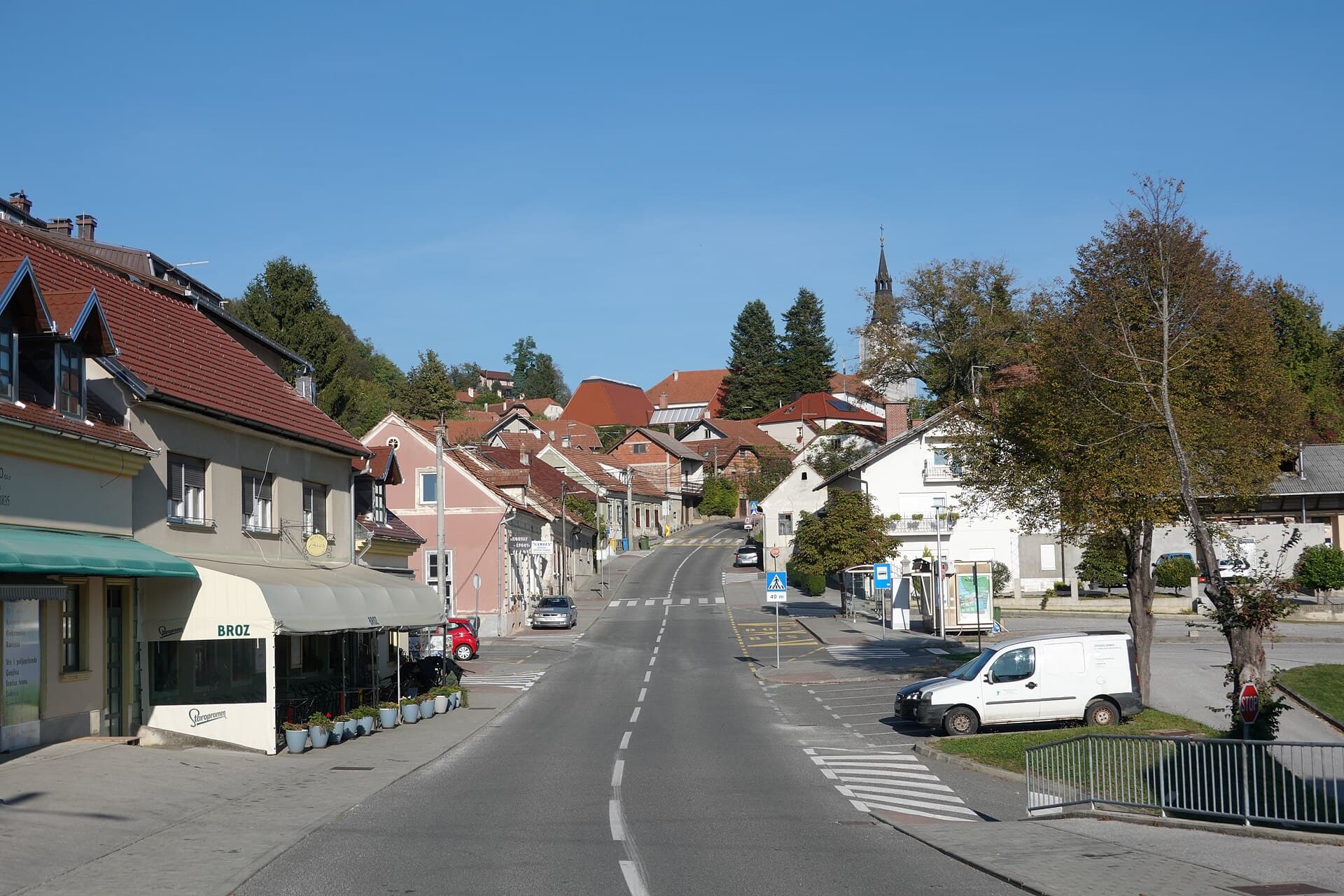
About this place
Klanjec is a small town in western Hrvatsko Zagorje, standing above the Sutla valley beneath 511-metre Cesarska Gora. First recorded in 1463, it is now defined by its Franciscan complex, sculptor Antun Augustinčić and connections with Croatia’s national anthem. Antun Mihanović Square brings together the Augustinčić Gallery and the Church of the Annunciation with its 17th-century Franciscan monastery. The church crypt preserves the restored metal sarcophagi of Sigismund and Emerik Erdődy, exceptional survivals of Croatian aristocratic heritage. Opened in 1976, the gallery presents Augustinčić’s portraits, intimate sculptures and monumental works before continuing outdoors into a sculpture park. Above Klanjec, a forest route climbs towards the ruins of Cesargrad and a mountain hut, while Zelenjak, Kumrovec and Tuheljske Toplice follow the wider Sutla corridor. Although Klanjec is only about 50 kilometres from Zagreb, public transport within western Zagorje remains limited, so a car or bicycle gives visitors greater freedom to connect its cultural and landscape sites.
Klanjec is the cultural and historic centre of western Zagorje, built on a slope between the Sutla and Cesarska Gora. First mentioned in 1463, the town produced sculptor Antun Augustinčić, painter Oton Iveković and lexicographers Ivan Broz and Franjo Iveković. Antun Mihanović, who wrote the words of Croatia’s national anthem, spent his final years in this area, and the main square bears his name. Klanjec’s character comes not from size but from an unusually dense collection of landmarks: a Franciscan monastery, an early Baroque church, aristocratic sarcophagi, the Augustinčić Gallery and its sculpture park. Above this compact centre rise the forests of Cesarska Gora and the ruins of Cesargrad.
Stays
No stays listed here yet
Things to see
The Antun Augustinčić Gallery opened in 1976 to display the work of the sculptor born in Klanjec in 1900; its three-part permanent exhibition continues into an outdoor sculpture park. Opposite the gallery, Sigismund and Nikola Erdődy commissioned the Church of the Annunciation and Franciscan monastery, with the church consecrated in 1655. Its crypt preserves richly worked metal sarcophagi made for Sigismund Erdődy in 1639 and Emerik Erdődy in 1690. A monument to Antun Mihanović, unveiled in 1910, occupies the main square. Above Klanjec, the ruins of medieval Cesargrad recall the fortress beneath which the settlement developed, while the Memorial Park of Notable Citizens introduces the town’s artists and language scholars.
Things to do
Begin on Antun Mihanović Square, where the monument to the anthem’s lyricist, the Antun Augustinčić Gallery and the Franciscan complex stand close together. Inside the gallery, explore intimate sculpture, portraits and models for monumental works before continuing into the outdoor sculpture park created from the former monastery orchard. Arrange a visit to the Church of the Annunciation through the Klanjec Cultural Centre to see the restored Erdődy sarcophagi. From the historic core, a wooded path climbs past St Florian’s Chapel towards the mountain hut and Cesargrad ruins. Cyclists can tackle the 41-kilometre loop from Klanjec through Kraljevec na Sutli, Dubravica and Luka, with 480 metres of total ascent.
Food and drink
The clearest choice for a Zagorje meal in Klanjec lies just beyond the historic centre. Stara Vodenica guesthouse at Gredice 32 serves home-style food in a family setting with room for about 70 diners. Bistro Broz on Lijepe Naše street pairs a simple lunch with wine made by local vintner and proprietor Zvonko Sever. The town’s visitor information also identifies Sever’s winery on Kumrovečka street as a place connected with Klanjec wine. Cafés around Antun Mihanović Square are convenient between the Augustinčić Gallery and Franciscan monastery, but Gredice is the stronger choice for a complete Zagorje meal.
Practical information
Practical information
Visitor information for Klanjec is provided by the Biser Zagorja Tourist Board, while the Klanjec Cultural Centre arranges guided access to the Church of the Annunciation, Franciscan monastery and Erdődy sarcophagi. The Antun Augustinčić Gallery and Studio operate their own museum service on Antun Mihanović Square. Footwear suitable for woodland is needed for the climb towards Cesargrad, and visitors should confirm whether the mountain hut is open before relying on its facilities. Cycling routes around Klanjec use narrow, lightly trafficked local roads but include noticeable Zagorje climbs. A few hours cover the gallery, monastery and central square, whereas adding Cesargrad and Zelenjak requires at least half a day.
Parking
Klanjec has a public car park immediately beside the Antun Augustinčić Gallery, allowing visitors to explore Antun Mihanović Square, the sculpture park and the Franciscan complex on foot. Further public spaces are available along Dr Franje Tuđmana street, although the official 2026–2030 destination plan notes that capacity around this street and the gallery becomes limited during major events. This is particularly relevant during the autumn thanksgiving festival, whose programme centres on the historic core. For a normal museum visit, parking by the gallery and walking around the centre is the simplest approach; reaching Cesargrad requires continuing to a suitable trailhead.
Getting there and around
Klanjec is about 50 kilometres from Zagreb by road, with regional roads connecting it to Zabok, Kumrovec, Tuheljske Toplice and the Sutla border area. Bus route 200 follows the Zaprešić–Pušća–Dubravica–Klanjec–Kumrovec corridor, while Presečki runs county services including Klanjec–Kumrovec–Desinić. Klanjec railway station lies on the Sutla line; HŽ Passenger Transport’s 2026 timetable includes trains towards Harmica and Savski Marof, where Zagreb connections are available. Despite these links, the official destination plan identifies limited public transport between Klanjec, Tuhelj and Veliko Trgovišće, making a car more practical for dispersed attractions.
Frequently asked questions
How can visitors see the Erdődy sarcophagi?
Visits to the Church of the Annunciation, monastery and sarcophagi are arranged through the Klanjec Cultural Centre.
What does the Antun Augustinčić Gallery display?
The permanent display covers Augustinčić’s intimate sculpture, portraits and monumental work, continuing outdoors into the sculpture park.
Is Klanjec served by train?
HŽ Passenger Transport’s 2026 timetable includes Klanjec station on the line towards Harmica and Savski Marof.
How long is the cycling loop from Klanjec?
The loop through Kraljevec na Sutli, Dubravica and Luka is 41 kilometres long with about 480 metres of total ascent.
Nearby

Mihanovićev Dol
Village · Central Croatia

Related guides
Tuhelj
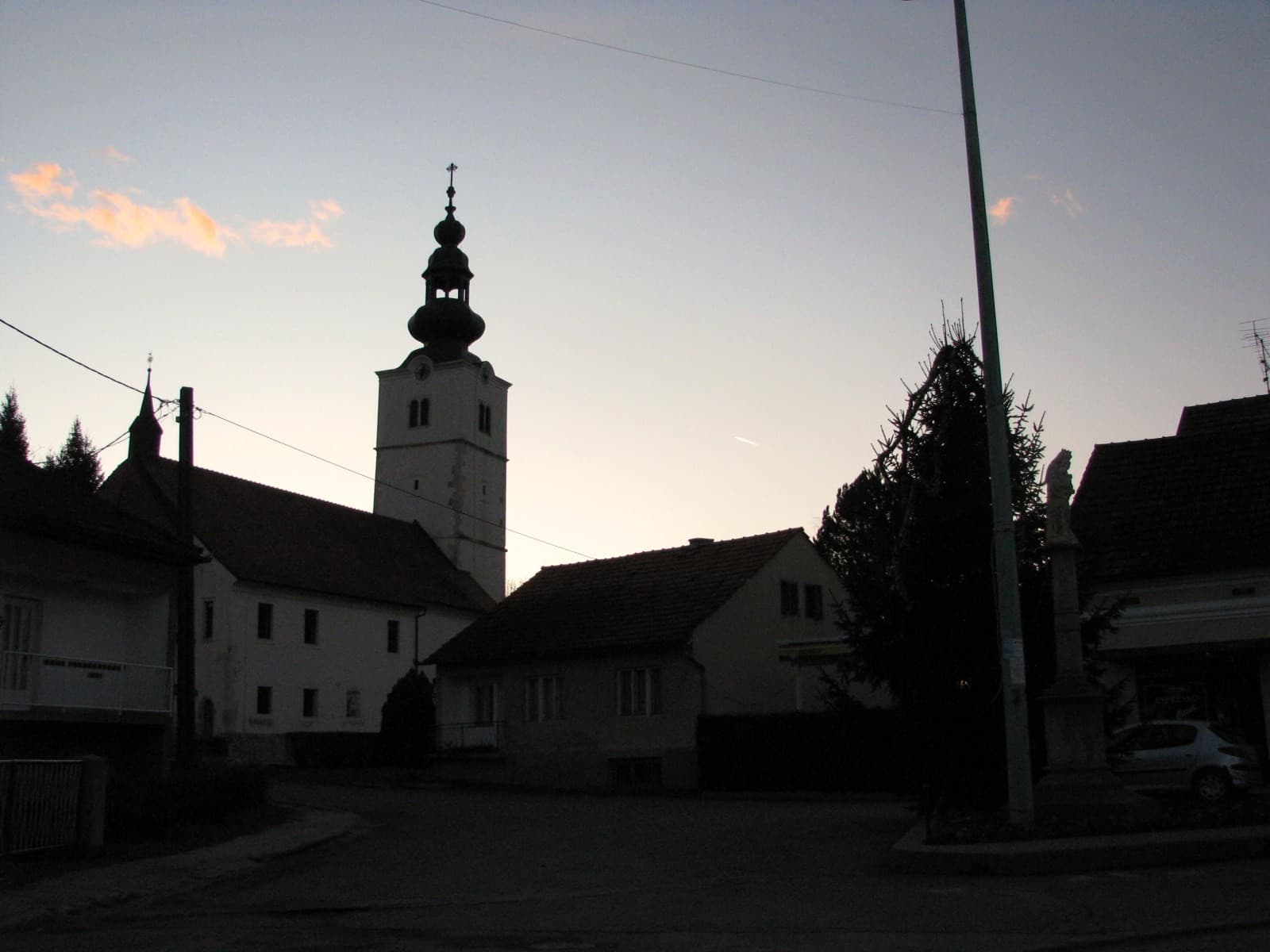
The population of the municipality has fallen from a peak of 3,780 in 1971 to 2,043 in 2021, and 61 people were lost in the last census decade alone. Eleven settlements, from Banska Gorica…
Read the guide

Help improve this page
Spot something missing or wrong? Suggest a correction, add your photo or report a problem. Editors review every suggestion before it is published.
Photo credits
- Klanjec, Mihanovićev Dol — Janezdrilc · CC0 · Wikimedia Commons
- Novi Dvori Klanječki — Exluppis · CC BY-SA 3.0 · Wikimedia Commons
- Sveti Križ, Tuhelj — Sandor Bordas · CC BY-SA 3.0 · Wikimedia Commons
- Tuhelj — Ex13 · CC BY-SA 3.0 · Wikimedia Commons


