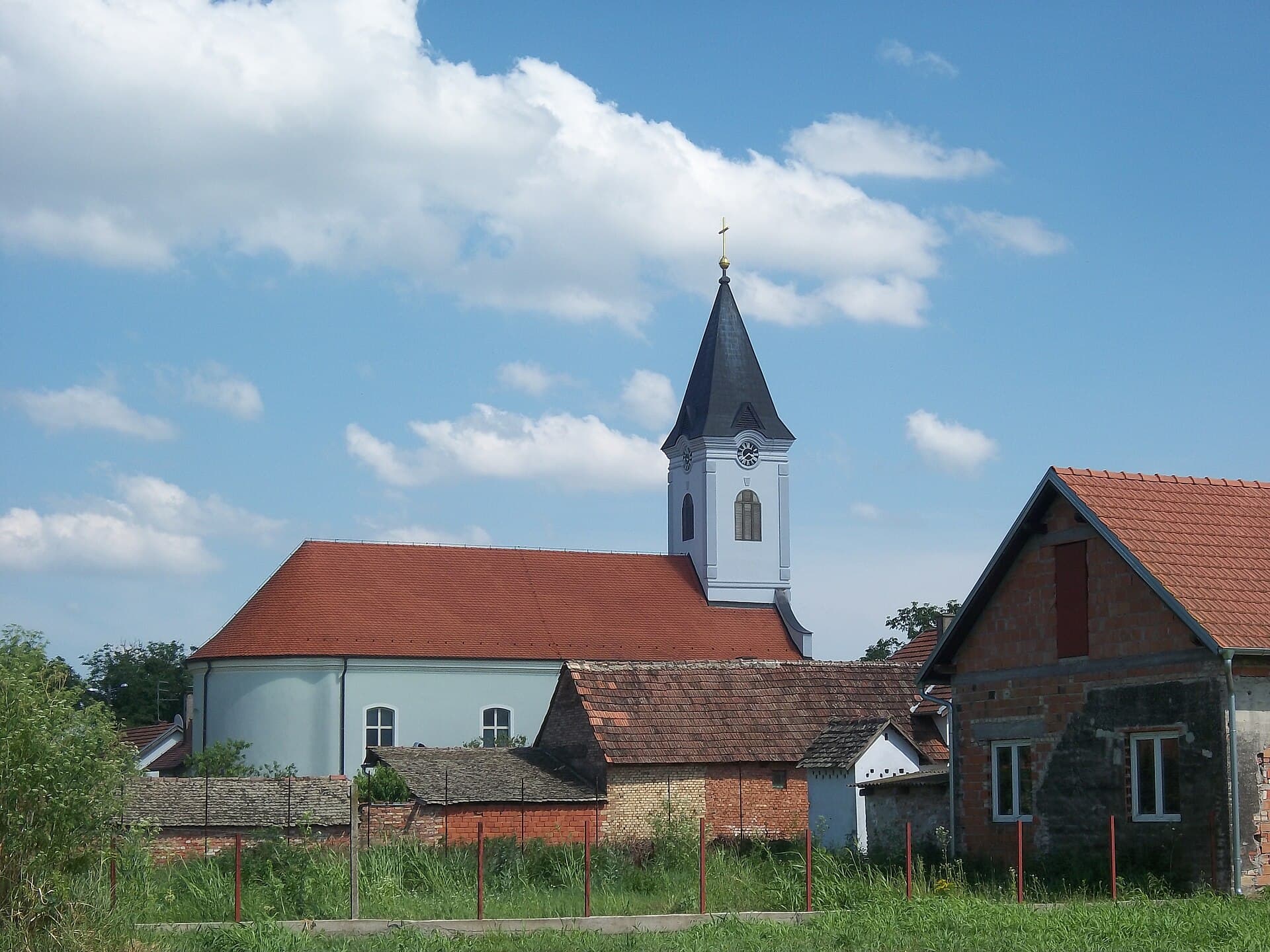
Vinkovci
About this place
Vinkovci is a city on the Bosut with an exceptionally deep archaeological record. The official city history states that the area of present-day Vinkovci and its immediate surroundings has been inhabited for about 7,000 years, while the City Museum presents the archaeology of the wider Vinkovci area across roughly eight millennia. Roman Cibalae once occupied the site and is associated with the emperors Valentinian I and Valens, while far older layers include the Starčevo, Sopot and Vučedol cultures. The best-known individual find is the Orion vessel, discovered in 1978 and dated to around 2600 BC, whose decoration has been interpreted as a calendar-like representation of the sky. Modern sightseeing connects archaeology naturally with the Bosut: a walking and cycling route leads from town toward Sopot and reconstructed houses inspired by the Sopot culture. A slower visit can remain around the main park, Krnjaš and the riverbank before turning to Slavonian food. Vinkovci therefore combines very deep archaeology, Šokac urban heritage and a calm river landscape in an unusually coherent way.
Vinkovci developed along the Bosut on ground where settlement layers can be followed from the Neolithic through Roman Cibalae to the modern city. The official city history specifically identifies the Sopot culture, named after the nearby site, and Roman Cibalae, which achieved municipal and later colonial status in the imperial period. The city’s identity is not only archaeological: Krnjaš preserves a traditional Šokac character, the central square and park represent the civic town, and the Bosut links these layers together. Vinkovci is therefore best understood through movement from the museum and centre toward the river and Sopot. Here archaeology is not separated from everyday urban life; it literally lies beneath and alongside the modern city.
Stays
No stays listed here yet
Things to see
Vinkovci City Museum maintains archaeological and ethnological displays with thousands of objects from the town and its surroundings; the archaeological department covers periods from prehistory through the Middle Ages. Orion, a ceramic vessel discovered in 1978 and dated to around 2600 BC, is one of the best-known finds and can be seen in the museum. Sopot offers a different kind of attraction: an archaeological park beside the Bosut with reconstructed houses and a link toward the Kanovci educational trail. In the centre, the heritage sequence continues with the Church of Saints Eusebius and Polion, while Meraja recalls the medieval ecclesiastical history of the site. Together, these places show why Vinkovci is strongly an archaeological destination rather than simply a regional urban centre.

Things to do
For a first day, start in the main park, visit the City Museum and the Church of Saints Eusebius and Polion, then cross the Bosut bridge and continue toward Krnjaš. The tourist board recommends this sequence and extends it toward the Banja bathing area or the Sopot archaeological park. Sopot is linked with the town by a walking and cycling route along the Bosut, turning archaeology into a landscape excursion rather than only a museum display. On returning, look for the Orion vessel in the City Museum and connect the object with the archaeological places visited outside. The day can end naturally in the centre with Slavonian food or a local craft beer, without requiring long transfers by car.
Food and drink
The Vinkovci tourist board lists a broad range of restaurants and bistros, including Kod Pjera, Marabu, Barun Trenk, Bijela lađa, Lu, Lamut, Srijem, Vatikan and Šokački stan. This allows visitors to choose between a conventional city meal and a setting that places more emphasis on Slavonian atmosphere. For a local experience, dishes such as kulen and other cured meats, meat stews, fish stew or čobanac are worth looking for when available, although menus vary by venue. Šokački stan near Sopot fits particularly well with an archaeological-park excursion, while central restaurants are convenient after the museum and Bosut walk. In 2026, current opening hours should be checked directly, especially on Sundays and public holidays.
Practical information
Practical information
The Vinkovci Tourist Board is at Trg bana Josipa Šokčevića 4 and, according to information published in 2026, is open on weekdays from 8:00 to 16:00. The City Museum is on the same central square, so visitor information and the start of a cultural itinerary can be combined without additional transport. A bicycle or longer walk is practical for reaching Sopot along the Bosut, while the centre, Krnjaš and most urban sights can be explored on foot. In 2026, museum opening hours and any temporary events should be checked before arrival, particularly if Orion or a specific exhibition is the main reason for the visit. In summer, the Bosut paths are more comfortable in the morning or evening than during the hottest hours.
Parking
Paid public parking in Vinkovci is divided into two zones with no general time limit on parking duration. According to official information available in 2026, Zone I is marked red and Zone II yellow; charging applies on weekdays from 8:00 to 20:00 and on Saturdays from 7:00 to 15:00, while Sundays and public holidays are free. Payment is available at parking machines, through mobile parking and by app. For central sightseeing, it is most practical to park once and continue on foot toward the museum, main square and Bosut because the principal urban sights are close together. Tariffs can change, so the current parking price should be checked on the Gradsko gospodarstvo website shortly before arrival.
Frequently asked questions
What was the Roman town at the site of present-day Vinkovci called?
The Roman city was called Cibalae, and the official city history also connects it with the emperors Valentinian I and Valens.
When was the Orion vessel discovered?
Orion was discovered in 1978 during works in Vinkovci and is dated to approximately 2600 BC.
How can Sopot be reached from Vinkovci?
Sopot is connected with the town by a several-kilometre walking and cycling route along the Bosut.
Where is the Vinkovci Tourist Board?
The office is at Trg bana Josipa Šokčevića 4 in the city centre.

Related guides

Osijek
Tvrđa and the centre around the main square are distinct starting points for understanding Osijek. The former emphasises the fortified historic quarter and Baroque architecture; the latter…
Read the guide

Help improve this page
Spot something missing or wrong? Suggest a correction, add your photo or report a problem. Editors review every suggestion before it is published.
Photo credits
- Vinkovci, Jarmina — IvanOS · CC BY-SA 3.0 · Wikimedia Commons
- Mirkovci, Nuštar, Tordinci, Gaboš — MirkoS18 · CC BY-SA 3.0