About this place
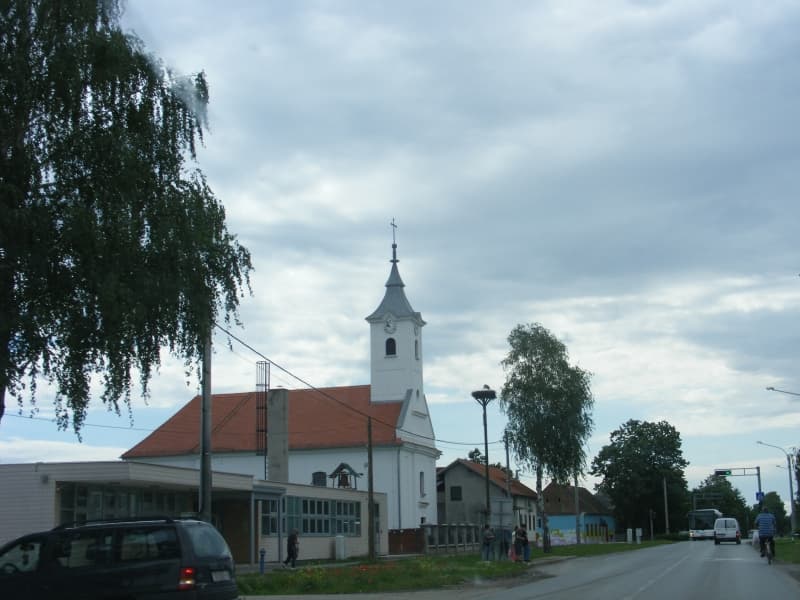
Kopačevo is a Baranja village on the immediate edge of Kopački Rit, roughly four to five kilometres east of Bilje and about ten kilometres from Osijek. Water frames it on three sides: fishponds and Lake Sakadaš lie to the north, while Bilje Lake, a natural continuation of Sakadaš, extends along the east and south. The first written reference appears in a 1212 charter issued by King Andrew II, which also mentions three fishing places. Fishing supported Kopačevo for centuries—around 200 fishers once worked here—whereas vegetable growing, ground paprika and rural tourism now play prominent roles in village life. The Kopačevo Reception Centre at Mali Sakadaš stands just beyond the settlement and serves as the principal entrance to Kopački Rit Nature Park. From here, visitors reach the White Water Lily Boardwalk and join organised boat trips, birdwatching sessions and wetland programmes focused on the floodplain between the Danube and Drava. Kopačevo also retains a strong Hungarian character, expressed through the name Kopács and its Reformed church. In September 2026, the 28th Fishermen’s Days brought fish stew, carp roasted on wooden forks and more than 80 exhibitors to the village.
Kopačevo, known in Hungarian as Kopács, is a linear village beside the western edge of Kopački Rit and away from Baranja’s principal roads. Lake Sakadaš, Bilje Lake and the surrounding reed beds explain why old house fronts, fishing history and local cooking are all tied to water. A charter issued by Andrew II in 1212 provides the first known written record and already refers to fishing grounds. The present village combines a predominantly Hungarian tradition, a Reformed church and vegetable cultivation, particularly the paprika used in local fish stew. The nearby Reception Centre makes Kopačevo the inhabited gateway to Baranja’s foremost wetland landscape.
Stays nearby
 Apartment
Apartmeni Klenovica.eu
Klenovica
Klenovica, 313 km from Kopačevo
up to 4 guests · 1 bedroom
The host confirms the exact price for your dates and availability.
Things to see
Kopačevo’s principal attraction is the Kopački Rit Nature Park Reception Centre at Mali Sakadaš, the starting point for the White Water Lily Boardwalk, boat landing and organised visits. The park occupies a floodplain in the angle formed by the Danube and Drava; 17,700 hectares received protection in 1967, followed by an 8,000-hectare special zoological reserve in 1969. The wetland supports 285 recorded bird species, including white-tailed eagles, great cormorants and several herons. Within the village, the Reformed church is the main cultural landmark, serving the Hungarian community and linking Kopačevo with the Reformed Christian Church of Hungarians in Croatia.
 Nature park
Things to do
Begin at the Kopačevo Reception Centre, Mali Sakadaš 1, where park tickets are sold and guided programmes are arranged. Follow the White Water Lily Boardwalk through the wetland margin, then choose a boat trip, small-craft excursion or guided birdwatching around Sakadaš. Back in the village, walk to the Reformed church and inspect house façades that recall Kopačevo’s fishing past. Reserve lunch at Didin Konak, Šandora Petefija 93, where fish stew and freshwater fish anchor the menu. A September visit can coincide with Fishermen’s Days, an event held for the 28th time in 2026.
Food and drink
Didin Konak at Šandora Petefija 93 is the clearest dining address within Kopačevo itself. Its Baranja-focused menu features fish stew, catfish perkelt, smoked carp, pike-perch and čobanac, served in a courtyard styled after a traditional Slavonian-Baranja household. Kopačevo’s cooking is closely tied to the village’s ground paprika, the locally grown ingredient that supplies fish stew with its colour and heat. During September’s Fishermen’s Days, kettles and wooden roasting forks take over the streets; the 2026 edition served fish stew and fork-roasted carp alongside products from more than 80 exhibitors.
Practical information
Practical information
The Kopačevo Reception Centre is at Mali Sakadaš 1; programme information is available on +385 31 445 445 and at [email protected]. Nature-park tickets are also sold through the official online shop, while cruises and guided activities are selected from the centre’s current programme. The Bilje Municipality Tourist Board is at Kralja Zvonimira 10 in Bilje, roughly five kilometres from Kopačevo. Closed footwear, sun protection and insect repellent are sensible for the boardwalk and boat programmes because the visitor route follows Lake Sakadaš and extensive reed beds.
Parking
The principal visitor parking area stands beside the Kopačevo Reception Centre at Mali Sakadaš and accommodates 50 cars and five coaches. Its position allows visitors to leave vehicles before joining the White Water Lily Boardwalk or boarding the excursion boat, avoiding unnecessary driving into the sensitive wetland. No separate public parking tariff is listed for 2026, while park admission and selected programmes are charged under the institution’s current price list. During Fishermen’s Days, when thousands of visitors arrive in Kopačevo, an early start is prudent because the village approaches become considerably busier.
Getting there and around
Drivers from Osijek should follow signs for Beli Manastir and continue through Darda and Bilje to Kopačevo; the village is about ten to eleven kilometres from Osijek. From the Baranjsko Petrovo Selo border crossing, the route runs towards Osijek before turning through Darda and Bilje. GPP Osijek restored its Osijek–Bilje service in September 2026, but the final five kilometres from Bilje to Kopačevo require separate arrangements. A bicycle suits that last section particularly well because the Reception Centre stands immediately beside the village, away from Baranja’s main traffic corridors.
Frequently asked questions
Where does a Kopački Rit visit begin?
The main entrance is the Kopačevo Reception Centre at Mali Sakadaš 1, beside the White Water Lily Boardwalk and boat landing.
What are Fishermen’s Days known for?
Held in early September, Kopačevo’s festival brings together fish stew, fork-roasted carp, Baranja wines and local producers.
Can visitors go birdwatching in Kopački Rit?
Yes. The Kopačevo centre offers birdwatching and photo-safari programmes, and 285 bird species have been recorded in the wetland.
Is there parking at the entrance?
The Kopačevo Reception Centre has parking for 50 cars and five coaches.

Related guides

Osijek
Tvrđa and the centre around the main square are distinct starting points for understanding Osijek. The former emphasises the fortified historic quarter and Baroque architecture; the latter…
Read the guide

Help improve this page
Spot something missing or wrong? Suggest a correction, add your photo or report a problem. Editors review every suggestion before it is published.
Photo credits
- Kopačevo — Szajci · CC BY-SA 4.0 · Wikimedia Commons
- Vardarac — Tórizs · CC BY-SA 3.0 · Wikimedia Commons
- Bilje — rom@nski photo · CC BY 2.0 · Wikimedia Commons
- Lug, Bilje — Donatus Darko Tepert · CC BY-SA 3.0 · Wikimedia Commons
- Sarvaš — Rocky031 · Public domain