
About this place
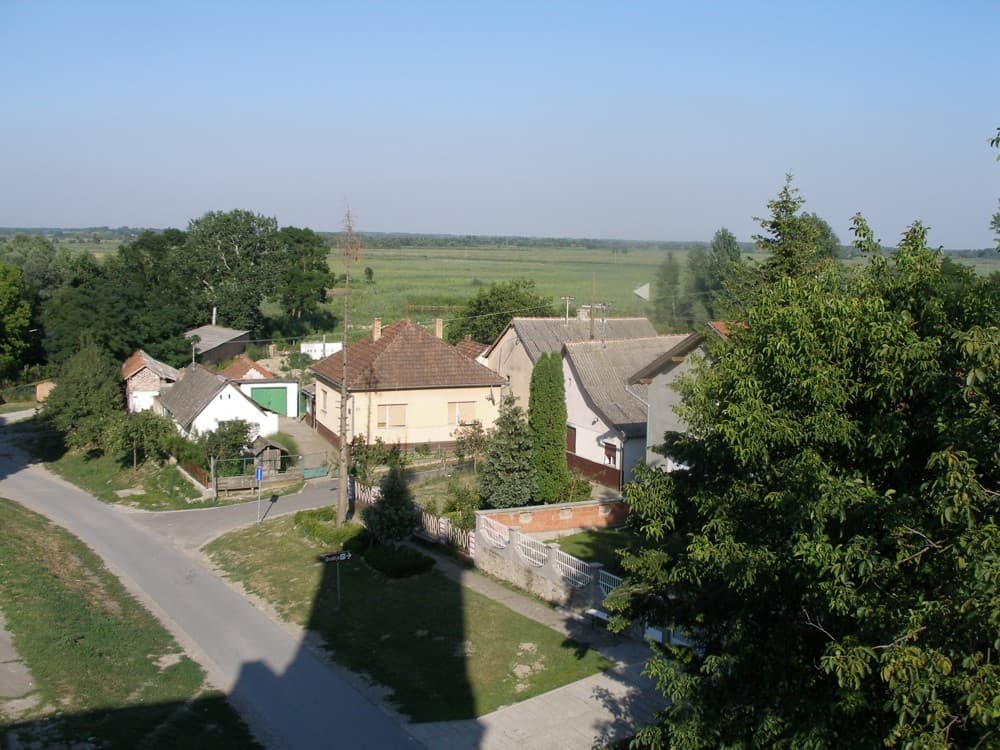
Bilje is a Baranja settlement at the point where greater Osijek gives way to the floodplain landscape of Kopački rit. In the village itself stands the hunting castle of Eugene of Savoy, former owner of the Bilje estate, with defensive details reminiscent of late-medieval and Renaissance lowland forts. A few kilometres away in Kopačevo, the main visitor centre of Kopački rit Nature Park serves as the departure point for boat tours, birdwatching and walks through reed beds, willow woods and flood channels. Bilje therefore works particularly well as a base between Osijek and one of Europe’s best-preserved floodplains. Its Baranja identity also appears on local menus: fish paprikash, carp cooked over an open fire, catfish perkelt and game dishes are served across Bilje, Kopačevo, Vardarac and Podunavlje. Flat cycling routes connect the castle, Kopački rit and the Old Drava without demanding climbs. From September 2026, Osijek’s GPP listed departures between Gajev trg and Bilje, providing a more direct public-transport link with central Osijek.
Bilje belongs unmistakably to Baranja, yet its daily life and transport links are closely tied to nearby Osijek. The edge of the settlement meets the Kopački rit floodplain, so houses and farmland quickly give way to channels, willow woods and reed beds. Its main historic landmark is the hunting castle of Eugene of Savoy, the first reliably documented owner of both the residence and the Bilje estate. Bilje is also the administrative centre of a municipality that includes Kopačevo, Vardarac, Lug, Tikveš and other villages shaped by Croatian, Hungarian and Šokac traditions. Its position between Osijek’s Gajev trg and the Kopački rit visitor centre gives Bilje an unusual dual role: it is both a suburban settlement and a gateway to wetland Baranja.
Stays nearby
 Apartment
Apartmeni Klenovica.eu
Klenovica
Klenovica, 310 km from Bilje
up to 4 guests · 1 bedroom
The host confirms the exact price for your dates and availability.
Things to see
Eugene of Savoy’s hunting castle is Bilje’s principal built landmark, although its precise construction date and architect remain unknown. Its enclosed, defensive-looking form recalls Renaissance lowland forts, while the surrounding park hosts cultural programmes in the village. Kopački rit begins at the edge of the Bilje area and protects floodplain forests, reed beds, lakes and channels near the confluence of the Drava and Danube. The main visitor centre at Kopačevo provides access to educational exhibits and boat trips on Kopačko Lake. Farther north stands the Tikveš complex; the associated settlement lies 10.7 kilometres from Bilje and already appeared on state maps produced between 1869 and 1887.
Things to do
Begin with a walk around Eugene of Savoy’s castle in Bilje, noting the square plan and defensive features of this lowland hunting residence. Continue to the Kopački rit visitor centre in Kopačevo, which organises boat trips, birdwatching, photo safaris and educational wetland tours. On returning, stop by Bilje Lake or cycle the flat routes towards Kopačevo and the Old Drava. For the day’s culinary stop, head to Vardarac: Citadela has served Baranja meat and freshwater-fish dishes since 1978 and is especially associated with fish paprikash. Visitors staying longer can continue to the Tikveš complex in the park’s northern sector, documented as 10.7 kilometres from Bilje.
Food and drink
Bilje’s food culture centres on freshwater fish, game, ground paprika and dishes prepared in cauldrons. In Bilje itself, the tourist board lists Kod Varge, while several of the municipality’s best-known fish restaurants are found in nearby villages. Citadela in Vardarac has operated since 1978 and is particularly associated with fish paprikash and homemade noodles, carp roasted over an open fire, and other river-fish and meat dishes. Didin konak in Kopačevo combines a restaurant with a traditional rural setting, wine cellar and accommodation. Kormoran in Podunavlje is known for carp, catfish perkelt and venison, but the tourist board currently marks it as temporarily closed, so it should not be planned without checking directly.
Practical information
Practical information
The Bilje–Kopački rit tourist office is at Kralja Zvonimira 10 in Bilje, while the nature park’s main visitor centre is at Mali Sakadaš 1 in Kopačevo. Boat tours, small-craft excursions, birdwatching and educational visits should be booked ahead because departures depend on the park programme and water conditions. Bring insect repellent, closed footwear and binoculars for the reed beds and flood channels around Kopačko Lake. The local tourist board currently labels Kormoran restaurant as temporarily closed, so visitors planning lunch should choose a confirmed open venue in Bilje, Kopačevo or Vardarac. Current park programmes and access conditions are best obtained directly from the Kopačevo visitor centre.
Getting there and around
From September 2026, Osijek public transport operator GPP lists departures between Gajev trg in Osijek and Bilje; travellers should consult the timetable for their specific month. Roads continue from Bilje towards Kopačevo, the Kopački rit visitor centre, Vardarac and Lug. A car, bicycle or organised transfer remains more practical for reaching deeper sections of the park, the Tikveš complex and Zlatna Greda, as the municipal development strategy notes that most park visitors arrive independently or with organised groups. The flat terrain makes cycling an especially suitable way to connect Bilje, Kopačevo and the accessible edges of the floodplain.
Frequently asked questions
Where is the Kopački rit visitor centre?
The main visitor centre is at Mali Sakadaš 1 in Kopačevo, a short distance from Bilje.
Is there a bus from Osijek to Bilje?
GPP Osijek lists Gajev trg–Bilje departures for September 2026; check the timetable for the current month before travelling.
What should visitors eat in Vardarac?
Citadela in Vardarac is particularly known for fish paprikash with homemade noodles, alongside spit-roasted carp and other Baranja dishes.
Who was the first known owner of Bilje Castle?
The first reliably documented owner of the hunting castle was Prince Eugene of Savoy.

Related guides

Osijek
Tvrđa and the centre around the main square are distinct starting points for understanding Osijek. The former emphasises the fortified historic quarter and Baroque architecture; the latter…
Read the guide

Help improve this page
Spot something missing or wrong? Suggest a correction, add your photo or report a problem. Editors review every suggestion before it is published.
Photo credits
- Bilje — rom@nski photo · CC BY 2.0 · Wikimedia Commons
- Vardarac — Tórizs · CC BY-SA 3.0 · Wikimedia Commons
- Kopačevo — Szajci · CC BY-SA 4.0 · Wikimedia Commons
- Darda — Biljanabekic · CC BY-SA 2.5 · Wikimedia Commons
- Lug, Bilje — Donatus Darko Tepert


