
About this place
Ilok, Croatia’s easternmost town, stands on a Syrmian rise above the Danube’s right bank, beneath the slopes of Fruška Gora. Its skyline brings together the river landscape and a tightly drawn historic core of medieval walls, Odescalchi Castle, and the Church and Franciscan monastery of St John Capistrano. The settlement first appears in records in 1267, under the forms Wjlok, Wylhoc and Iwnlak, while its Roman predecessor is associated with the frontier fort of Cuccium. Odescalchi Castle now houses the Ilok Town Museum, whose collections span archaeology, history, ethnography and art. Vineyards and cellars form the town’s other defining layer: Traminac is one of the varieties associated with the area, and the Odescalchi family left a lasting mark on local winemaking. Ilok also has Croatia’s largest Slovak minority community. A visit therefore moves naturally from the fortifications and Danube views to wine cellars and vineyards on the Fruška Gora slopes.
Ilok is a Syrmian town in Croatia’s far east, where the slopes of Fruška Gora descend to the Danube. Its elevated historic core is defined by the walls, Odescalchi Castle and the shrine of St John Capistrano, with views across the river towards Bačka. The castle houses the Ilok Town Museum, while old cellars and vineyards continue the wine tradition for which Ilok is known, particularly its Traminac. The municipal area also includes Bapska, Šarengrad, Radoš and Mohovo, and the town’s cultural fabric includes Croatia’s largest Slovak minority community.
Stays nearby
 Apartment
Apartmeni Klenovica.eu
Klenovica
Klenovica, 355 km from Ilok
up to 4 guests · 1 bedroom
The host confirms the exact price for your dates and availability.
Things to see
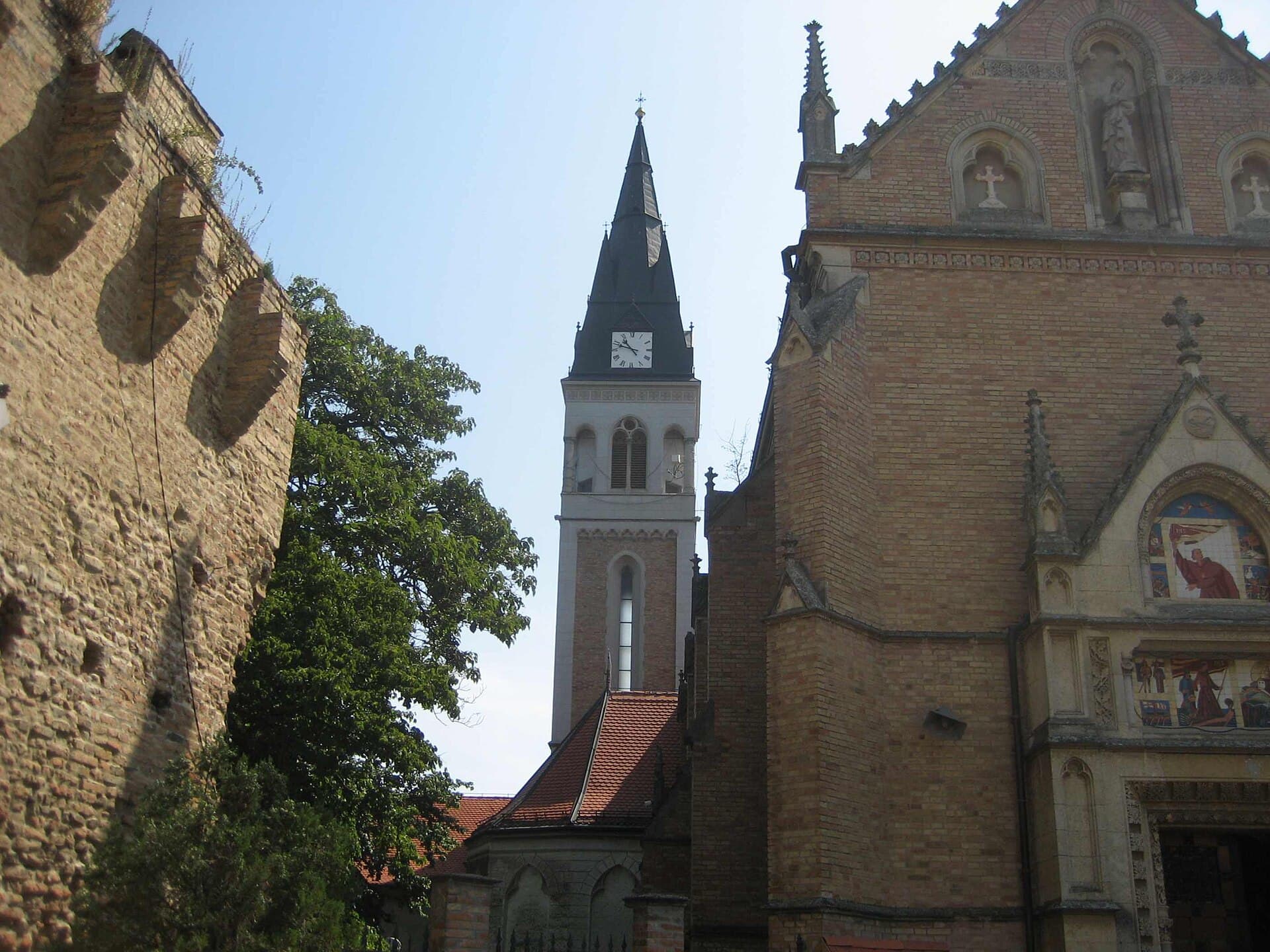
Odescalchi Castle, now the Ilok Town Museum, stands within the medieval centre strengthened by Nikola of Ilok in the 15th century. The Church of St John of Capistrano was completed in 1349 and has borne its present dedication since 1700; the friary preserves the cell in which Capistrano died in 1456. Surviving sections of the walls overlook the Danube and the Bačka plain. An Ottoman bath and tomb remain from the period of Ottoman rule between 1526 and 1688. Historic wine cellars beneath the castle connect the Odescalchi estate with Ilok’s long winemaking tradition.
Things to do
Start the morning inside the fortified core: walk the walls, visit the Ilok Town Museum in Odescalchi Castle and enter the Church of St John of Capistrano. Continue to the Old Cellar for a guided visit to wine cellars dating from the 15th and 18th centuries, followed by a tasting. After lunch, descend toward the Danube or follow the urban wine route between smaller producers’ cellars. Near sunset, drive four kilometres to Principovac, where the Odescalchi family’s former country residence now contains a wine bar and viewpoint above 125 hectares of vineyards.
Food and drink
Restaurant Dunav at 62 Ulica Julija Benešića specialises in river fish; its signature dishes include boneless fish paprikash, served near a terrace facing the Danube landing. Stari Podrum in the historic centre offers traditional Srijem cooking with wines from Iločki Podrumi and stands above an 18th-century cellar. Local menus feature Ilok-style pork steak, čobanac stew, Srijem sausage and cured ham. In 2026, Principovac operates as a wine bar offering local cured meats, cheeses and desserts, while the full restaurant meal is served at Stari Podrum in town.
Practical information
Practical information
The Ilok Tourist Board occupies the Brnjaković Curia at 5 Trg svetog Ivana Kapistrana; its published office hours are Monday to Friday, 7am–3pm. Advance notice is advisable for tastings with smaller producers because the Ilok Wine Road comprises numerous family cellars scattered across different streets. Stari Podrum accepts individual visitors for tours when a guide is available, while groups should arrange their visit beforehand. The Croatian–Serbian border lies immediately beside the city area, so travellers continuing into Bačka need a valid travel document.
Getting there and around
The D2 road links Ilok with Vukovar, Osijek and Vinkovci, while border crossings east of town lead into Vojvodina. Ilok has no passenger railway station, so public-transport arrivals depend on buses. Čazmatrans Vukovar operated the regular Vukovar–Ilok service from 1 July to 5 September 2025; travellers should confirm the current schedule directly with the operator because seasonal arrangements change. A car or pre-arranged transfer is useful for vineyard visits and Principovac, which lies four kilometres from the centre.
Frequently asked questions
Which wine is Ilok best known for?
Ilok is particularly known for Traminac, alongside Graševina, Rhine Riesling, Chardonnay and white, grey and red Pinot varieties.
What is inside Odescalchi Castle?
Odescalchi Castle houses the Ilok Town Museum and its archaeological, historical, ethnographic and art collections.
How far is Principovac from central Ilok?
The Principovac estate lies four kilometres from the centre amid 125 hectares of vineyards bearing the same name.
When did St John of Capistrano die in Ilok?
John of Capistrano died in Ilok in 1456, and his cell is preserved within the Franciscan complex.


Related guides

Osijek
Tvrđa and the centre around the main square are distinct starting points for understanding Osijek. The former emphasises the fortified historic quarter and Baroque architecture; the latter…
Read the guide

Help improve this page
Spot something missing or wrong? Suggest a correction, add your photo or report a problem. Editors review every suggestion before it is published.
Photo credits
- Ilok — Goran.Smith2~commonswiki · CC BY-SA 2.5 · Wikimedia Commons
- Šarengrad — Shabicht · CC0 · Wikimedia Commons
- Mohovo — Roberta F. · CC BY-SA 3.0 · Wikimedia Commons
- Ilok Castle — Modzzak · Public domain · Wikimedia Commons
- Saint John Capistran's church in Ilok — Tournasol7 · CC BY-SA 4.0


