
Zabok
About this place
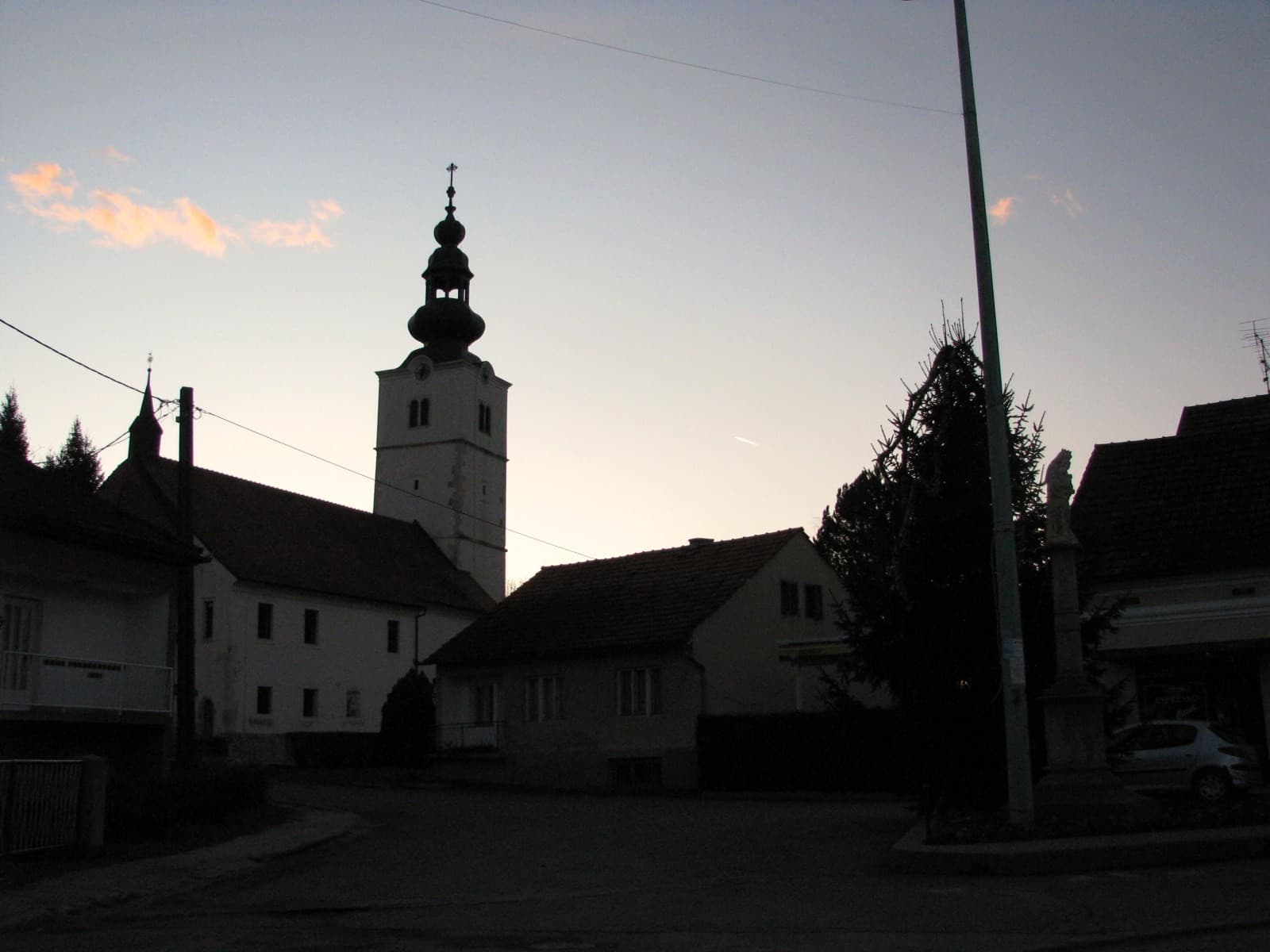
Zabok is one of Hrvatsko Zagorje’s key transport junctions, built beside the Krapinica stream where routes from Zagreb meet those for Krapina, Bedekovčina and the Stubica area. Although the Zabok estate first appeared in records in 1335, the modern centre grew around the Church of Saint Helena of the Cross, constructed between 1782 and 1805. The Vojković family arms decorate its portal, while the interior preserves an 1882 Heferer organ. South of the centre, Gredice Castle marks the birthplace of writer Ksaver Šandor Gjalski in 1854; his literary and family legacy also shapes Zabok’s municipal library. The surrounding hills are best explored on the Ksaver trails leading towards Picelj, whose mountain hut stands at 212 metres. Zabok offers short heritage stops rather than a monumental old town, complemented by Zagorje cooking and unusually useful rail connections. It also works well as a base for Bedekovčina Lakes, Krapinske Toplice, Krapina and the manor houses of central Zagorje.
Zabok lies on the right bank of the Krapinica, close to its meeting with the River Krapina and beside the Zagreb–Macelj motorway. Its growth differs from that of older Zagorje market towns: settlement expanded along roads leading from Kaštel, Gredice and Bračak towards the new Church of Saint Helena. Railway branches towards Zagreb, Varaždin and Krapina strengthened Zabok’s role as a regional junction. The town’s literary identity is inseparable from Ksaver Šandor Gjalski, born at Gredice in 1854, whose name is carried by a square, the municipal library and local walking trails.
Stays nearby
 Apartment
Apartmeni Klenovica.eu
Klenovica
Klenovica, 137 km from Zabok
up to 4 guests · 1 bedroom
The host confirms the exact price for your dates and availability.
Things to see
The parish Church of Saint Helena of the Cross is Zabok’s principal historic landmark: construction began in 1782, ended in 1805, and the Vojković family arms appear on its Classical portal. The seventeenth-century Chapel of Saint Anthony recalls an older centre of the Zabok estate. Gredice Castle was built around 1772 over a sixteenth-century manor; after wartime destruction, it was reconstructed in the 1990s. Gjalski was born there in 1854, and a bust by sculptor Mirjana Drempetić Hanžić was installed at the entrance in 1999. The Picelj mountain hut provides Zabok with a smaller, landscape-based landmark.
Donja Bedekovčina Castle
Landmark · Zabok
An 18th-century manor built in 1780 on a gentle slope above the Krapina River, exemplifying Croatian Zagorje architecture of the Bedeković Komorski family.
Things to do
Start at the Church of Saint Helena of the Cross, built between 1782 and 1805, because modern Zabok developed around this site. At the Ksaver Šandor Gjalski Municipal Library, seek out the local-history collection, whose oldest copy of “Pod starimi krovovi” dates from 1886. Continue to Gredice to see the reconstructed façade of Gjalski’s birthplace and the bust installed in 1999. For a longer walk, follow the Ksaver trails towards the Picelj mountain hut at 212 metres. End with Zagorje cooking at Restaurant Zaboky or, by prior arrangement, at the rural Zaboky Selo property.
Food and drink
Restaurant Zaboky at Ulica Baltazara Zabokya 1 is the most convenient choice after visiting the town centre. The same local operator runs Zaboky Selo at Pavlovec Zabočki 160, where visits are accepted by arrangement and suit a slower rural meal. Hotel and Restaurant Dvorac Gjalski at Gredice combines dining with the birthplace of writer Ksaver Šandor Gjalski. Across Zabok and the wider Zagorje region, menus may feature štrukli, turkey with mlinci or buckwheat dishes, though the exact daily selection should be checked directly with the chosen restaurant.
Practical information
Practical information
The Ksaver Šandor Gjalski Municipal Library is at Stjepana Radića 1, occupies two floors and maintains a local-history collection devoted to Gjalski. In 2026, the railway ticket office at Trg Ksavera Šandora Gjalskog 2 is normally open daily from 5:20 a.m. to 9:20 p.m., subject to published exceptions. Visitor information covering Zabok, nearby spas, manor houses and trails is provided by the Heart of Zagorje Tourist Board in Krapinske Toplice. Advance booking is advisable for Zaboky Selo or a meal at Gredice, as the rural property accepts guests only by arrangement.
Parking
Under the municipal arrangement effective from 1 November 2022, Zone 1 includes the car parks at Naselje Borovčaki, along Kolodvorska Street and beside Milan Prpić Park; the cemetery car park belongs to Zone 2. The published 2022 charge is €0.66 per hour in both zones, with a €9.94 day ticket. Charging hours are weekdays from 8 a.m. to 5 p.m. and Saturdays from 8 a.m. to 1 p.m. in Zone 1. Tickets can be purchased from a machine or by SMS and must be obtained within five minutes of parking.
Getting there and around
Zabok is a railway junction where the Zagreb–Varaždin route branches towards Krapina and Đurmanec. HŽ’s 2026 timetable also includes cross-border services continuing through Krapina and Đurmanec to Rogatec in Slovenia, with varying weekend and holiday restrictions. The station stands at Trg Ksavera Šandora Gjalskog 2, close to the centre. By car, Zabok is reached from the A2 Zagreb–Macelj motorway, whose position makes onward travel towards Krapina or Zagreb straightforward. Local bus routes connect the town with spa resorts and other settlements across Hrvatsko Zagorje.
Frequently asked questions
When was Zabok’s Church of Saint Helena built?
Construction began in 1782, and the church was completed in 1805.
Where was Ksaver Šandor Gjalski born?
Gjalski was born in 1854 at Gredice Castle near Zabok, now used as a hotel and restaurant.
How high is Picelj?
The Picelj mountain hut stands on a hill 212 metres above sea level.
Do trains run from Zabok to Slovenia?
In the 2026 timetable, selected trains continue through Krapina and Đurmanec to Rogatec, with day-specific restrictions.

Related guides
Tuhelj
The population of the municipality has fallen from a peak of 3,780 in 1971 to 2,043 in 2021, and 61 people were lost in the last census decade alone. Eleven settlements, from Banska Gorica…
Read the guide

Help improve this page
Spot something missing or wrong? Suggest a correction, add your photo or report a problem. Editors review every suggestion before it is published.
Photo credits
- Zabok — Suradnik13 · CC BY-SA 3.0 · Wikimedia Commons
- Dubrava Zabočka — Zrvongr at Croatian Wikipedia · CC BY-SA 3.0 · Wikimedia Commons
- Apartmeni Klenovica.eu — Apartmani Klenovica.eu · courtesy of the property owner
- Tuhelj — Ex13 · CC BY-SA 3.0 · Wikimedia Commons
- Sveti Martin na Muri — Silverije · CC BY-SA 3.0 · Wikimedia Commons

