Pokupsko
About this place
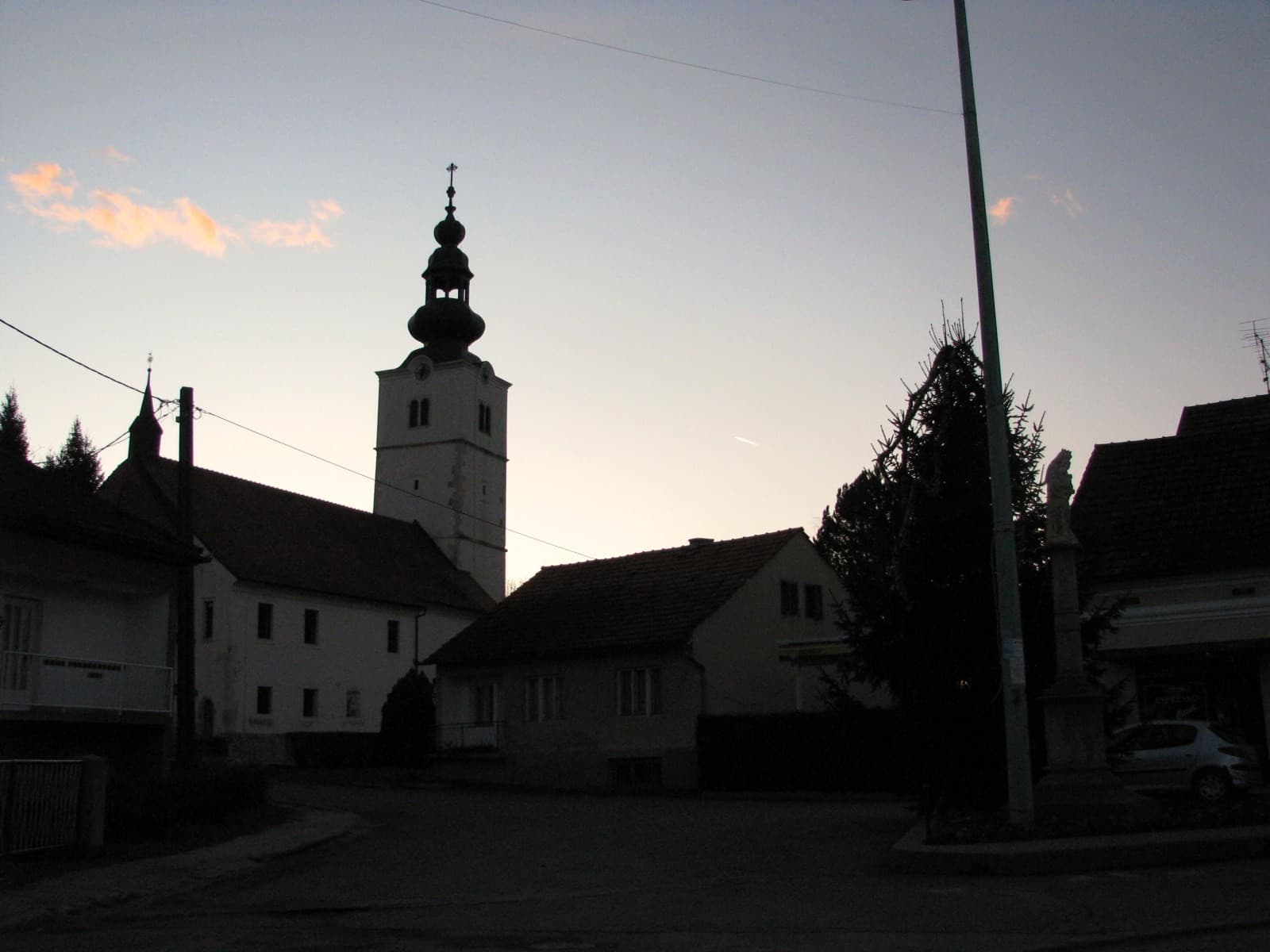
Pokupsko stands on the left bank of the Kupa, 145 metres above sea level and 34 kilometres south-west of Velika Gorica. The river, the nearby Vukomeričke gorice hills and a chain of scattered hamlets shape the settlement more strongly than any conventional urban centre. Rising above the houses is the Baroque parish Church of the Assumption of the Blessed Virgin Mary, built between 1736 and 1739 and consecrated in 1740. Its quatrefoil plan, onion-domed bell tower, stucco work and Baroque furnishings make it Pokupsko’s principal cultural landmark. The church was shelled in 1991 and damaged again by the 2020 earthquake, linking its story to the more recent ordeals of the Kupa region. A bathing spot lies beside the river, while cycling routes connect Pokupsko with the Vukomeričke gorice hills and chapels in neighbouring villages. The settlement is 51 kilometres south of Zagreb on the road towards Glina, and public transport centres on bus route 372 from Velika Gorica. Pokupsko therefore combines a distinctive river landscape, important Baroque heritage and quiet cycling roads in southern Zagreb County.
Pokupsko belongs to the Kupa region and developed on the river’s left bank, between the floodplain and the Vukomeričke gorice hills. Its position at 145 metres and the holiday cottages beside the Kupa give the settlement the rhythm of a riverside retreat rather than a town. The defining landmark is the Church of the Assumption of the Blessed Virgin Mary, a Baroque quatrefoil building erected between 1736 and 1739 at the initiative of Bishop Juraj Branjug. The name Pokwpia appears in written sources in 1507, while the parish was established in the mid-17th century. Shell damage sustained in 1991 and the effects of the 2020 earthquake are now inseparable from the more recent history of both the church and Pokupsko.
Stays nearby
 Apartment
Apartmeni Klenovica.eu
Klenovica
99 km from Pokupsko
up to 4 guests · 1 bedroom
The host confirms the exact price for your dates and availability.
Things to do
Pokupsko is best experienced through two of its defining places: the parish church of the Assumption of the Blessed Virgin Mary and the bathing area on the Kupa. Built for Bishop Juraj Branjug between 1736 and 1739, the church has a quatrefoil nave and Czech-cap vaulting, details best appreciated inside. From there, continue down to the Kupa, where Pokupsko’s river beach is used for summer swimming. For a quieter finish, follow the local roads towards the wooded Vukomeričke Gorice, linking this riverside setting with Turopolje’s hills and wooden chapels.
Practical information
Getting there and around
Pokupsko is 34 kilometres by road from Velika Gorica and 51 kilometres from Zagreb, on the Velika Gorica–Pokupsko–Glina corridor. Zagreb County’s public transport network includes route 372 between Velika Gorica and Pokupsko, operated by Autoturist Turizam. The county timetable for this route lists several departures from both termini, though travellers should confirm the service for their intended date. Reaching Zagreb by public transport will generally involve a connection in Velika Gorica. A car or bicycle is more practical for visiting the chapels in Lukinić Brdo, Cerje Pokupsko and Gladovec Pokupski because these sites are dispersed across the municipality’s hilly terrain.
Frequently asked questions
Which bank of the Kupa is Pokupsko on?
Pokupsko stands on the left bank of the Kupa at an elevation of 145 metres.
When was Pokupsko’s parish church built?
The Church of the Assumption was built from 1736 to 1739 and consecrated in 1740.
Which bus connects Pokupsko and Velika Gorica?
County bus route 372 connects Pokupsko with Velika Gorica.
Nearby
Gladovec Pokupski
Village · Central Croatia
Gornja Bučica
Village · Central Croatia
Related guides
Tuhelj
The population of the municipality has fallen from a peak of 3,780 in 1971 to 2,043 in 2021, and 61 people were lost in the last census decade alone. Eleven settlements, from Banska Gorica…
Read the guide

Help improve this page
Spot something missing or wrong? Suggest a correction, add your photo or report a problem. Editors review every suggestion before it is published.
Photo credits
- Apartmeni Klenovica.eu — Apartmani Klenovica.eu · courtesy of the property owner
- Tuhelj — Ex13 · CC BY-SA 3.0 · Wikimedia Commons
- Sveti Martin na Muri — Silverije · CC BY-SA 3.0 · Wikimedia Commons
- Velika Gorica — Frane Lovošević · CC BY-SA 3.0 · Wikimedia Commons
- Stubičke Toplice — MOs810 · CC BY-SA 4.0 · Wikimedia Commons

