
Krapinske Toplice
About this place
Krapinske Toplice grew around thermal springs in the Toplički potok valley, 17 kilometres southwest of Krapina and about 46 kilometres from Zagreb. Four hyperthermal mineral springs reach roughly 39–41°C, with water containing calcium, magnesium and bicarbonate. The village now combines a specialist rehabilitation hospital, the Magdalena and Akromion clinics and the Aquae Vivae water park. Its historic layers are most visible in Jakob’s Bath, marked with a Croatian coat of arms and the year 1862, the 1855–56 parish church of the Holy Trinity and St Mary Magdalene’s Chapel on Zašat hill. Jakob Badl acquired the springs and developed the Bathing House and several baths during the 1860s, establishing the settlement as an organised spa. A visit can combine swimming, a short heritage walk and the ascent to the chapel. Krapina, Zabok, Tuheljske Toplice and Zagorje’s castles provide straightforward road excursions.
Krapinske Toplice developed not around a fortress or market square but beside warm springs aligned along the Krapina thermal fault. The source system yields about 80 litres per second, with the principal springs naturally reaching roughly 39–40°C. Organised spa development accelerated under Jakob Badl, who built a 75-room Bathing House in 1861 and Jakob’s, Mary’s and the Public Bath in 1862–63. That medical tradition continues through the specialist rehabilitation hospital and the Magdalena and Akromion clinics. Aquae Vivae adds recreational bathing to a settlement whose urban form and everyday identity remain closely tied to thermal water, rehabilitation and specialist medicine.
Stays
No stays listed here yet
Things to see
Jakob’s Bath bears the clearest emblem of local spa history: a Croatian coat of arms, the date 1862, a spring motif and the motto “For the honour of the homeland and the benefit of humanity.” The parish church of the Holy Trinity rose in 1855–56 on an older church site and contains four side altars and an Ebner organ dating from 1860. St Mary Magdalene’s Chapel, built on Zašat in 1874 beside the Badl mausoleum, occupies a hill where restoration work uncovered a Late Bronze Age settlement. Aquae Vivae is the contemporary continuation of the bathing tradition, while the historic hospital and bath buildings show how Krapinske Toplice expanded around its springs.
Things to do
Begin with a swim at Aquae Vivae, where thermal water supplies indoor and outdoor recreational facilities. Afterwards, walk through the centre to the historic spa buildings and find the Croatian coat of arms dated 1862 on Jakob’s Bath. Continue to the neoclassical parish church of the Holy Trinity, built in 1855–56 and furnished with an 1860 organ by Tyrolean maker Josef Ebner. For a more active finish, climb Zašat hill to St Mary Magdalene’s Chapel and the Badl family mausoleum. Reserve dinner at Villa Magdalena, whose restaurant and elevated setting look across the surrounding Zagorje hills.
Food and drink
The gourmet restaurant at Villa Magdalena, Mirna ulica 1, is Krapinske Toplice’s most distinctive dining address. Its kitchen reworks Zagorje ingredients and familiar recipes with contemporary techniques, using local staples such as štrukli, pumpkin, duck, crackling, fresh cheese and pumpkin-seed oil. Seasonal tasting menus make it more than a convenient hotel meal after the pools. The restaurant’s hillside position overlooks the surrounding Zagorje landscape, while its wine list includes more than fifty Croatian labels. Booking directly is advisable for a tasting menu or evening table, particularly at weekends and when the spa town is hosting a programme.
Practical information
Practical information
Aquae Vivae stands at Antuna Mihanovića 1a in the central spa district, close to the medical and historic bathing facilities. Swimwear, non-slip sandals and a towel are basic equipment for the water park, while the climb to St Mary Magdalene’s Chapel calls for shoes suitable for a slope. Natural spring water emerges at roughly 39–41°C, but individual pool temperatures are set by the operator and should not be confused with the source temperature. The rehabilitation hospital, Magdalena and Akromion are medical institutions, so their treatments and appointments are separate from an Aquae Vivae admission ticket. Current bathing conditions should be confirmed directly with the water park.
Frequently asked questions
What is the natural temperature of the thermal water?
The main springs emerge at roughly 39–41°C, although individual pool temperatures may be lower.
What does the inscription on Jakob’s Bath mean?
Beside the date 1862 is a motto meaning “For the honour of the homeland and the benefit of humanity,” associated with Badl’s spa development.
Does Krapinske Toplice have a railway station?
The village has no railway station; visitors use buses or make a connection via Zabok.
Where is St Mary Magdalene’s Chapel?
The 1874 chapel stands on Zašat hill beside the Badl mausoleum and a prehistoric settlement site.

Related guides
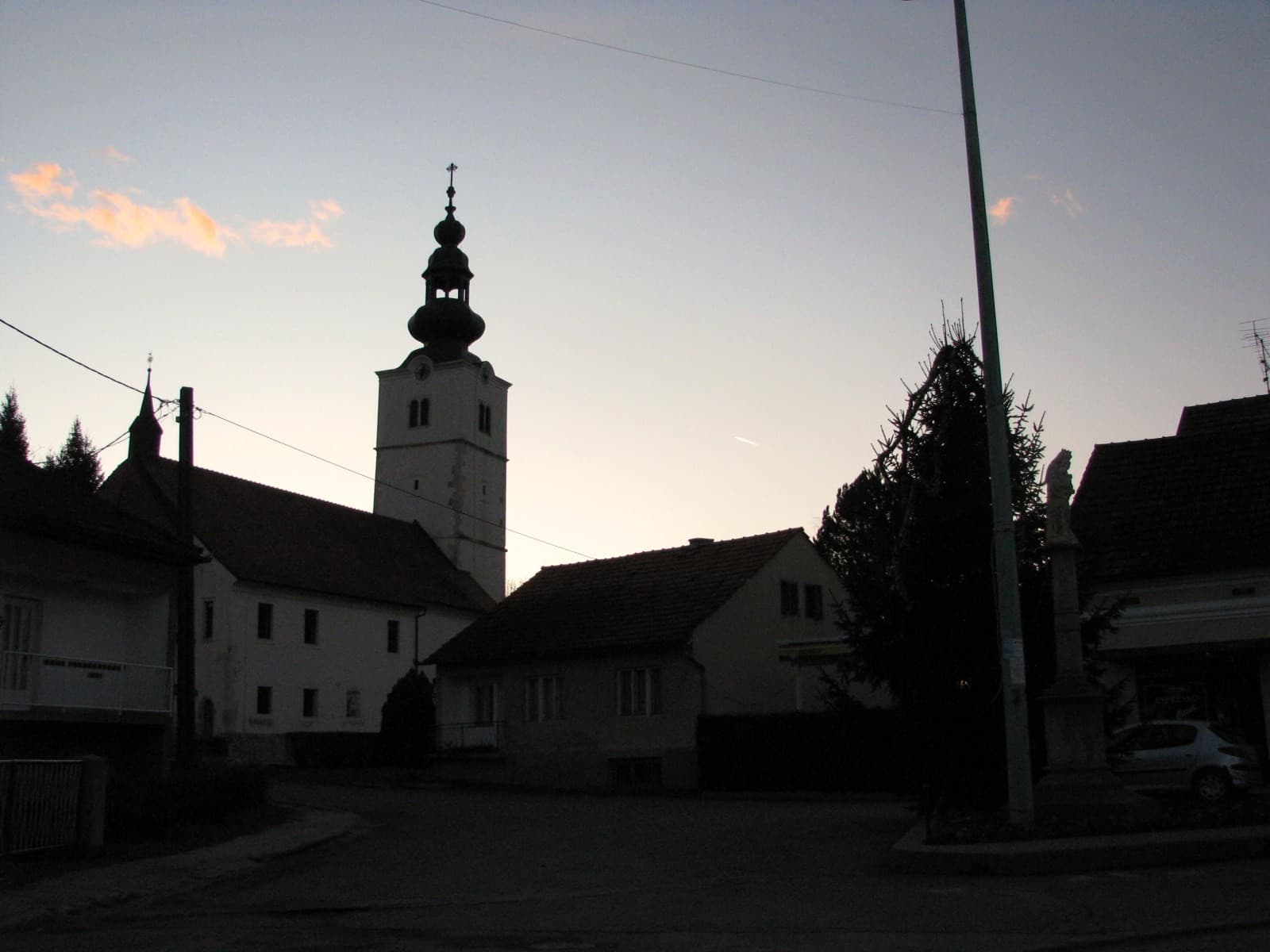
Tuhelj
The population of the municipality has fallen from a peak of 3,780 in 1971 to 2,043 in 2021, and 61 people were lost in the last census decade alone. Eleven settlements, from Banska Gorica…
Read the guide

Help improve this page
Spot something missing or wrong? Suggest a correction, add your photo or report a problem. Editors review every suggestion before it is published.
Photo credits
- Krapinske Toplice, Klokovec — Sandor Bordas · CC BY-SA 3.0 · Wikimedia Commons
- Tuhelj — Ex13 · CC BY-SA 3.0 · Wikimedia Commons
- Sveti Martin na Muri — Silverije · CC BY-SA 3.0 · Wikimedia Commons
- Velika Gorica

