
About this place
Donja Stubica is a Zagorje town whose identity is strongly connected with the Peasants’ Revolt of 1573, although its documented history begins much earlier: Stubica appears in written sources in 1209. By the sixteenth century the area formed part of the major Susedgrad–Stubica estate, and the decisive battle of the revolt took place near Stubica on 9 February 1573. A visit therefore naturally begins with the landscape of Gubec’s story but should extend to Stubički Golubovec Castle, the parish Church of the Holy Trinity and traces of the older civic centre. Golubovec is especially interesting for its late-Baroque architecture, park and later owners, including Zagreb bishop Maksimilijan Vrhovac. Local food is distinctly Zagorje rather than metropolitan, with official sources listing places such as Lagvić and Majsecov mlin. Donja Stubica also combines naturally with Gornja Stubica and Stubičke Toplice, allowing one day to cover revolt history, castles, regional cooking and the recreational landscape beneath Medvednica.
Donja Stubica developed as an administrative and civic centre on the northern slopes of Medvednica, and the city’s historical overview follows it from the first written mention of Stubica in 1209 to its formal city status in 1997. The dominant historical layer remains the Peasants’ Revolt of 1573, since the Stubica area was one of the key locations in the conflict led by Matija Gubec. Yet the town is not merely a memorial landscape of the revolt: Stubički Golubovec Castle, the Church of the Holy Trinity, old crafts and nineteenth-century civic development are also important to its identity. This combination explains why Donja Stubica is best experienced through several separate locations rather than through a single central square or one monumental attraction.
Stays nearby
 Apartment
Apartmeni Klenovica.eu
Klenovica
Klenovica, 131 km from Donja Stubica
up to 4 guests · 1 bedroom
The host confirms the exact price for your dates and availability.
Things to see
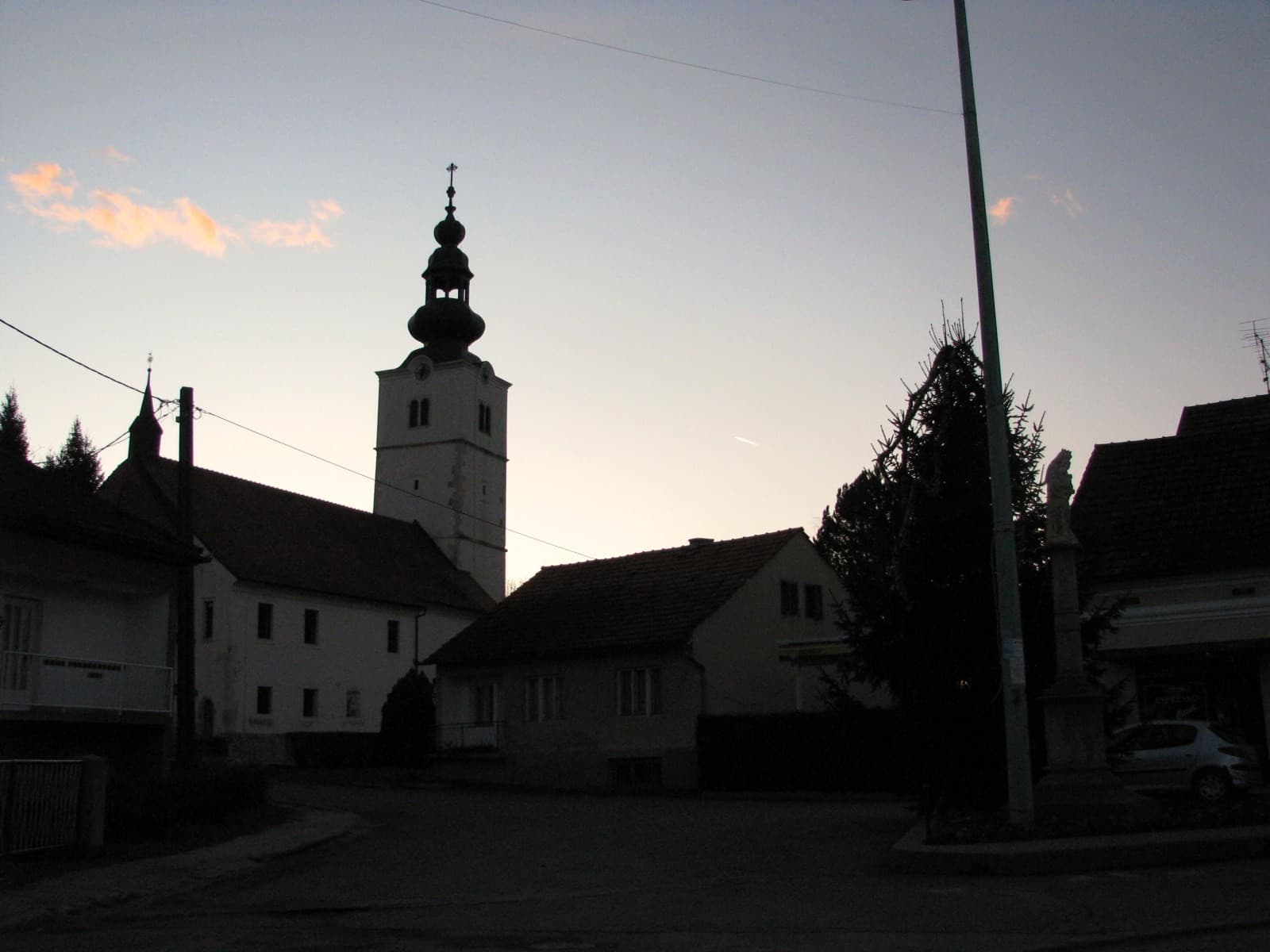
Stubički Golubovec Castle is the principal representative historic building in Donja Stubica. A particularly important phase began after 1804, when the estate passed to Zagreb bishop Maksimilijan Vrhovac, who renovated the castle and developed its economy. The attraction is more than the building itself: the park, woodland and Vilinske poljane form a wider cultural landscape. In the town, the parish Church of the Holy Trinity is another major landmark, described by official local sources as an important Gothic religious monument of Hrvatsko Zagorje. To explore the Peasants’ Revolt in greater depth, the itinerary should continue into Gornja Stubica, because the principal museum and monumental sites connected with Matija Gubec lie outside the administrative centre of Donja Stubica.
Things to do
For a first visit, begin in central Donja Stubica with the local places connected to the town’s history, then continue toward Stubički Golubovec. The castle, park and surrounding meadows provide a calmer counterpoint to the story of the Peasants’ Revolt, while the estate itself links several centuries of local history. From there, it makes sense to continue toward Gornja Stubica, where the monuments are more directly connected with Matija Gubec and the events of 1573. The day can end in Stubičke Toplice or with a regional meal, breaking up the historical route with recreation or food. Donja Stubica therefore works better as a starting point for the wider Gubec area than as a destination exhausted by a short walk around its centre.
Food and drink
The city’s official visitor information lists several places that fit naturally into a Stubica itinerary. Restaurant Lagvić highlights homemade bread and a dish called Stubička pisanica, while Majsecov mlin combines the setting of an old mill with dishes such as trout, potatoes and nettles, together with traditional Zagorje meat preparations. Additional dining options are available around Terme Jezerčica. The food scene matches the character of the destination: the focus is on Zagorje ingredients and traditional cooking rather than a large urban restaurant culture. In 2026, current opening hours and reservation requirements should be checked before arrival, especially on weekends and during major local events when the wider Gubec area receives substantially more visitors.
Practical information
Practical information
Tourist information for Donja Stubica is published by the city and the local Gubec-area tourism organisation, with attractions spread across Donja Stubica, Gornja Stubica and Stubičke Toplice. It is therefore useful to decide before arrival whether the plan covers only the town or the entire historical area associated with Gubec. In 2026, the status of museums and castles should be checked before travelling because several properties have undergone renovation in recent years. The 2026 re-enactment of the Battle of Stubica was held in central Donja Stubica, showing how major events can temporarily alter normal traffic and visitor arrangements. On an ordinary day, the most practical approach is to combine walking in the centre with short drives toward Golubovec and neighbouring settlements.
Frequently asked questions
When is Stubica first mentioned in written sources?
The City of Donja Stubica’s historical overview gives 1209, in a charter issued by the Hungarian king Andrew II.
When did the decisive battle of the Peasants’ Revolt take place near Stubica?
The battle was fought on 9 February 1573, and the Stubica area remains strongly associated with Matija Gubec and the memory of the revolt.
Which castle is the main historic castle in Donja Stubica?
It is Stubički Golubovec, a castle with a park and wider estate complex that passed to Bishop Maksimilijan Vrhovac in the early nineteenth century.
Where are the main sites connected with Matija Gubec?
The principal monumental and museum sites are in Gornja Stubica, making them a natural extension of a visit to Donja Stubica.
Related guides
Tuhelj
The population of the municipality has fallen from a peak of 3,780 in 1971 to 2,043 in 2021, and 61 people were lost in the last census decade alone. Eleven settlements, from Banska Gorica…
Read the guide

Help improve this page
Spot something missing or wrong? Suggest a correction, add your photo or report a problem. Editors review every suggestion before it is published.
Photo credits
- Donja Stubica — Suradnik13 · CC BY-SA 3.0 · Wikimedia Commons
- Apartmeni Klenovica.eu — Apartmani Klenovica.eu · courtesy of the property owner
- Tuhelj — Ex13 · CC BY-SA 3.0 · Wikimedia Commons
- Sveti Martin na Muri — Silverije · CC BY-SA 3.0 · Wikimedia Commons
- Velika Gorica — Frane Lovošević · CC BY-SA 3.0 · Wikimedia Commons

