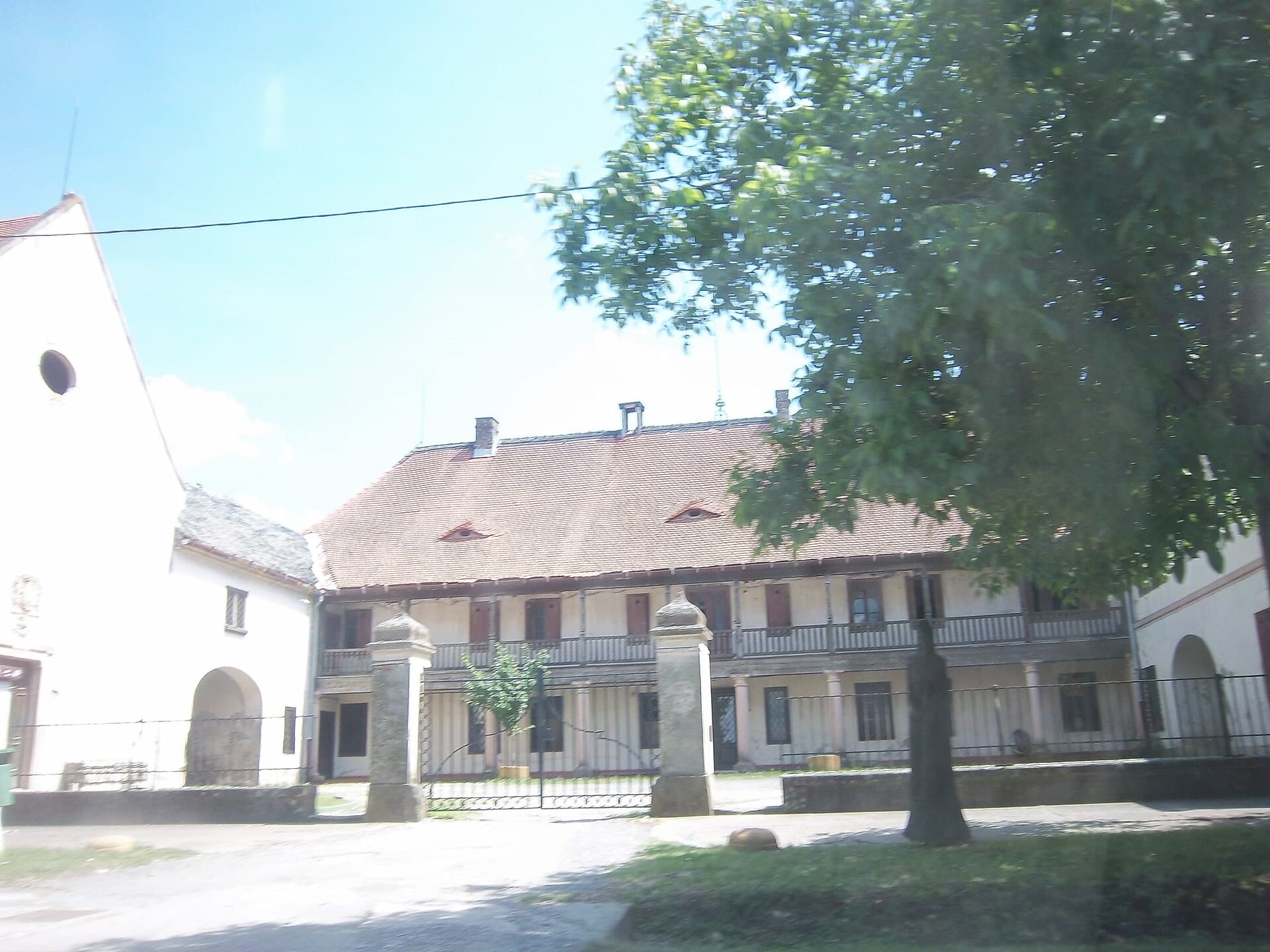
Nuštar
About this place
Nuštar lies between Vinkovci and Vukovar at a road junction that has shaped the settlement for centuries. Its historic core is defined by Khuen-Belassy Castle, a manorial ensemble comprising the Large and Small castles, service buildings, the Church of the Holy Cross and an extensive park. The church was built in 1737 using material from an older Benedictine monastery and a ruined church, and it served as the parish church within the estate. Much of Nuštar’s present layout emerged in the eighteenth century: a former riding avenue linked the castle to Zverinjak, the estate’s hunting ground beside an old meander of the Vuka. The village also preserves the ruins of St Anne’s Church, built in 1726 on the site of the former Holy Spirit monastery, and the 1906 Chapel of St Florian in the cemetery. Protected in 1971 as a monument of park architecture, the castle grounds help reveal how residence, church, landscaped park and the long Slavonian village street formed a single planned ensemble.
Nuštar was shaped not around a conventional square but along the meeting point of old routes towards Vinkovci, Vukovar and villages south of the Vuka. Khuen-Belassy Castle stands beside the road on a slight rise, and its Baroque axis once continued towards the Zverinjak hunting ground. The Large and Small castles, Holy Cross Church, service buildings and park together formed the estate’s administrative, religious and economic centre. Long rows of gable-fronted houses gave Nuštar a distinctive Slavonian streetscape before the destruction of 1991. The surviving park remains the essential green setting for reading the manor complex as a unified historic landscape.
Things to see


Stays
No stays listed here yet
Things to do
Begin a Nuštar walk at the Khuen-Belassy estate, where the relationship between the Large and Small castles, Holy Cross Church and the former landscaped park is easiest to understand. The 1737 church belongs to the manor itself, so its façade and position make most sense when viewed together with the road and shared courtyard. Continue to the cemetery, where the Chapel of St Florian, built in 1906, occupies a raised position beside a Way of the Cross added the following year. Another historical layer survives in the ruins of St Anne’s Church on the site of the former Benedictine monastery and settlement known as Monostur.
Tours and activities
AdAd · partner offers: GetYourGuideThe partner handles booking, payment and support. StayBravo may earn a commission on bookings made through these links.How we choose offersGetYourGuide offers are selected and ordered by GetYourGuide based on the name of the nearest larger town or national park; we do not influence their selection and do not use data about you.GetYourGuide · Vukovar
We show GetYourGuide offers once you allow their cookies.
Practical information
Getting there and around
Nuštar is on the D55 state road, an important link between Vukovar, Vinkovci and Županja. From Vinkovci, the D55 leads to Nuštar, while county road Ž4126 connects the village with the Vinkovci area via Cerić. The M601 Vinkovci–Vukovar railway crosses the municipality and includes the official Nuštar halt. For a specific rail journey, use the current HŽ Passenger Transport journey planner: the 2025/2026 timetable runs until 12 December 2026 and is amended during the year. For the manor, church and park in the village centre, a train or bus arrival followed by a short walk is convenient.
Frequently asked questions
What forms the Khuen-Belassy estate?
The protected ensemble comprises the Large and Small castles, spatially joined by Holy Cross Church, service buildings and the historic park.
When was Holy Cross Church in Nuštar built?
Holy Cross Church was built in 1737 as part of the manorial complex and served as the parish church.
Does Nuštar have a railway halt?
Yes. The official Nuštar halt is on the M601 Vinkovci–Vukovar line.
Nearby
Nuštar
Open in OpenStreetMap(opens in a new tab)straight-line distance
Related guides

Osijek
Tvrđa and the centre around the main square are distinct starting points for understanding Osijek. The former emphasises the fortified historic quarter and Baroque architecture; the latter…
Read the guide

Vukovar
A cultural visit to Vukovar has several separate centres of gravity. Eltz Palace and the City Museum address the city and its inhabitants across different periods. Vučedol reaches much…
Read the guide

Stubičke Toplice
Stubičke Toplice derives almost its entire identity from thermal water and the Zagorje landscape. There is no large urban historic core; green spaces, bathing facilities and traces of the…
Read the guide
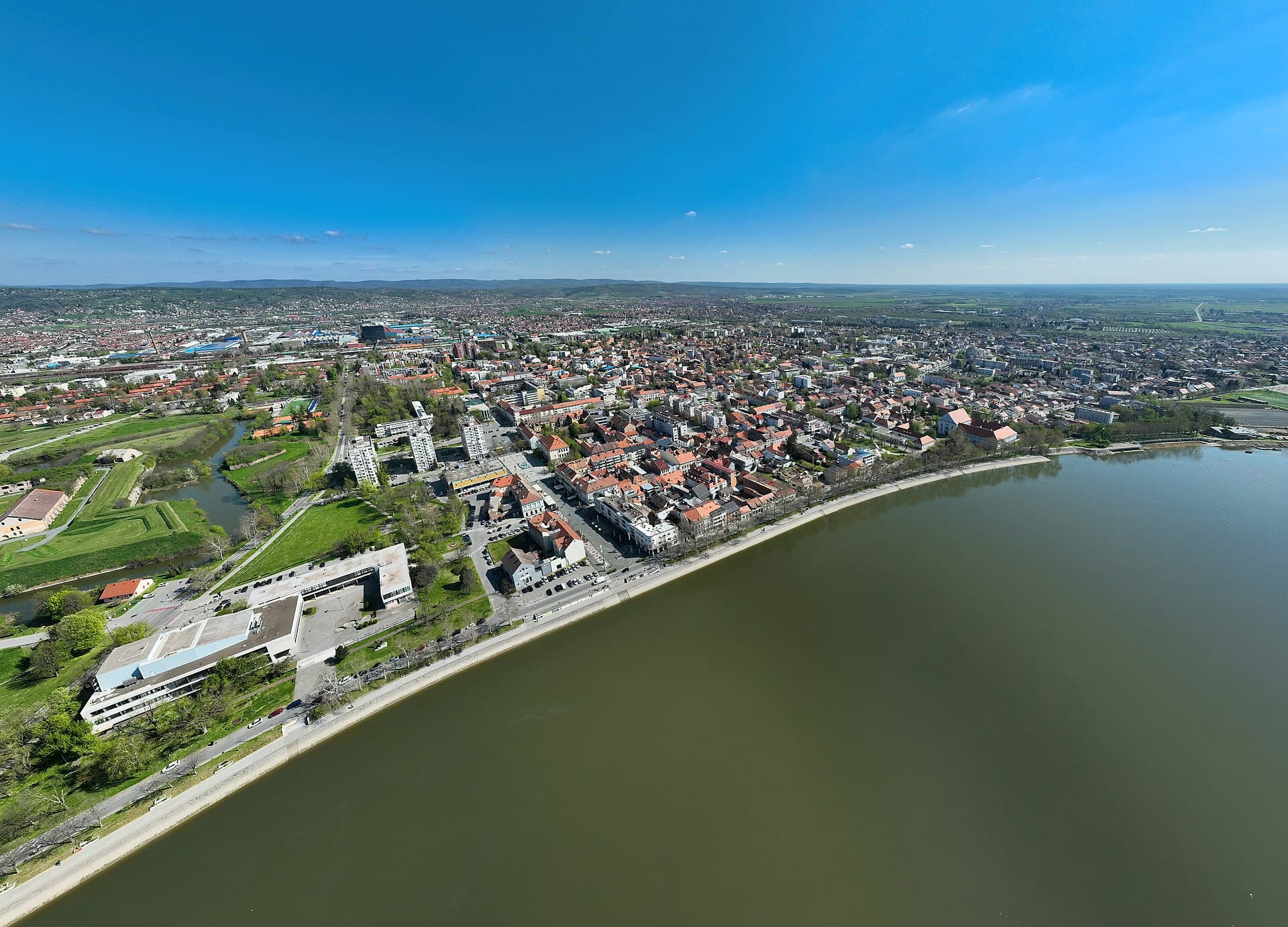
Slavonski Brod
Slavonski Brod developed around one of the major crossings of the Sava, and that border and transport role left a strong mark on the city. Brod Fortress represents the eighteenth-century…
Read the guide
Know Nuštar? Correct us
Tell us in your own words what is not accurate. We check right away.Do not enter personal data. Corrections are checked by the StayBravo AI assistant; changes to the description are approved by an editor. Use the form instead
Do you know Nuštar?
Help the guests who come after you.
Help us complete
Nothing is published without an editor’s review.Report illegal content
Photo credits: Nuštar, Tordinci, Mirkovci, Gaboš, Church of the Nativity of the Virgin Mary — MirkoS18 (CC BY-SA 3.0) · Cerić, Pačetin, Bršadin, Ludvinci, Church of St. Nicholas, Church of Saints Eusebius and Polion — MirkoS18 (CC BY-SA 4.0) · Vinkovci — IvanOS (CC BY-SA 3.0) · Bogdanovci — Sokac121 (CC BY-SA 3.0) · Church of Pentecost — Belirac (CC BY-SA 3.0) · Osijek — Rp031 (CC BY-SA 4.0) · Vukovar — Bybbisch94, Christian Gebhardt (CC BY-SA 4.0) · Stubičke Toplice — MOs810 (CC BY-SA 4.0) · Slavonski Brod — Petar Milošević (CC BY-SA 4.0)