
Koška
About this place
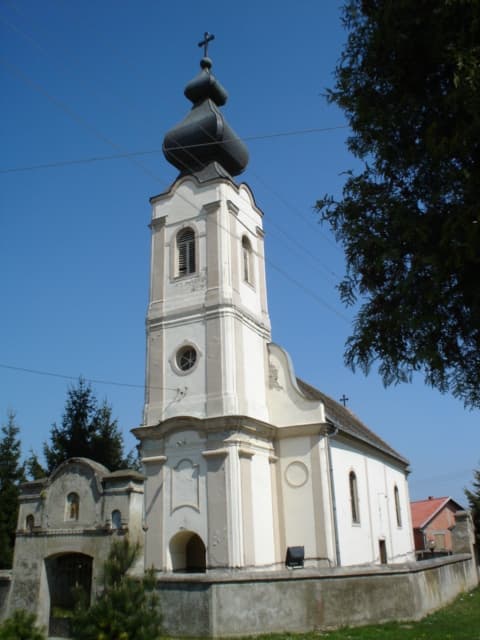
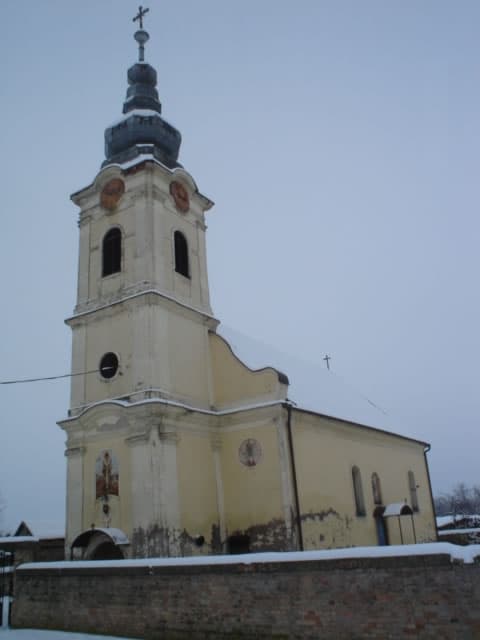
Koška is a Slavonian municipal centre positioned between Našice and Osijek, beside the D2 state road and the railway linking the two cities. The village lies 18 kilometres east of Našice and roughly 35 kilometres west of Osijek, making it a convenient short stop along this Podravina corridor. Its principal landmark is the parish church of Saints Peter and Paul, a single-nave building standing on a slight rise within the cemetery. The church combines Romanesque and Gothic features with a medieval structural core, while its bell tower dates from the 19th century. Koška enters the written record in 1229 as “terra Kos” by the Breznica, and sources from the 14th and early 15th centuries also mention a medieval castle. The surrounding settlements reveal another layer of local history: Normanci, Vučkovac and Topoline emerged around 1875 to house workers employed by the Valpovo estate and its sawmills. A visit therefore works best as a compact historical walk from the church into the village centre, followed by a drive through the flat countryside shaped by forestry, sawmills and the later railway connection.
Koška occupies the Lower Drava plain at an elevation of about 99 metres, between Našice and Osijek. A document from 1229 records the settlement as “terra Kos”, with the later forms “Koos” and “Kwos” appearing in medieval sources. References to a castellan in 1338 and to Castrum Kaswara in 1389 and 1406 point to Koška’s former fortified importance. The more recent landscape developed around forestry and sawmills: Normanci, Vučkovac and Topoline were established around 1875 for workers on the Valpovo estate. Agriculture, livestock farming and timber processing subsequently shaped Koška’s economy, while the D2 state road and the Našice–Osijek railway define its modern transport position.
Things to see


Stays
No stays listed here yet
Things to do
Start at the parish church of Saints Peter and Paul, set on a small rise in Koška’s north-western quarter. Look for its single-nave plan, narrower rectangular sanctuary and bell tower attached to the south side of the nave. Romanesque and Gothic details, together with a confirmed medieval structural layer, distinguish it from later Slavonian churches. Continue toward the village centre while placing present-day Koška against its first written mention in 1229. The outing can then extend to Normanci, Vučkovac and Topoline, three nearby settlements founded around 1875 to accommodate workers connected with the Valpovo estate and its sawmills.
Tours and activities
AdAd · partner offers: GetYourGuideThe partner handles booking, payment and support. StayBravo may earn a commission on bookings made through these links.How we choose offersGetYourGuide offers are selected and ordered by GetYourGuide based on the name of the nearest larger town or national park; we do not influence their selection and do not use data about you.GetYourGuide · Đakovo
We show GetYourGuide offers once you allow their cookies.
Practical information
Getting there and around
Koška stands on the D2 state road, about 18 kilometres east of Našice and 35 kilometres west of Osijek. The Našice–Osijek railway also passes through the village, giving Koška a rail connection uncommon among smaller Slavonian municipal centres. Rail passengers should consult the current Croatian Railways passenger timetable for the Našice–Osijek route, as departures vary by day. A car is useful for continuing to the municipality’s surrounding settlements, while the Church of Saints Peter and Paul and central Koška are close enough to combine in a short walk.
Frequently asked questions
What is Koška’s main landmark?
The principal historic building is the parish church of Saints Peter and Paul, which preserves Romanesque and Gothic features.
When was Koška first mentioned?
Koška was recorded in 1229 as “terra Kos” on the Breznica River.
Does Koška have a railway connection?
Koška lies on the Našice–Osijek railway; current departures should be checked in the HŽPP timetable.
Nearby
Koška
Open in OpenStreetMap(opens in a new tab)Smaller places
straight-line distance
Related guides

Osijek
Tvrđa and the centre around the main square are distinct starting points for understanding Osijek. The former emphasises the fortified historic quarter and Baroque architecture; the latter…
Read the guide

Vukovar
A cultural visit to Vukovar has several separate centres of gravity. Eltz Palace and the City Museum address the city and its inhabitants across different periods. Vučedol reaches much…
Read the guide

Stubičke Toplice
Stubičke Toplice derives almost its entire identity from thermal water and the Zagorje landscape. There is no large urban historic core; green spaces, bathing facilities and traces of the…
Read the guide
Slavonski Brod
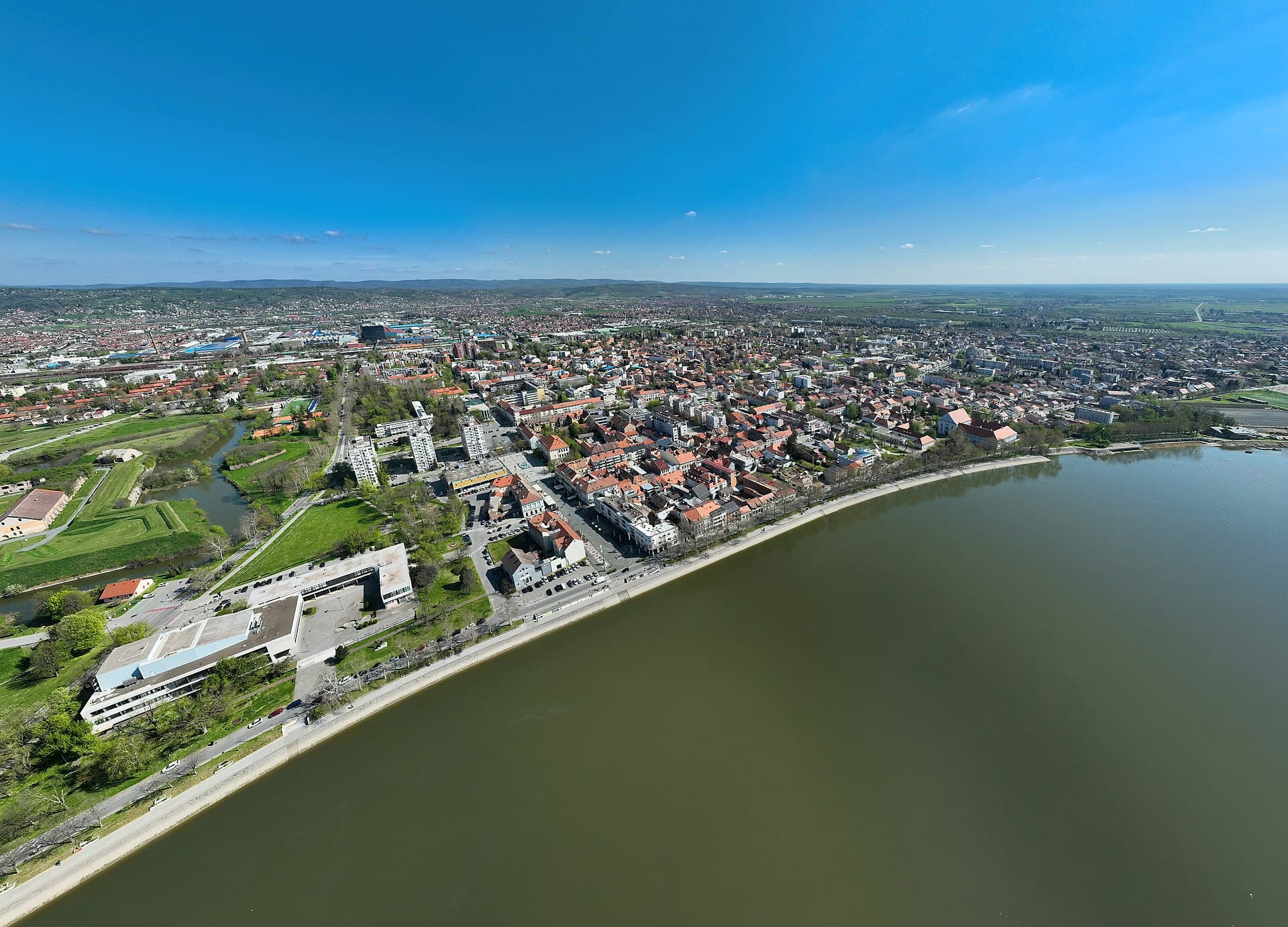
Slavonski Brod developed around one of the major crossings of the Sava, and that border and transport role left a strong mark on the city. Brod Fortress represents the eighteenth-century…
Read the guide
Know Koška? Correct us
Tell us in your own words what is not accurate. We check right away.Do not enter personal data. Corrections are checked by the StayBravo AI assistant; changes to the description are approved by an editor. Use the form instead
Do you know Koška?
Help the guests who come after you.
Help us complete
Nothing is published without an editor’s review.Report illegal content
Photo credits: Koška — Frane Lovošević (CC BY-SA 3.0) · Budimci — MirkoS18 (CC BY 4.0) · Prandau-Normann Castle — Roko Poljak (CC BY-SA 4.0) · Pejačević Manor — Flammard (CC BY-SA 3.0) · Church of St. Peter and Paul, Church of St. Nicholas — Ljubomir Damjanovic (CC BY-SA 3.0) · Osijek — Rp031 (CC BY-SA 4.0) · Vukovar — Bybbisch94, Christian Gebhardt (CC BY-SA 4.0) · Stubičke Toplice — MOs810 (CC BY-SA 4.0) · Slavonski Brod — Petar Milošević (CC BY-SA 4.0)