
Belišće
About this place
Belišće grew around the Gutmann family’s industrial works established in 1884, so its history is read not in medieval lanes but through factories, railways and planned workers’ housing. Its defining building is the 1905 Gutmann Palace, an Art Nouveau administrative headquarters severely damaged in 1992 and reopened after restoration in 2023. Nearby, the houses of Pekmez Street date from 1890–95, while the preserved memorial train recalls the narrow-gauge Slavonia–Podravina railway, closed in 1970. Belišće Museum interprets this story through an industrial and technical collection covering sawmills, cooperage and wood processing, paper and machinery production, and the development of the settlement itself. Yet the city also faces the Drava, Karašica and Vučica rivers, and its industrial character soon gives way to green spaces and routes towards Bistrinci. The nearby shrine of St Anne grew around a wayside monument erected in 1797, connecting a pilgrimage tradition with the Drava landscape. Belišće is therefore best understood as a young Slavonian town whose shared identity was forged by a factory, a narrow-gauge railway, a workers’ colony and the river.
Belišće is an unusually young Slavonian town: its urban development began around the Gutmann wood-processing works founded in 1884. Industry determined the settlement plan, workers’ housing, railway and cultural life, leaving landmarks such as Gutmann Palace, the Green Houses, Pekmez Street, the sawmill structure and the memorial train. Beyond this industrial core lies the flat landscape between the Drava, Karašica and Vučica, with parks and woodland softening the factory-town character. Belišće therefore has no single ancient centre; its identity is instead formed by a network of production buildings, workers’ neighbourhoods and civic institutions created through rapid industrialisation.
Things to see
Pekmez Street and the Memorial Train reveal Belišće beyond the grand Gutmann Palace. Seven surviving workers’ houses on Vijenac S. H. Gutmanna were built between 1890 and 1895; their popular name recalls elderberry jam once cooked in large courtyard cauldrons. In Željeznička Street, a restored narrow-gauge Slavonian-Podravina railway train stands on the former Gutmann railway alignment. Its locomotive and four carriages form part of the Belišće Museum collection. Together with the museum’s industrial displays, these two sites explain both daily life in the original workers’ settlement and the transport network that once linked the Gutmann factories with Slavonia’s forests.

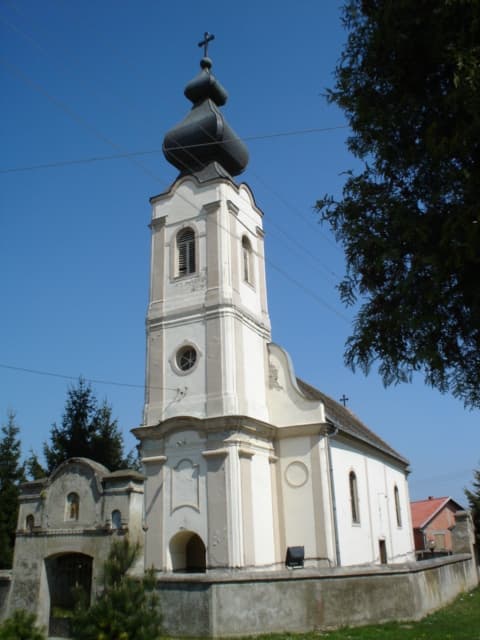
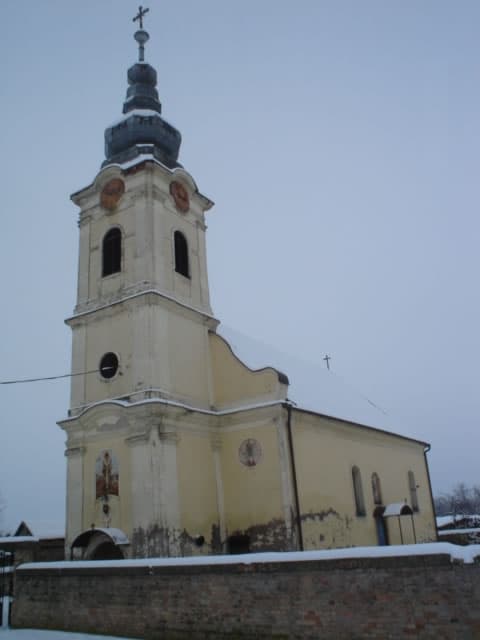

Esterhazy castle in Darda
Landmark · Darda
Esterházy Castle in Darda is a three-winged Baroque and Neoclassical residence by Lake Đola, shaped during the 18th and early 19th centuries.
23 km from Belišće
Stays
No stays listed here yet
Things to do
A Belišće visit is best begun at Gutmann Palace, the 1905 administrative building of Belišće d.d., which also houses the Belišće Museum gallery. Continue to Pekmez Street, named for the elderberry jam once cooked in the yards of its workers’ houses. The museum display then supplies the industrial context, covering the sawmill, cooperage, parquet factory, wool mill, tannin processing and an old laboratory. Together, the palace and workers’ quarter reveal the two sides of Gutmann’s industrial town.
Food and drink
In central Belišće, the official tourism directory lists Restaurant Romberg at Vijenac S. H. Gutmanna 12 and Restaurant Fontana at Trg Ante Starčevića 17A, making either a convenient stop after the Gutmann Palace and the historic industrial quarter. Elsewhere within the Belišće administrative area, Restaurant Kod Svrtana operates at Nova 2 in Kitišanci. For locally made food, the tourist board also points visitors to producers such as Kulen Novosel in Gat and OPG Kraljik in Belišće. Opening hours and arrangements for larger groups should be confirmed directly before visiting.
Tours and activities
AdAd · partner offers: GetYourGuideThe partner handles booking, payment and support. StayBravo may earn a commission on bookings made through these links.How we choose offersGetYourGuide offers are selected and ordered by GetYourGuide based on the name of the nearest larger town or national park; we do not influence their selection and do not use data about you.GetYourGuide · Osijek
We show GetYourGuide offers once you allow their cookies.
Practical information
Practical information
The Belišće Tourist Board is at Vijenac S. H. Gutmanna 15B, within walking distance of Gutmann Palace, Pekmez Street and the central square. Visitors wishing to enter Belišće Museum or arrange an industrial-heritage tour should contact the relevant institution in advance, as small local collections may not keep all-day hours. The town also has a 50-by-25-metre outdoor Olympic pool and a separate children’s pool 30–50 centimetres deep; seasonal opening dates should be checked before arrival. Questions about municipal parking can be directed to the city’s traffic and parking office at [email protected].
Parking
In 2026, Belišće continued charging for parking in its red Zone 1, covering central locations including Trg Ante Starčevića, Vijenac S. H. Gutmanna, Vijenac dr. Franje Tuđmana, Željeznička Street and Albert Hofmann Park. The published rate is €0.40 per started hour with no time limit, while the yellow Zone 2 is currently not charged. Payment applies from 7:00 to 19:00 on weekdays and from 7:00 to 13:00 on Saturdays; Sundays and Croatian public holidays are free. Hourly tickets can be purchased with coins at a meter or by sending the vehicle registration by SMS to the number displayed for Zone 1, with an additional transaction fee.
Frequently asked questions
Why is it called Pekmez Street?
The name recalls elderberry jam once cooked in large cauldrons in the courtyards of the workers’ houses.
What does Belišće Museum display?
Its 830 exhibits trace wood processing, paper and machinery production, the railway, and the settlement’s social development.
What is Belišće’s Partizanka?
Partizanka is a 1913 locomotive preserved as part of the memorial train from the former narrow-gauge Slavonia–Podravina railway.
Is parking charged on Sundays in Belišće?
According to the city’s 2024 information, parking was free on Sundays and public holidays.
When was Gutmann Palace built?
Gutmann Palace, formerly the Belišće d.d. administration building, was built in 1905.
How did Pekmez Street get its name?
Its name recalls elderberry jam once cooked in the houses’ courtyards.
What does the Belišće Museum’s industrial display show?
The display covers the sawmill, cooperage, parquet factory, wool mill and tannin processing.
Where is the Belišće Museum Gallery?
The Belišće Museum Gallery is located in the basement of Gutmann Palace.
How many artworks are in the gallery collection?
The Gutmann Palace gallery collection comprises 220 artworks.
Nearby
Belišće
Open in OpenStreetMap(opens in a new tab)straight-line distance
Related guides

Osijek
Tvrđa and the centre around the main square are distinct starting points for understanding Osijek. The former emphasises the fortified historic quarter and Baroque architecture; the latter…
Read the guide

Vukovar
A cultural visit to Vukovar has several separate centres of gravity. Eltz Palace and the City Museum address the city and its inhabitants across different periods. Vučedol reaches much…
Read the guide

Stubičke Toplice
Stubičke Toplice derives almost its entire identity from thermal water and the Zagorje landscape. There is no large urban historic core; green spaces, bathing facilities and traces of the…
Read the guide
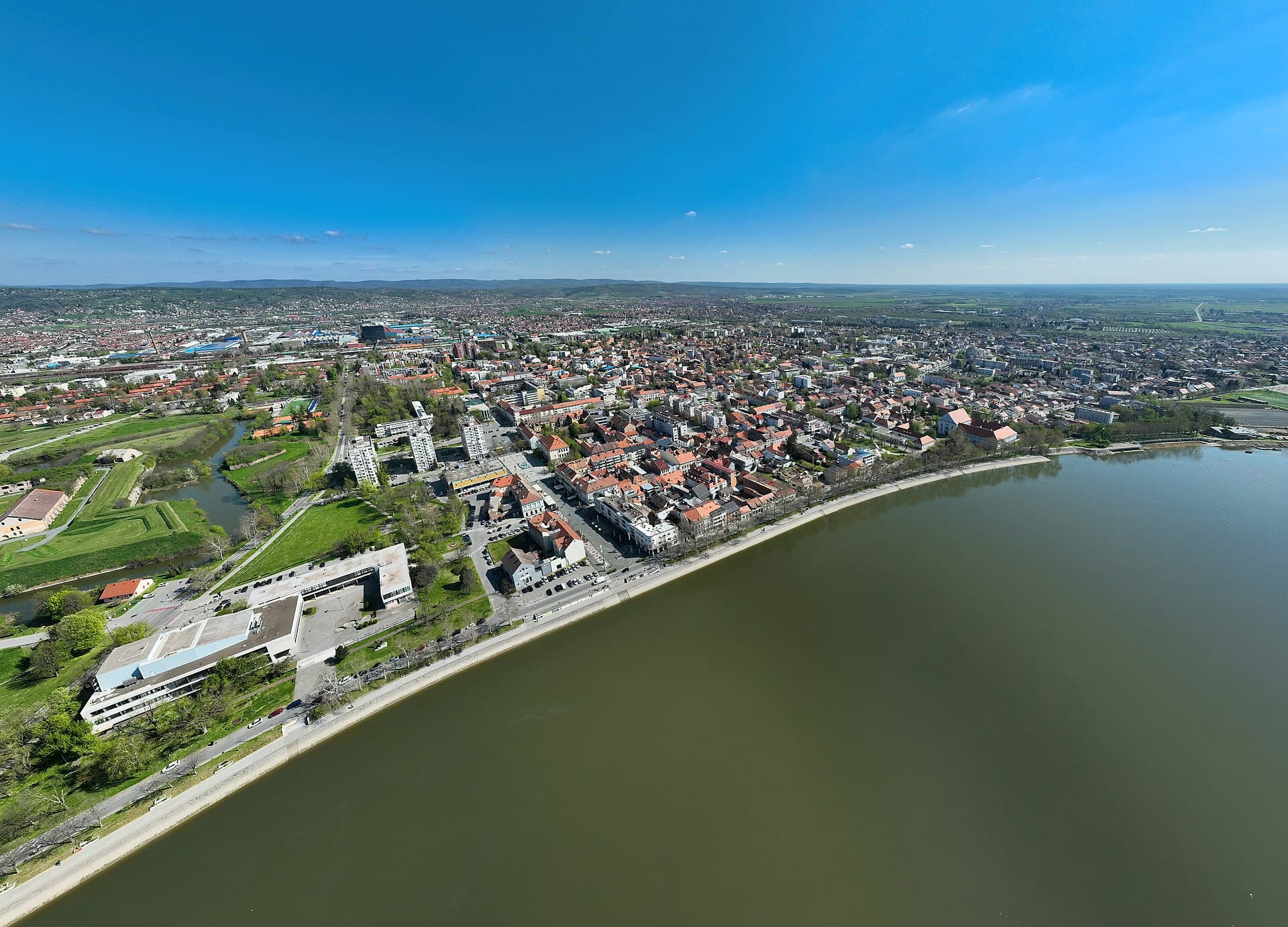
Slavonski Brod
Slavonski Brod developed around one of the major crossings of the Sava, and that border and transport role left a strong mark on the city. Brod Fortress represents the eighteenth-century…
Read the guide
Know Belišće? Correct us
Tell us in your own words what is not accurate. We check right away.Do not enter personal data. Corrections are checked by the StayBravo AI assistant; changes to the description are approved by an editor. Use the form instead
Do you know Belišće?
Help the guests who come after you.
Help us complete
Nothing is published without an editor’s review.Report illegal content
Photo credits: Belišće, Valpovo, Prandau-Normann Castle — Roko Poljak (CC BY-SA 4.0) · Bistrinci, Šag — IvanOS (CC BY-SA 3.0) · Nard — Robert Ruff (CC BY 3.0) · Veliškovci — Flammard (CC BY-SA 3.0) · Church of St. Peter and Paul, Church of St. Nicholas — Ljubomir Damjanovic (CC BY-SA 3.0) · Esterhazy castle in Darda — Biljanabekic (CC BY-SA 2.5) · Osijek — Rp031 (CC BY-SA 4.0) · Vukovar — Bybbisch94, Christian Gebhardt (CC BY-SA 4.0) · Stubičke Toplice — MOs810 (CC BY-SA 4.0) · Slavonski Brod — Petar Milošević (CC BY-SA 4.0)